Guide · Road Racing & Criteriums
Road race vs. criterium: what's the difference?
Two very different kinds of bike race, and why the Berkeley Omnium asks riders to do both in one weekend.
The short answer
A road race is a long mass-start race over open roads, often with serious climbing, where the field breaks apart over hours. A criterium is a shorter race of many laps around a closed circuit of city streets, where the bunch stays together and the finish usually comes down to a sprint. The Berkeley Omnium pairs one of each: the Berkeley Hills Road Race on Day 1 and the Berkeley Streets Criterium on Day 2.
What a road race is like
Road racing is the oldest form of bike racing. Everyone starts together and races a set distance over public roads, usually a large loop ridden more than once, and the first rider across the line wins. Races are long enough that nobody can go flat out the whole way, so the day is about spending energy carefully.
Riding in someone's draft saves a lot of energy, which is why the field travels as a group and why a solo attack on flat roads rarely survives. Climbs change that. On a steep hill speed drops and drafting matters far less, so the strongest climbers can ride away and everyone else is on their own. That's why hilly road races break apart: the field shrinks a little on every climb until only a small group is left to contest the finish.
On the Three Bears
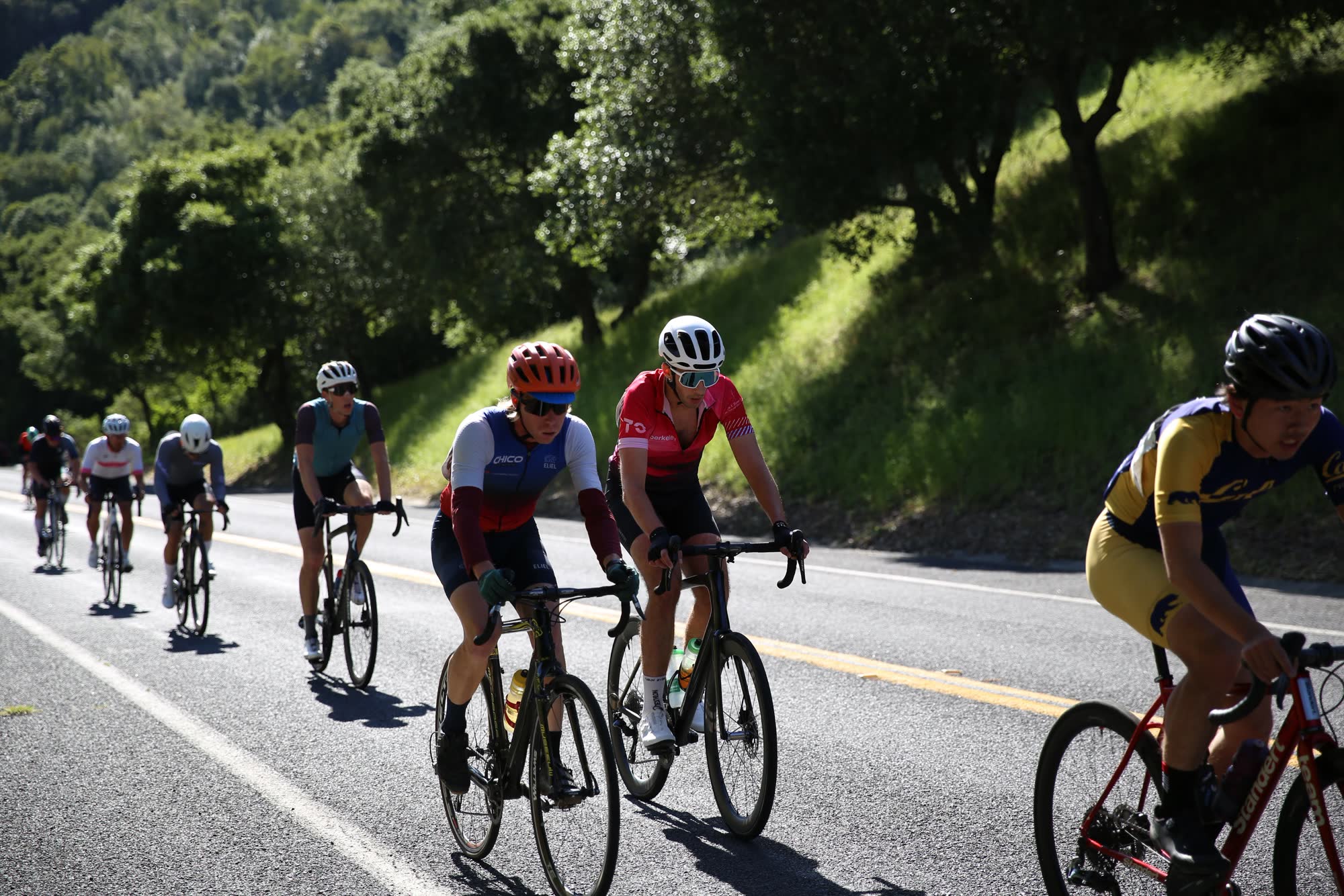
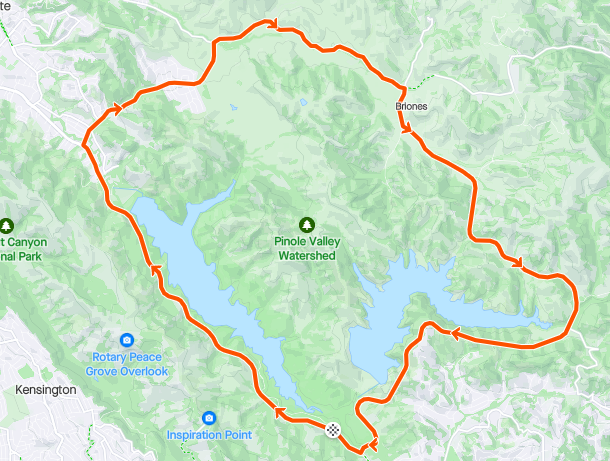
The Berkeley Hills Road Race is a textbook climbing road race. Each lap of the course is 18.76 miles with 759 feet of climbing, over Baby Bear, Mama Bear and Papa Bear on Bear Creek Road near Orinda. The climbs come around again every lap, and the race is typically decided on Papa Bear, where riders who have been hanging on finally come off.
The Berkeley Hills Road Race course →
What a criterium is like
A criterium, or crit, compresses racing into a short circuit of city streets, often a mile or less per lap, raced for a set time rather than a set distance. The field passes the start-finish line every couple of minutes, so riders are never far from the action and neither are spectators.
Crits reward different skills than road races. With short laps and several corners, the bunch brakes and sprints out of every turn, and riders who stay near the front spend far less energy than riders stuck at the back. Attacks, primes (mid-race prizes for winning a lap) and team lead-outs keep the pace high until the final sprint.
What is a criterium? A full guide →

Side by side
| Berkeley Hills Road Race | Berkeley Streets Criterium | |
|---|---|---|
| Day | Day 1 of the Berkeley Omnium | Day 2 of the Berkeley Omnium |
| Where | The Three Bears, Bear Creek Road near Orinda | A closed circuit in Downtown Berkeley, beside Ohlone Park |
| Course | A long loop, 18.76 miles per lap | A short loop of city streets, raced many times |
| Climbing | 759 feet per lap | Minimal. Speed comes from the corners |
| What decides it | Sustained climbing, typically on Papa Bear | Positioning, cornering and the sprint |
| Race shape | The field splits apart through attrition | The bunch stays together lap after lap |
| Key skills | Climbing, pacing, descending | Cornering, pack skills, a fast finish |
| For spectators | Riders pass a given spot only once a lap | The field passes every lap, every few minutes |
Why the Berkeley Omnium races both
In cycling, an omnium is a competition made of several races, with each rider's results combined into one overall standing. The Berkeley Omnium is built on the contrast between its two days. A pure climber can win on the Three Bears and lose it all in a crit, and a sprinter who survives the hills has a real chance on Day 2. The overall winner is the rider who can handle both.
It also makes for a better weekend. Day 1 carries the history: the Berkeley Hills Road Race has been raced since 1957, and 2026 was its 70th edition. Day 2 brings the racing into town, where families, neighbors and kids can watch up close.
Which is better for a first race?
Either can be. A crit is short and close to the start area, and if things go badly you're never far from home, but it demands confident cornering and riding shoulder to shoulder. A road race asks for more fitness and pacing, with less time in a tight pack. Most new racers find that group rides are the best preparation for both.
At the Berkeley Omnium, the Novice field (Cat 5) is set up for new racers, and junior, collegiate and women's fields raced in 2026. 2027 categories will be posted with registration.
Watching each kind of race
Both days of the Berkeley Omnium are free to watch. A road race is more of an adventure for spectators: the race is spread out over a long loop in the hills, and you see the riders once each lap, often in pieces, which is exactly what tells you how the race is going. A crit is the easy one. Pick a corner, watch the field brake, lean and sprint away, then move to the finish line for the final laps.
Questions
Road race vs. criterium: what's the difference: FAQ
What is the difference between a road race and a criterium?
A road race is a long race over open roads, often with climbing, where the field breaks apart over hours. A criterium is a shorter, timed race of many laps on a short closed circuit, where the bunch stays together and the finish is usually a sprint.
Is a criterium harder than a road race?
They're hard in different ways. Road races test endurance and climbing over a long distance. Criteriums are shorter but more intense, with repeated sprints out of corners and constant fighting for position.
What is an omnium in cycling?
An omnium is a competition made up of several races, with each rider's results combined into one overall standing. The Berkeley Omnium combines the Berkeley Hills Road Race and the Berkeley Streets Criterium.
About the Berkeley Omnium →Can beginners race the Berkeley Omnium?
Yes. In 2026 the Omnium offered a Novice field (Cat 5) for new racers, alongside Elite, Collegiate, Women's and Junior fields. 2027 categories will be posted with registration on BikeReg.
Berkeley Omnium on BikeReg →