
Guide · Criterium Racing
What is a criterium?
How crit racing works, what it takes to race one, and why it's the easiest kind of bike race to watch.
The short answer
A criterium, or crit, is a road bike race of many laps around a short circuit on closed streets, usually a mile or less per lap. The field stays close together, corners come fast, and the finish often comes down to a bunch sprint. In the Bay Area, the Berkeley Streets Criterium is Day 2 of the Berkeley Omnium, raced in downtown Berkeley.
How a criterium works
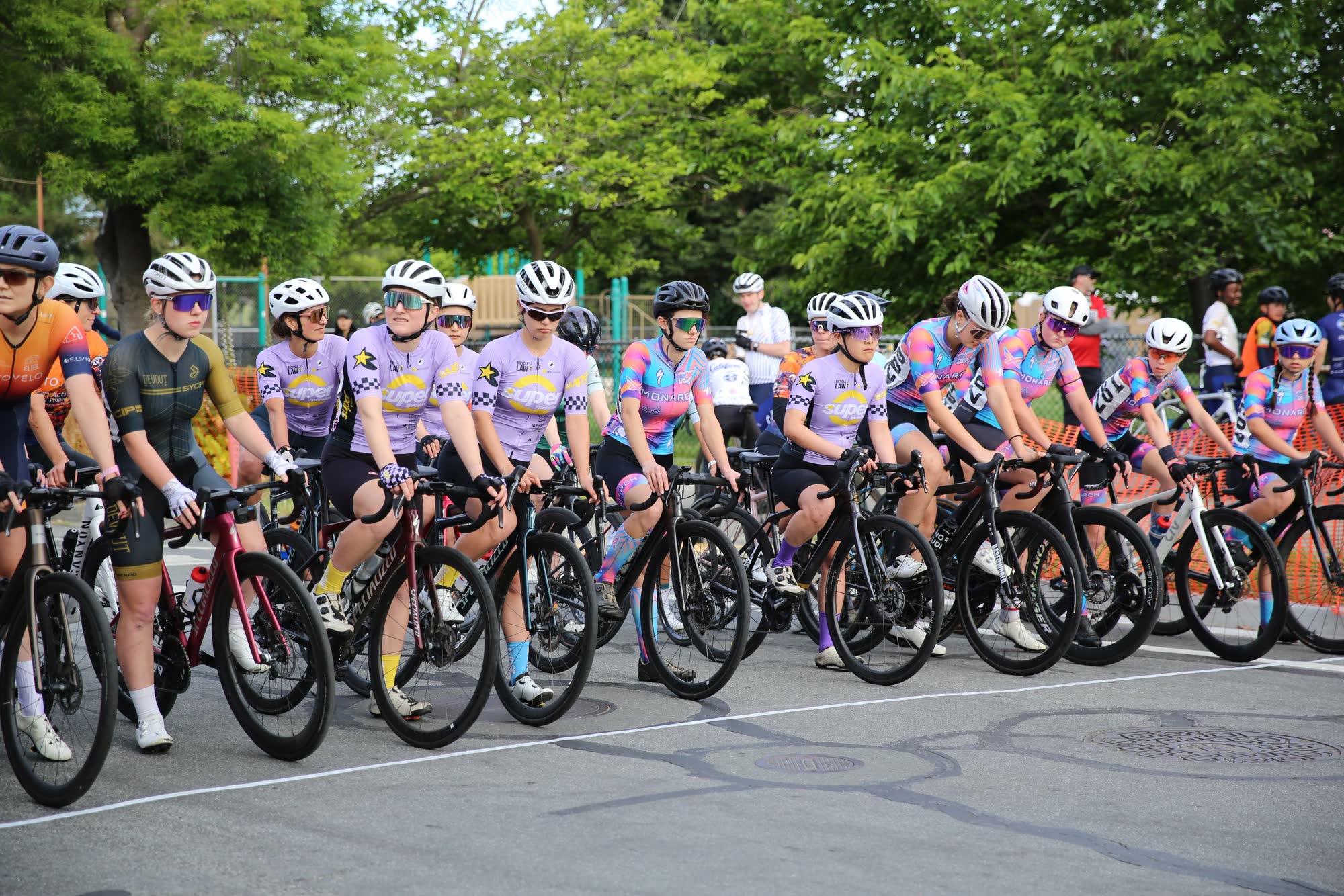
A criterium is raced on a closed loop, often just a few city blocks, and riders complete it again and again. Because the lap is short, the whole race stays in one place: riders pass the start-finish line every couple of minutes, and officials can see nearly all of the course.
Most crits in the United States are raced for a set time rather than a set distance. As the end approaches, officials show a lap card counting down the remaining laps, and a bell rings as the leaders start the final lap.
- Primes (pronounced "preems"): prizes for the first rider across the line on a lap announced mid-race, usually signaled with a bell.
- Free laps: many crits let a rider who crashes or has a mechanical problem sit out a lap and rejoin, up until a point late in the race.
- Getting pulled: riders who fall far behind or get lapped by the leaders may be pulled from the race by officials.
Criterium vs. road race
The Berkeley Omnium puts both formats back to back, so it's a good way to see the difference. The Berkeley Hills Road Race on Day 1 rewards climbing and endurance. The Berkeley Streets Criterium on Day 2 rewards bike handling, positioning and a fast finish.
| Berkeley Streets Criterium | Berkeley Hills Road Race | |
|---|---|---|
| Course | Short closed circuit in Downtown Berkeley | Long loop over the Three Bears climbs, 18.76 miles per lap |
| Climbing | Minimal. Speed comes from the corners | 759 feet per lap |
| What decides it | Positioning, cornering and the sprint | Sustained climbing, typically on Papa Bear |
| Race shape | The bunch stays together lap after lap | The field splits apart through attrition |
| For spectators | The field passes every lap | Riders pass a given spot only a few times |
In an omnium, riders' results from both formats combine into one overall standing, so the winner has to handle both.
What it takes to race a crit
Crits are less about raw power than about using it well. Every corner squeezes the field, and every exit is a sprint to close the gaps it opened. Riders who stay near the front spend less energy than riders caught at the back.
- Cornering skills matter more than raw power, practice holding your line at speed.
- The field stays compressed all race, positioning early avoids getting boxed in late.
Pack skills matter as much as fitness: ride predictably, hold your line through corners, and don't make sudden moves. If you're new to racing, practice cornering at speed and riding close to other riders on group rides before your first crit.
Who can race a criterium?
Crits in the U.S. are usually run under USA Cycling rules, with fields split by category from Cat 5 (beginners) up to Cat 1 and pro, plus separate fields for women, juniors, masters and, at some events, collegiate riders. New racers start in the lowest category and move up by gaining experience and results.
The Berkeley Omnium's fields are Elite (Cat 1/2/3/4 · Full podium), Novice (Cat 5 · New racers welcome), Collegiate (Open to collegiate teams), Women (Combined & categorized), Junior (Age-appropriate distances). Both races are USA Cycling sanctioned and held under the Northern California Nevada Cycling Association (NCNCA).
How to watch a criterium
Crits are the most spectator-friendly races in road cycling. Pick a corner to watch riders brake, lean and sprint out of it, then move to the finish line for the final laps. At the Berkeley Streets Criterium, admission is free and the same riders pass every few minutes.
The Berkeley Streets Criterium
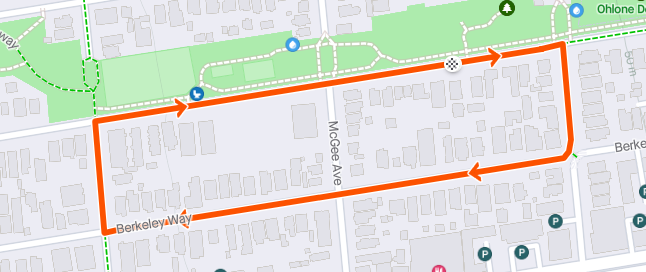
The Berkeley Streets Criterium closes out the Berkeley Omnium weekend on a circuit in downtown Berkeley along Berkeley Way and McGee Avenue, beside Ohlone Park. Kids ride too: in 2026 a kids clinic and kids race ran alongside the adult fields.
Questions
What is a criterium: FAQ
What does "crit" mean in cycling?
"Crit" is short for criterium: a multi-lap road bike race on a short, closed circuit, usually on city streets.
How long is a criterium?
Most U.S. criteriums are raced for a set time rather than a set distance, commonly somewhere between about 20 minutes for beginner fields and an hour or more for elite fields, with a few extra laps counted down at the end.
What is a prime in a bike race?
A prime (pronounced "preem") is a prize for the first rider to cross the line on a particular lap, announced during the race and usually signaled with a bell.
Is a criterium good for a first bike race?
Often, yes. Crits are short and on closed roads, and beginner fields such as Cat 5 are made for new racers. Practice cornering and riding close to others first, because crits reward pack skills.
Where can I race or watch a criterium near Berkeley?
The Berkeley Streets Criterium is Day 2 of the Berkeley Omnium, raced on a closed circuit in downtown Berkeley beside Ohlone Park. It is free to watch.
Berkeley Streets Criterium →