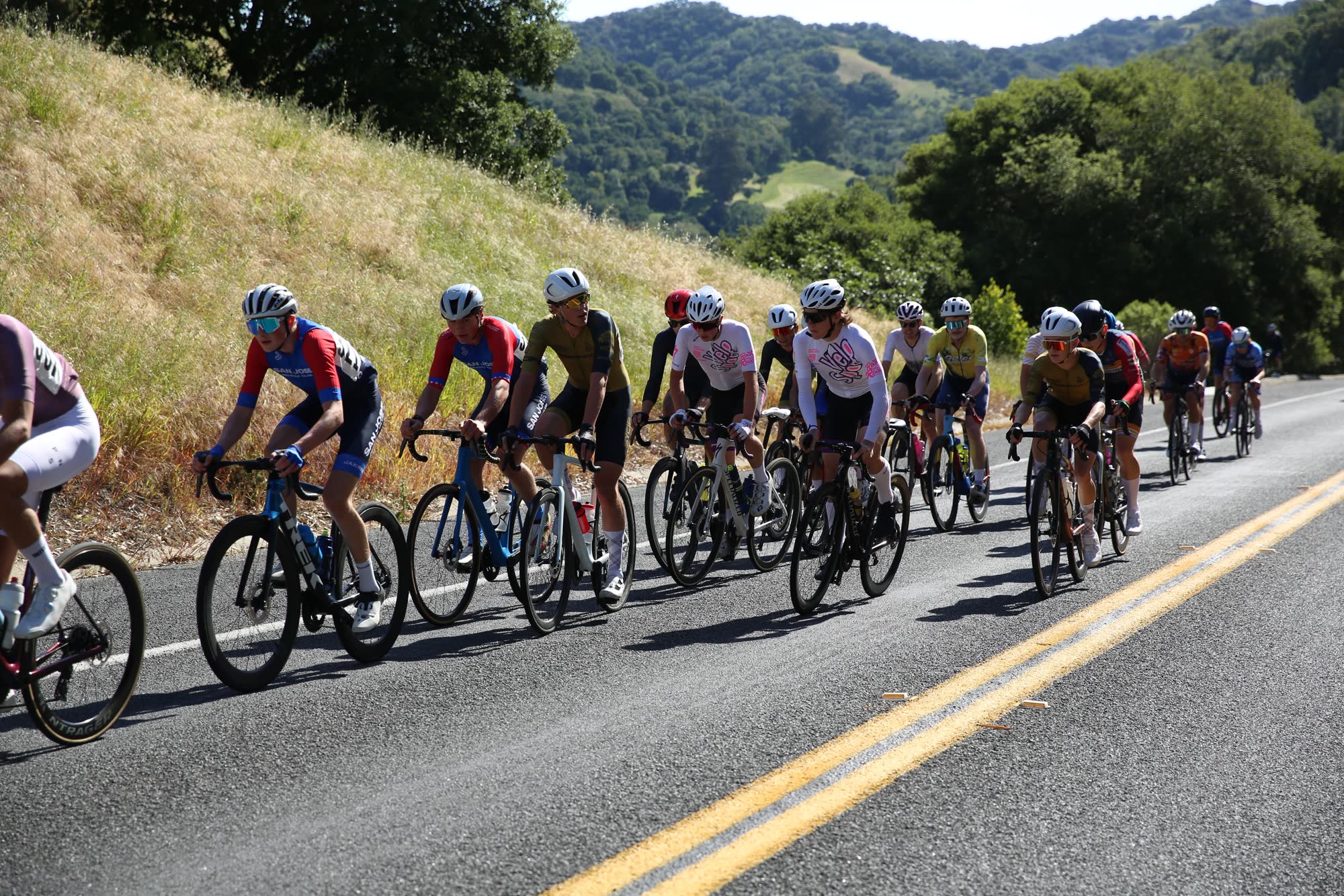
Guide · Road Racing
How to prepare for the Berkeley Hills Road Race
Training, positioning, pacing, fueling and race morning on the Three Bears, for first-time racers and for experienced racers coming to Berkeley for the first time.
You can be fit and still have a bad bike race. You can climb well and still miss the move. You can arrive with great numbers and still be thirty wheels back when the race splits on Papa Bear.
The Berkeley Hills Road Race has been sorting riders out like that since 1957. It doesn't ask one question, like how many watts you can hold for twenty minutes. It asks a series of them, lap after lap. Can you climb hard and recover? Are you in the right place before the road tilts up? Can you descend with confidence, eat while the race is quiet, and still make a good decision when you're tired?
This guide is about being able to answer yes. It covers the course, training, positioning, pacing, fueling, the bike, race week and race morning, the way an experienced racer would talk you through it before your first trip to the Three Bears.
The short answer
To prepare for the Berkeley Hills Road Race, train for repeated climbing on tired legs rather than one big effort: build endurance, add sustained and above-threshold climbing work, and practice recovering while still riding hard. Learn the course, a loop over the Three Bears on Bear Creek Road near Orinda that climbs 759 feet every 18.76 miles, with fast technical descents and a race typically decided on Papa Bear. Practice pack skills and descending on group rides, fuel early, taper in race week, and arrive with a bike that has nothing new on it.
The Berkeley Hills Road Race in brief
The Berkeley Hills Road Race (BHRR) is a hilly road race in the East Bay hills, raced over the Three Bears climbs, Baby Bear, Mama Bear, Papa Bear, on Bear Creek Road near Orinda, California. Peter Rich promoted the first edition in 1957, and 2026 was the 70th. The Berkeley Bicycle Club, formed in 1979, has organized it ever since, and since 2024 it has been Day 1 of the Berkeley Omnium, a two-day weekend that pairs the road race with the Berkeley Streets Criterium in downtown Berkeley.
The Berkeley Hills Road Race →
It is a USA Cycling sanctioned race held under the Northern California Nevada Cycling Association (NCNCA). The 2026 fields were Elite (Cat 1/2/3/4), Novice (Cat 5), Collegiate, Women and Junior. The 2027 Berkeley Omnium is April 17–18, 2027, with the road race on Day 1, and 2027 categories, start times and fees will be posted with registration.
It is also one of the longest-running road races in the United States, and plenty of good riders have learned something on these climbs. Jonathan Boyer won in 1979, two years before he became the first American to ride the Tour de France, and Kristen Faulkner raced the 2019 women's field five years before winning Olympic gold in the road race.
Know the course before you train for it
Each lap of the Berkeley Hills Road Race is 18.76 miles with 759 feet of climbing, over Baby Bear, Mama Bear and Papa Bear. The course is built on sustained climbing and attrition, with fast, technical descending between the climbs. Papa Bear's back side runs 2.1 miles, and it is where the race is usually decided, by riders who can still attack after their legs are gone.
What that means for your preparation:
- Repeated climbing. You climb hard, recover on the way down, and do it again, lap after lap. Train for the last climb of your race, not the first.
- Descending. The descents are fast and technical. A smooth, confident line keeps you in contact for free; nervous descending turns into a chase at the bottom.
- Position before the climbs. When the road tilts up, the field stretches out. Riders who start a climb near the front have room to drift back and still crest with the group.
- Attrition. The race is decided by who still has something left on Papa Bear, so energy wasted early is energy you won't have when it counts.
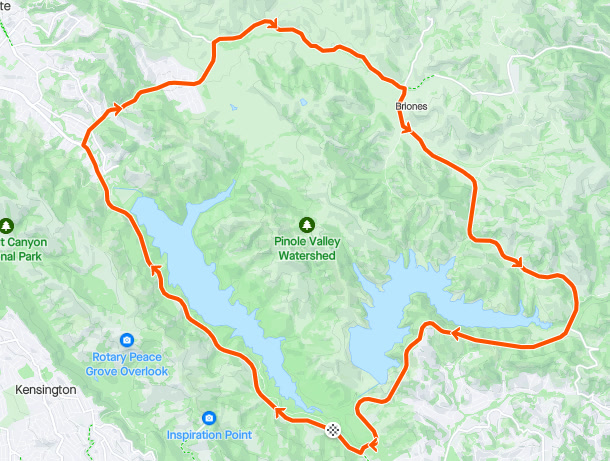
How long is the day? That depends on your field, and junior fields race age-appropriate distances. For a sense of the top end, Cycling West described the long-time pro format as five laps and about 100 miles, climbing each of the Three Bears five times for 15 climbs. Check the race information for your field's distance once the 2027 schedule is posted, and train for that, plus a margin.
If you can, ride the loop before race day. Riding it tells you more than any description: where each climb starts to bite, how the descents flow, and where you could reach for a bottle. In training these are open public roads, so ride them that way. If you can't get there, the 2018 course pre-ride video from English Endurance Coaching is the next best thing.
Training for the Three Bears
Train for repeatability. The Berkeley Hills Road Race rarely rewards one great effort. It rewards the rider who can climb hard, recover on the descent, and climb hard again when the race is already well under way. Build the engine first, then make the hard work look like the race.
“The Berkeley Hills Road Race and the Berkeley Streets Criterium demand two very different energy systems, long sustained climbing, sharp accelerations, and the kind of repeatability that breaks legs and defines winners.”
Build aerobic durability
A road race is not one long FTP effort. The decisive moments may last a few minutes, but they arrive after you've already spent a long time racing, and the rider whose power holds up best when tired usually wins them. That durability comes from weeks and months of consistent endurance riding: long, steady rides, with some of your harder efforts placed late in the ride so you practice producing power on legs that are already tired.
Train repeated climbing efforts
- Sustained climbing at or near threshold, on a hill long enough to settle into a rhythm, the way you'll ride a long climb when the pace is steady.
- Shorter, harder efforts above threshold (VO2 work), for the moments when a climb gets raced instead of ridden.
- Surges: a hard acceleration mid-climb or over the top, then settling back to a strong pace instead of sitting up.
- Repeats where the last one counts. If your third effort falls apart, that is the one to train.
There is no single plan that fits both a Cat 5 rider training around a full-time job and a Pro/1/2 racer chasing a result. Scale the volume and the intensity to where you are, build gradually, and if you want a plan built around you, work with a coach. Nate English, who won the Berkeley Hills Road Race in 2008, built the race-specific training plan for the 2026 Omnium.
Coaches who know these roads →
Train your recovery, not just your efforts
Producing a hard effort is half the skill. The other half is recovering from it while the race keeps going, then responding again. Riders who can bring their breathing down quickly while still holding a wheel get more chances to answer the next move. Practice it: after a hard effort in training, keep riding at a solid pace instead of stopping, and pay attention to how quickly your legs come back.
Race skills come from group rides
Fitness gets you to the climbs. Skills keep you from wasting it before you get there. Practice these safely and predictably on group rides, long before race day:
- Drafting: close enough to get shelter, without overlapping the wheel in front.
- Moving up through a group along the side, using the gaps that open instead of forcing them.
- Holding a wheel on climbs and descents, without surging and braking.
- Cornering and descending in a group, holding your line.
- Eating and drinking one-handed in a pack.
- Riding predictably: no sudden braking or swerving, and look before you move.
Race day is a bad day to try any of this for the first time. If you've never descended in a tight group or opened a gel in a pack, find a club ride where you can practice.
Positioning: the cheapest watts in the race
Being 20 watts stronger doesn't help much if you're 30 wheels back when the race splits. Position is free energy. A rider near the front at the bottom of a climb can drift back through the group and still be in contact at the top. A rider who starts at the back has to pass people uphill just to stay where they are, at exactly the moment everyone is hurting.
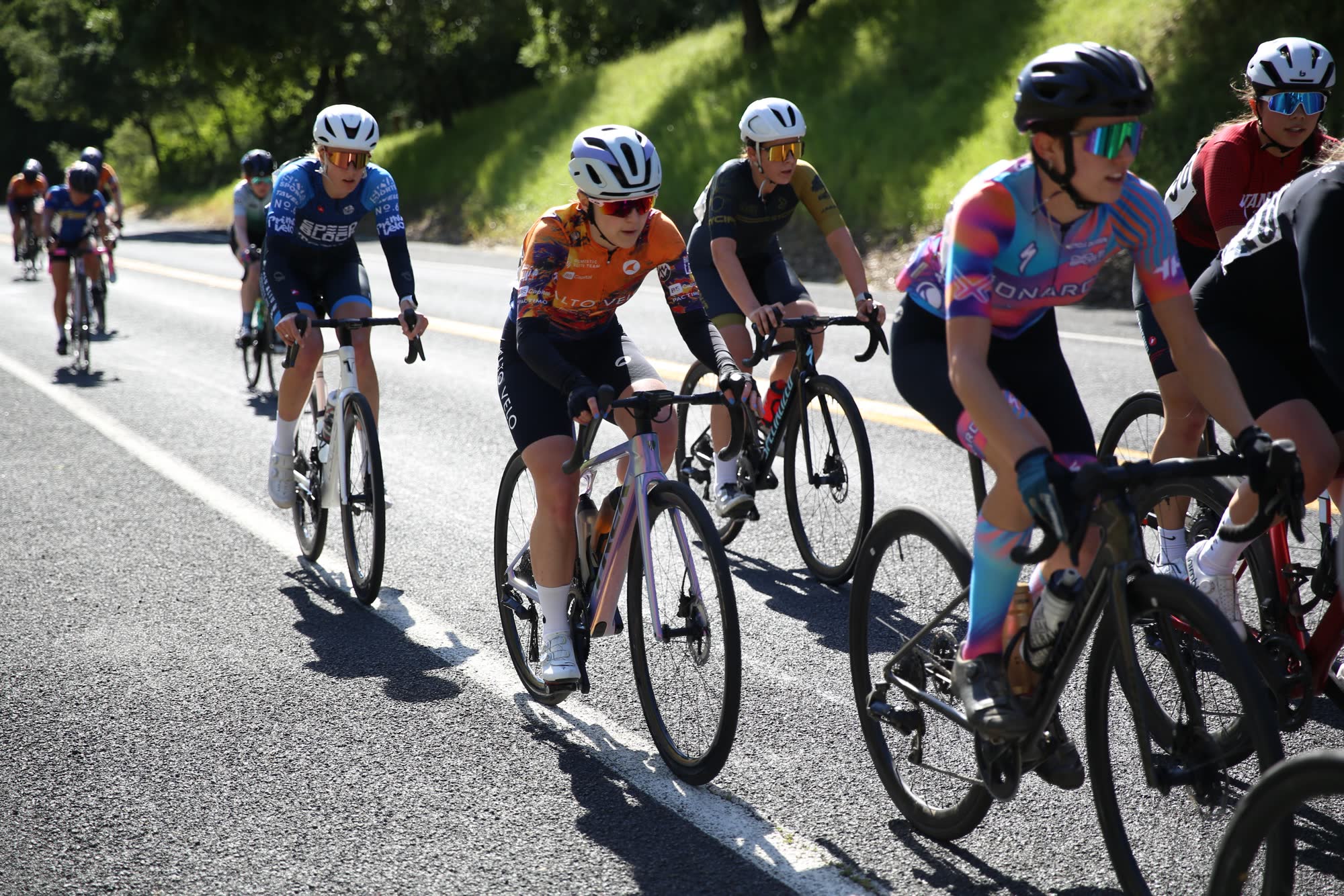
Move up before the terrain, not during it
Moving up on easier road costs a little. Moving up halfway up a climb costs a lot. Because the race repeats the same loop, you always know what's coming: the foot of each of the Three Bears, and Papa Bear above all, are places to already be where you want to be.
Stay out of the wind, without fighting for the front
Riding in the draft saves a lot of energy, so every minute in the wind that isn't moving you forward is energy spent for nothing. You don't need the very first wheels for the whole race either; fighting for them costs more than it saves. Aim to sit close enough to the front to see what's happening and respond, with a few riders sheltering you.
Read the field and anticipate
Watch for the signs that the race is about to change: the group stretching into a single line, gaps opening on a descent, strong riders and teams moving up together. Close small gaps immediately. A two-bike-length gap is cheap to close; the same gap halfway up a climb may not be.
Different fields race differently. Newer fields can be erratic, so give yourself space and ride predictably; elite fields move fast and surge in organized ways. The principle doesn't change: be where you need to be before you need to be there.
Pacing: a road race is not a time trial
Pace a hilly road race by what the race is doing, not by a number. The most common mistake newer racers make is riding their target power no matter what the field does: pulling too hard in the wind when the group is calm, then getting dropped when the pace jumps on a climb because there's nothing left to answer with.
A power meter works better as a fuel gauge than a script. You'll spend long stretches well under your threshold in the draft, then minutes well over it when the road goes up or someone attacks. The goal isn't an even effort. It's spending energy where it changes the outcome.
- Conserve when the race is calm: sit in, eat, drink, hold position.
- Spend when it matters. If staying with the group over a climb keeps you in the race, going above your planned effort for a minute is worth it, because the alternative is chasing alone.
- Don't chase every acceleration. Ask whether the move matters: who is in it, how much race is left, and whether it can stay away on this course.
- Count your matches. Every hard effort costs something, so burn them with purpose. The bill comes due on the last climb.
Going too deep too early is how good riders have bad days on the Three Bears. Blow up on an early climb and you'll spend the rest of the race recovering instead of racing.
Fueling and hydration
During a road race, eat carbohydrates you've already tested in training, start early, before you feel hungry or flat, and keep eating in small amounts at regular intervals. Drink to the conditions. Nobody can hand you the perfect formula, so practice yours.
- Before the race: a familiar, carbohydrate-rich breakfast, early enough to digest before you warm up.
- Start fueling early. Once you feel depleted, it is very hard to catch up during a hilly race.
- Eat and drink when the race is calm, such as after a climb once the group settles, not halfway up a climb or on a technical descent.
- Carry enough for your race distance and the weather, plus a little extra.
- Hot days call for more fluid and electrolytes; cool, damp days make it easy to forget to drink.
- Rehearse it: use the same products, amounts and timing on long training rides and hard group rides.
Race day is not the day to discover that your stomach hates your new gel.
Get the bike ready
A mechanical problem can end your race however fit you are, and most are preventable. Go through the bike a few days out, not the night before, so there is time to fix what you find.
- Tires: check for cuts and wear, and replace anything doubtful. Set pressure for your tire width, your weight, the road and the weather. There is no single right number, so use what you've tested in training.
- Brakes: pads with life left, clean braking surfaces, firm levers. The descents are fast and technical, so your brakes need to be right.
- Drivetrain: a clean, lubricated chain and gears that shift cleanly under load, including into your easiest gear.
- Batteries: charge electronic shifting, your power meter and your head unit.
- Fit and fasteners: wheels secure, bar and stem tight, nothing creaking or loose.
- Shoes and cleats: worn cleats can release when you're out of the saddle on a climb.
- Helmet: a certified helmet in good condition. USA Cycling races require one.
- Bottles and cages: the bottles you'll race with, in cages that hold them over rough pavement.
- Clothing: layers for the start and for whatever the forecast says. Decide what to race in after you've warmed up.
Don't make changes the night before. New wheels, a new saddle height, tires you've never ridden: if it's new, it's a risk you don't need on race day.
The week before
You can't gain meaningful fitness in race week, but you can lose freshness. The goal is to arrive rested, sharp, fueled, healthy, and with a bike that's ready.
- Cut the volume: shorter rides than a normal week.
- Keep a little intensity: a few short, hard efforts so your legs don't feel flat, but no new hard workouts.
- Sleep, and eat the way you normally do. Race week is not the week to try a new diet.
- Do the bike check early, so a worn part or a cut tire is a fix, not a crisis.
- Make your plan: registration confirmed, race information read, and travel and lodging booked if you're coming from outside the Bay Area.
How much to taper depends on your training and on how your body responds. If you work with a coach, follow their plan. If you don't, err on the side of fresher.
The night before: a checklist
- Bike: checked, tires pumped, batteries charged, plus a floor pump and basic tools for the morning.
- Kit: jersey, shorts, base layer, socks, gloves, shoes, helmet, glasses, and layers for the start.
- Safety pins, in case you need extras for your numbers.
- Nutrition: bottles filled or ready to mix, and food for before, during and after.
- Your USA Cycling license and registration details.
- Your field's start time, and when registration or check-in opens.
- Directions, parking, and an honest estimate of how long it takes to get there.
- The weather forecast, and clothing to match.
- Alarm set, and a breakfast plan.
- Something warm to wear and something to eat and drink after the finish.
Start times, locations and parking can change from year to year. Check the posted race information for the current edition rather than relying on last year's details or a friend's memory.
Race morning
Arrive early enough that nothing has to be rushed. For a first road race, that usually means well over an hour before your start: time to park, check in, pin numbers, find the restroom, check the bike, warm up and get to staging. Experienced racers cut it closer. First-timers shouldn't.
- Check in at registration, show your license if asked, and collect your numbers.
- Pin your numbers where the officials tell you, flat enough that they don't flap.
- Find the restroom early. The line only gets longer as start time gets closer.
- Check the bike once more: tire pressure, brakes, shifting, bottles in their cages.
- Warm up enough to open your legs, especially if your field tends to go hard early, and finish with time to spare.
- Get to staging early, listen to the officials' instructions, and line up where you want to start.
At the Berkeley Hills Road Race, registration and staging are at Orinda BART, and racing starts only after a neutral rollout to San Pablo Dam Road and Bear Creek Road.
BHRR start, staging and rollout guide →
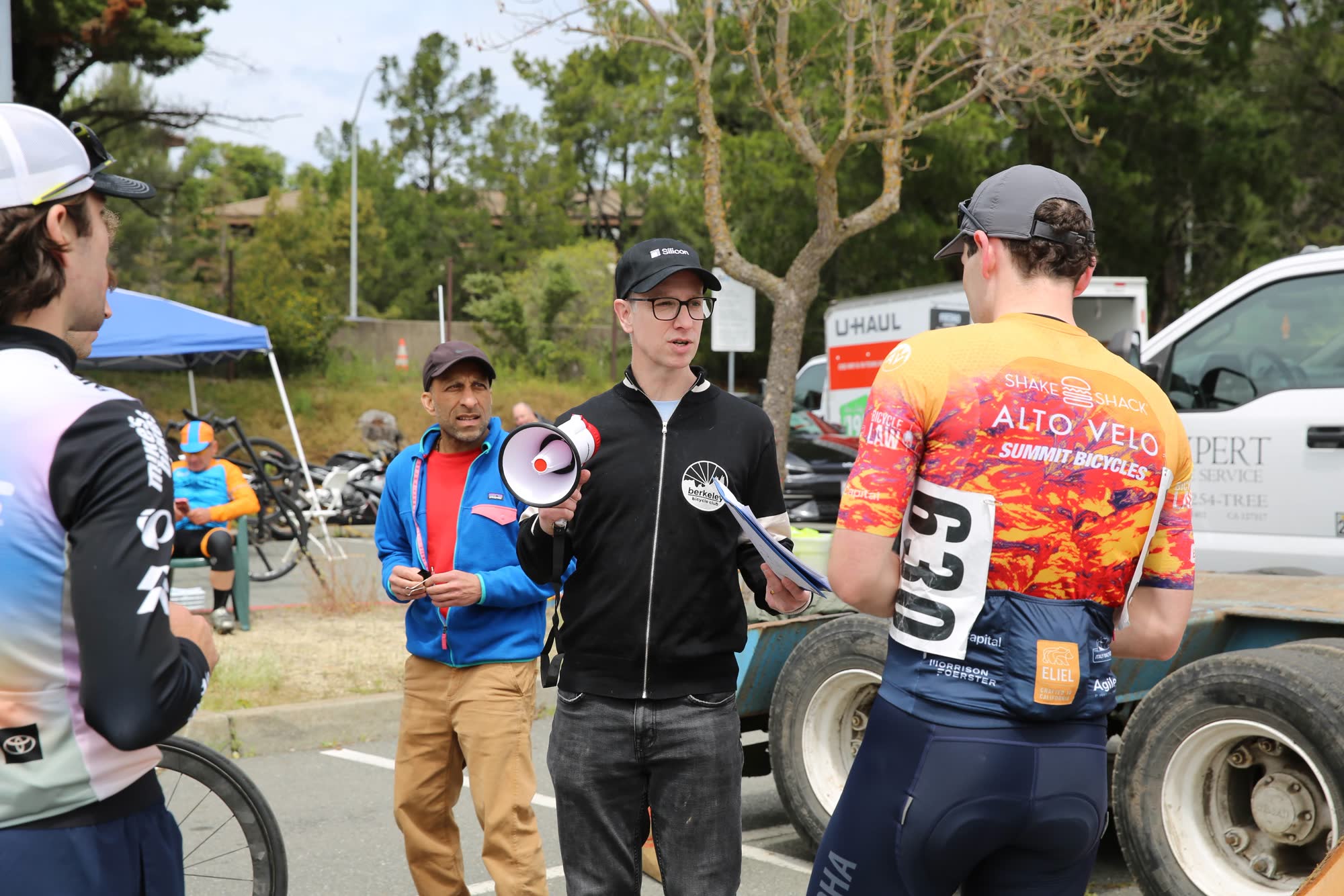
Then take a breath. Everyone on the line is nervous about something.
During the race
Every race unfolds differently, and a Novice field races nothing like a Pro/1/2 field. These principles hold for both.
Early on: don't spend energy proving you're strong
The first part of the race is for settling in, staying out of the wind and finding your place. The race is usually decided late, on Papa Bear, and riders who go too deep on the early climbs rarely have it when the decisive moment comes.
When the pace goes up: decide, then act
Not every acceleration matters. Before you respond, ask who went, how much race is left, and whether the move has the strength to stay away. Follow the moves that matter and let the others go.
Before important terrain: position first
Get where you need to be before the road tilts up or the descent begins. Moving up at the foot of a climb costs far less than fighting for it halfway up.
When you're hurting: so is everyone else
The moment you feel worst is often the moment the riders around you feel the same. Hold the wheel a little longer. Over the top, the pace usually eases, and the riders who hung on are still in the race.
After a hard section: recover on purpose
As soon as the pace settles, eat, drink, breathe, and get your position back. Riders who use those moments well have more to give the next time the race goes hard.
Late in the race: stop saving
Energy saved for a race that is almost over is energy wasted. When the finale comes, commit to it. The riders who still attack on Papa Bear are the ones who spent wisely earlier.
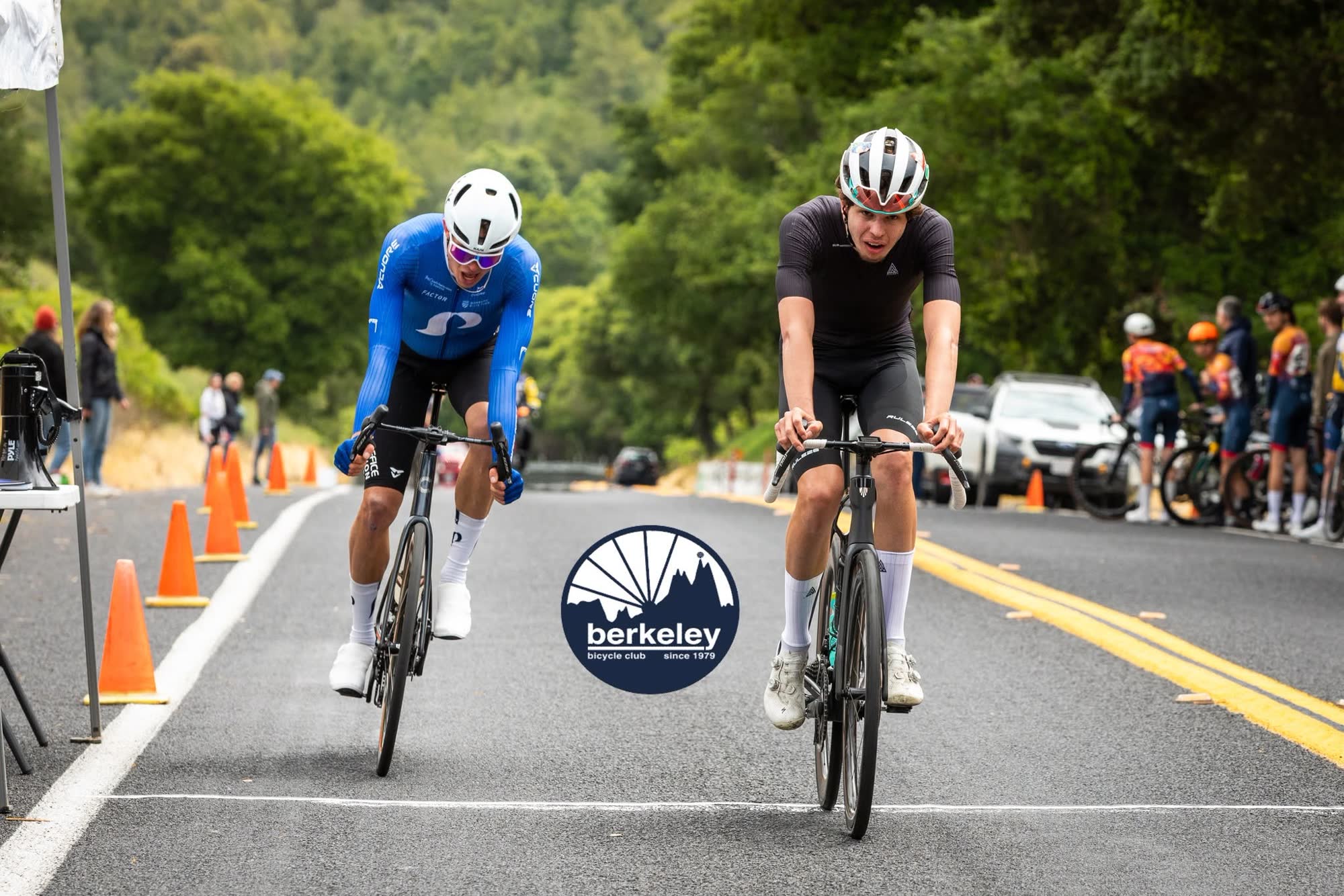
Racing BHRR for the first time?
You don't need to be an elite racer to belong on this start line. The 2026 Omnium had a Novice field (Cat 5) set up for new racers, alongside Elite, Collegiate, Women's and Junior fields, and Berkeley Bicycle Club riders alone finished the 2026 race in fields from Novice to Masters 65+. 2027 categories will be posted with registration.
USA Cycling road races group riders by category, from Cat 5 for new racers up to Cat 1 and pro, with separate fields for women and juniors and, at many events, masters. You start in the lowest category and move up as you gain experience and results.
For a first road race, set simple goals: ride safely and predictably, stay in the draft, eat and drink, and learn how the race moves. Group-riding experience matters more than your numbers, because it is what lets you use your fitness. Results come later.
How to start bike racing in Northern California →
Everyone starts somewhere. Kristen Faulkner was two years into racing when she lined up for the 2019 women's race here. Five years later she won Olympic gold in the road race.
Junior racers
Junior fields race age-appropriate distances, and the same preparation applies at a smaller scale: ride with a group, practice the skills, learn to eat and drink on the bike, and race to learn.
Supporting young racers is part of what this weekend is for. The Berkeley Bicycle Club's junior program, led by Todd Edminster, brings riders from club rides to racing, and part of every Omnium entry fee goes to six East Bay NICA high school mountain bike teams: $21,000 in 2025 and $28,610 in 2026.
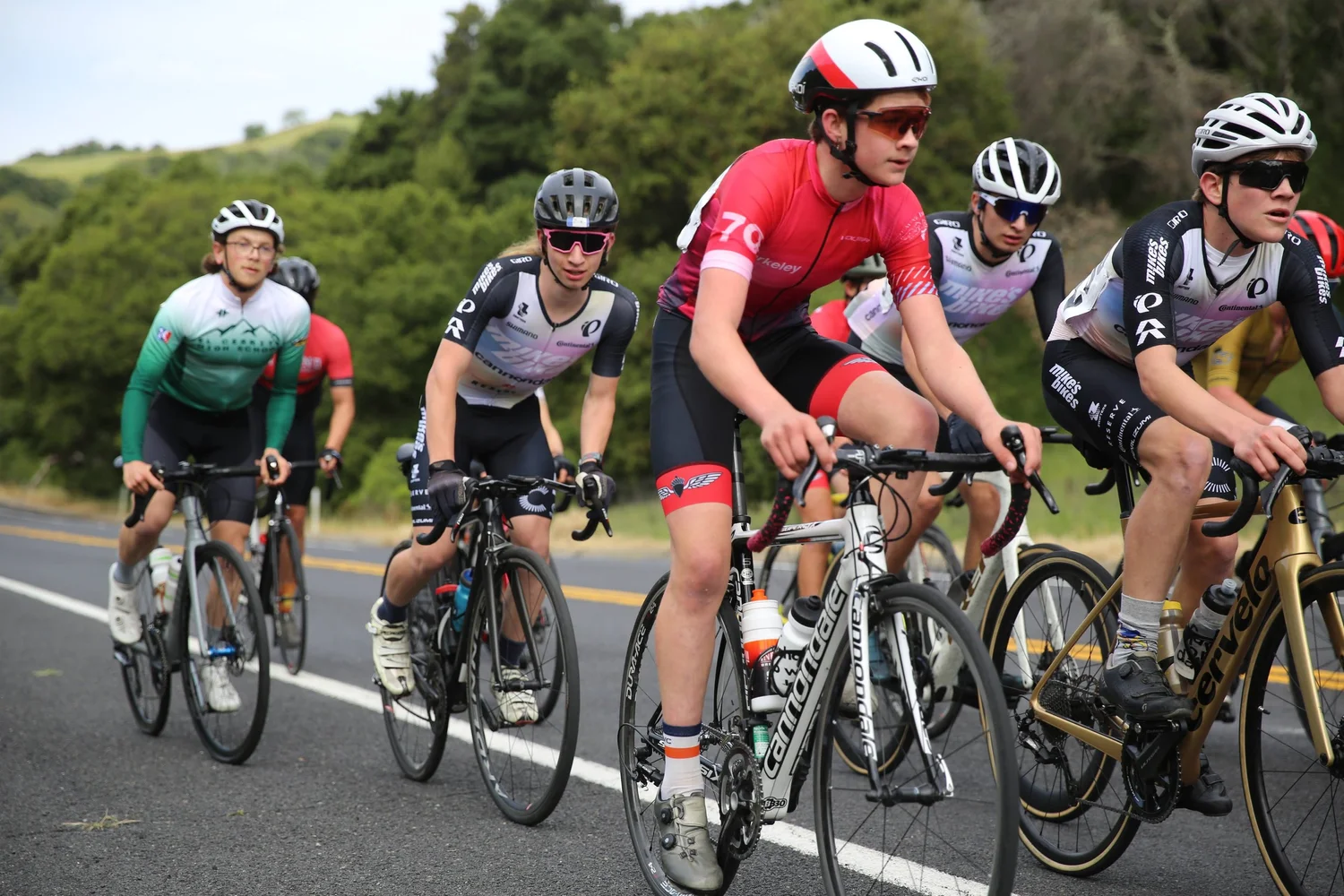
Make it a weekend: the Berkeley Omnium
Come for the road race, and stay for Day 2. The Berkeley Streets Criterium is everything the Three Bears isn't: short, fast laps on a closed course along Hearst Avenue, McGee Avenue and Berkeley Way beside Ohlone Park, with tight corners, a field that stays together, and a finish that often comes down to a sprint.
The Berkeley Streets Criterium →
The road race rewards endurance, climbing, positioning before the climbs and patience across a long day. The criterium rewards speed, cornering, positioning before every turn and repeated accelerations. Race both and your results combine into the overall Omnium standings, which reward the rider who can handle both, on legs that remember the day before.
Road race vs. criterium: how the two days differ →
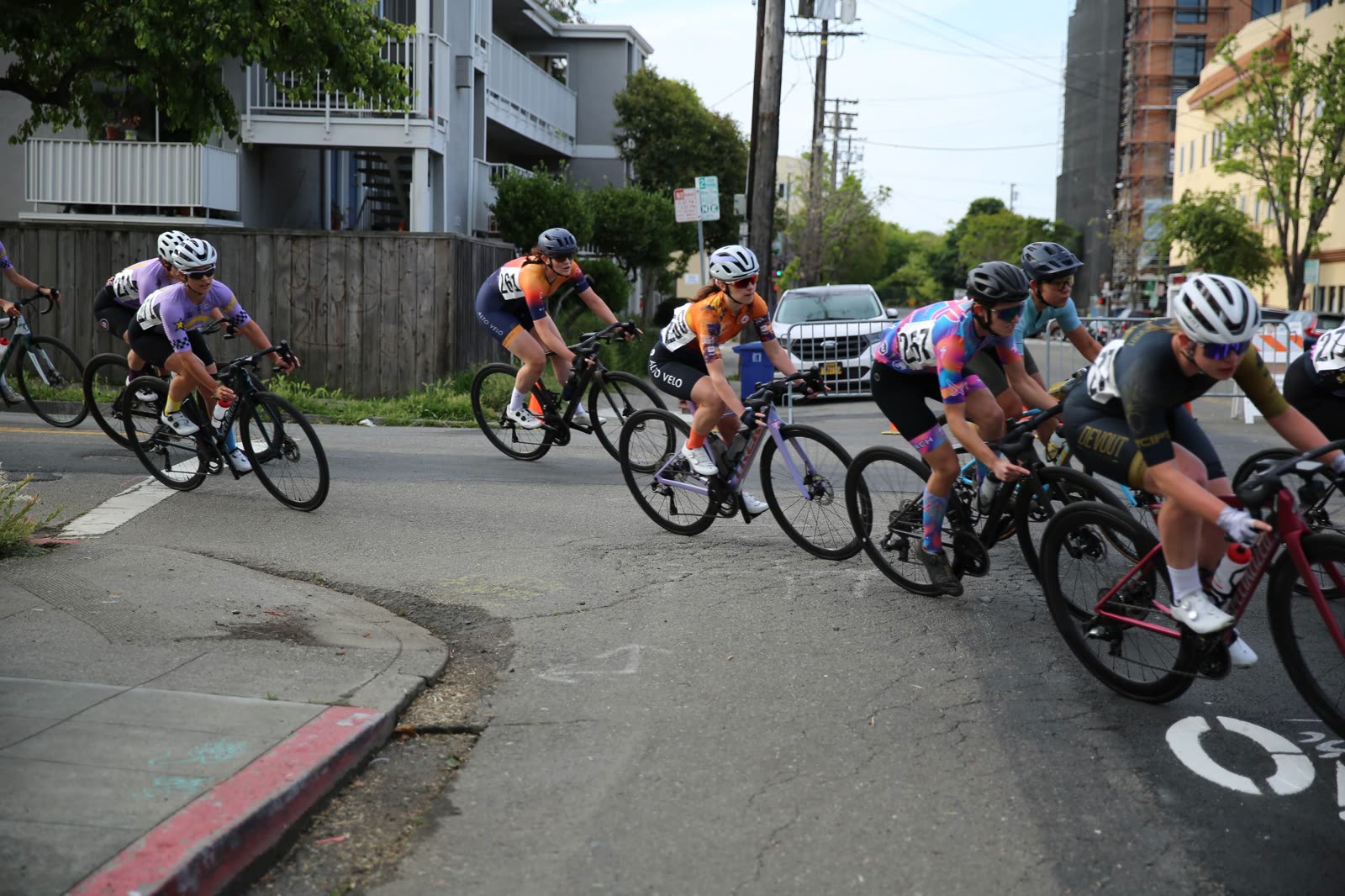
More than a race entry
Local races only happen when a club decides to put one on. The Berkeley Bicycle Club has organized the Berkeley Hills Road Race since it formed in 1979, and the Omnium runs on volunteers: course marshals, registration, results and timing, follow cars and motos, setup and teardown. "Berkeley Omnium doesn't happen without volunteers. Full stop." That is how the club put it after 2026.
Many of the clubs you race against send volunteer crews too, and your entry helps fund the next generation of East Bay riders. You aren't just entering a race. You're joining a racing community that has kept this one going for generations.
See you on the start line
You can't control how the Berkeley Hills Road Race unfolds: who attacks, when the field splits, what the weather does. You can control whether you arrive prepared.
- Train the engine.
- Practice the skills.
- Know the course.
- Prepare the bike.
- Fuel the work.
- Save your matches for when they matter.
Then come race Berkeley. Arrive prepared, race smart, and we'll see you on the Three Bears.
Questions
How to prepare for the Berkeley Hills Road Race: FAQ
How hard is the Berkeley Hills Road Race?
It's a demanding hilly road race. Each 18.76 miles lap climbs 759 feet over the Three Bears on Bear Creek Road near Orinda, with fast technical descents between the climbs, and the race is typically decided on Papa Bear. How hard it feels depends on your field and its distance, but expect repeated climbing efforts on tired legs.
The course →Can a newer racer race the Berkeley Hills Road Race?
Yes. The 2026 Berkeley Omnium had a Novice field (Cat 5) for new racers, plus Junior, Collegiate, Women's and Elite fields. Group-riding experience matters more than results. 2027 categories will be posted with registration.
How early should I arrive for a bike race?
Early enough to park, check in, pin your numbers, use the restroom, warm up and reach staging without rushing. For a first road race, plan on well over an hour before your start.
What should I bring to a road race?
Your license and registration details, a checked bike, helmet, shoes, kit and layers for the weather, safety pins, filled bottles, race food you've tested, a pump and basic tools, and something warm to eat, drink and wear after the finish.
What should I eat during a road race?
Carbohydrates you've already tested in training, starting early and in small, regular amounts, with fluids matched to the weather. Eat when the race is calm, not on climbs or technical descents.
How should I prepare the week before a road race?
Reduce your training volume, keep a few short efforts so your legs stay sharp, sleep and eat normally, check the bike early in the week, and confirm your registration, start time and travel. You can't gain fitness in race week, but you can arrive fresh.