Guide · First Race
How to start bike racing in Northern California
From "I'm interested, but I don't know where to start" to your first start line: skills, categories, licenses, race day, and where the Berkeley Omnium fits.
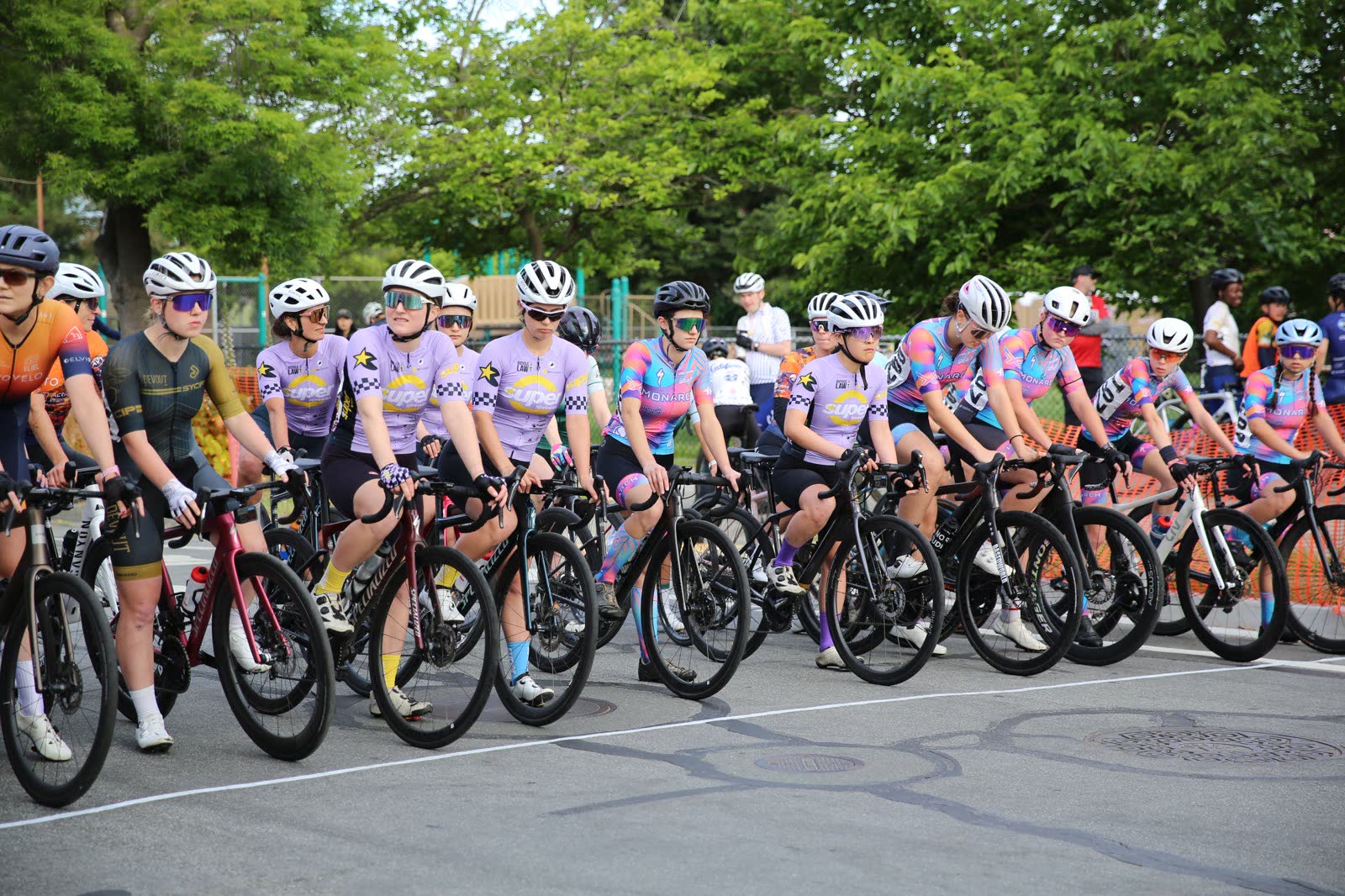
Every rider on a Northern California start line was once where you are now: curious, a little nervous, and not sure what the first step is. Plenty of them didn't start because they were suddenly fast. They started because someone on a group ride said, you should try a race.
Bike racing here is a community sport. Clubs put the races on, volunteers marshal the corners, and the person pinning a number next to you at registration was probably a beginner a few seasons ago. This guide is the conversation an experienced racer would have with you before your first race: what to practice, which field to enter, what race day looks like, and what to expect when it gets hard.
The short answer
To start bike racing in Northern California, first get comfortable riding predictably in a group, then learn basic race skills such as holding a wheel, cornering and braking smoothly on club rides or a beginner program. Choose a USA Cycling sanctioned race with a Novice field, the category for new racers, get a one-day or annual USA Cycling license, register (usually on BikeReg), and arrive early on race day. The Berkeley Omnium, a spring race weekend in Berkeley, pairs a road race with a criterium and has offered Novice, women's, junior and collegiate fields.
How do you actually start racing?
You start by riding with other people, not by entering a race. Racing is group riding at high speed, so the skills come first and the start line comes second. Here is the usual sequence:
- Ride with groups. Join club rides that match your pace and get comfortable riding close to others.
- Learn race skills: holding a wheel, cornering, braking smoothly and riding a straight line, ideally in a skills session or with a mentor.
- Choose an event and a field. Look for a USA Cycling sanctioned race with a field for new racers, usually called Novice.
- Check your license. Sanctioned races require a USA Cycling license: a one-day license to try it, or an annual license if you'll race often.
- Register, usually on BikeReg, and read the race information: start time, location, distance or duration, and rules.
- Prepare: ride the distance, practice the skills, rehearse your fueling, and rest before the race.
How long that takes depends on where you're starting. A rider who already does fast club rides might be ready for a Novice field within weeks. Someone newer to group riding should give it a season of regular rides first. Neither is a better path; the point is to arrive safe and able to learn.
Fitness isn't the same as race-ready
Being fit gets you through the race. Being predictable keeps you and everyone around you upright. In a race, riders are inches apart at speed, and a sudden swerve or a grab of the brakes can take down the riders behind you. That is why experience in groups matters more than your numbers when you're starting out.
- Ride predictably: hold your line, look before you move, and avoid sudden braking or swerving.
- Hold a wheel: ride close behind another rider without overlapping their back wheel.
- Brake smoothly and early, especially before corners, so the riders behind you aren't surprised.
- Corner with confidence: pick a line, keep it, and don't dive inside another rider.
- Stay relaxed in contact: bumping elbows or shoulders happens; stiff arms turn a nudge into a crash.
- Eat and drink with one hand while holding your line.
Practice on group rides, and look for skills sessions built for new racers. In Northern California, the Early Birds program, run by Velo Promo with the NCNCA, has offered winter sessions where mentors work with riders of all levels, including those new to racing; Berkeley Bicycle Club members volunteer as mentors there and at Late Bird sessions.
Road race or criterium: which should you try first?
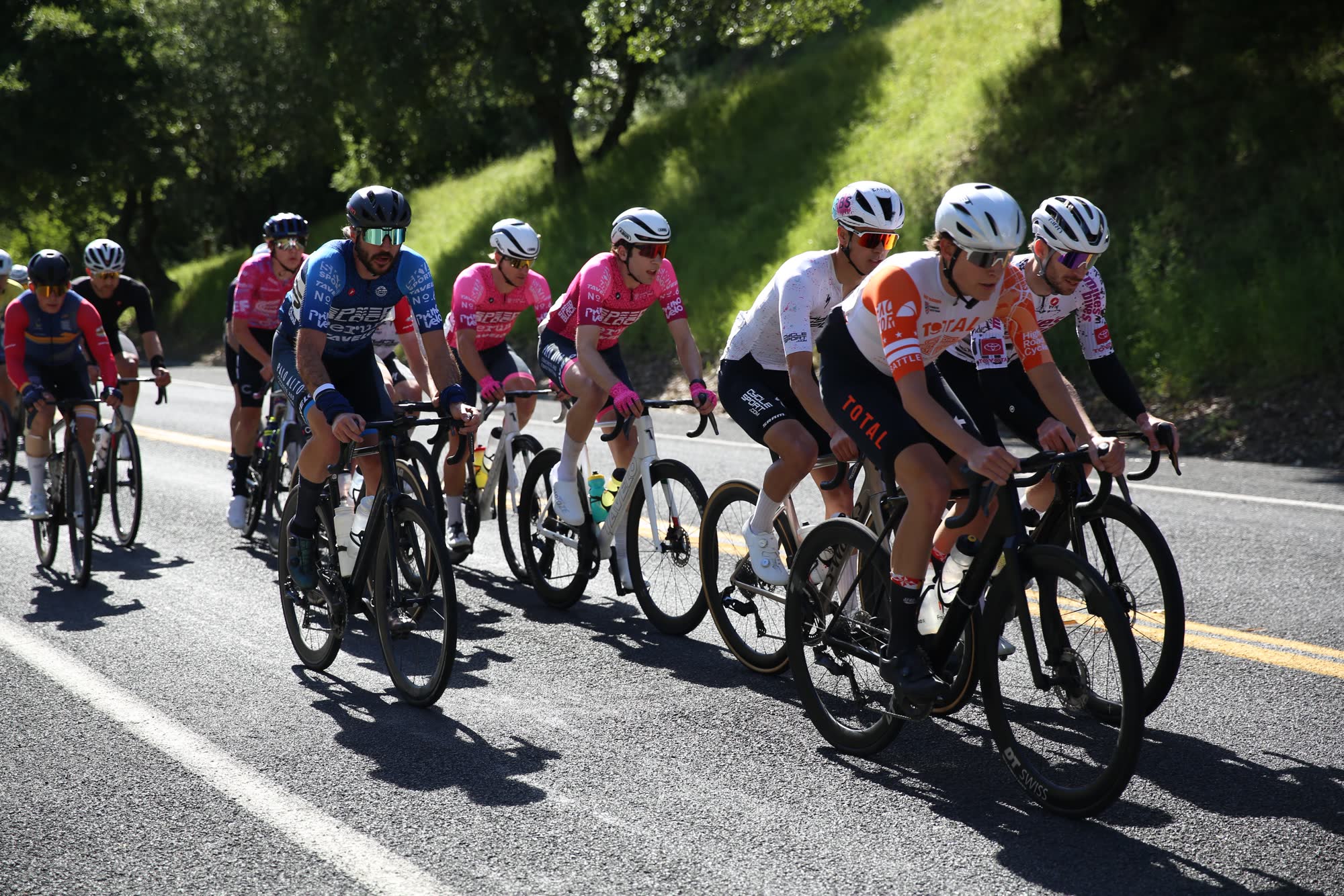
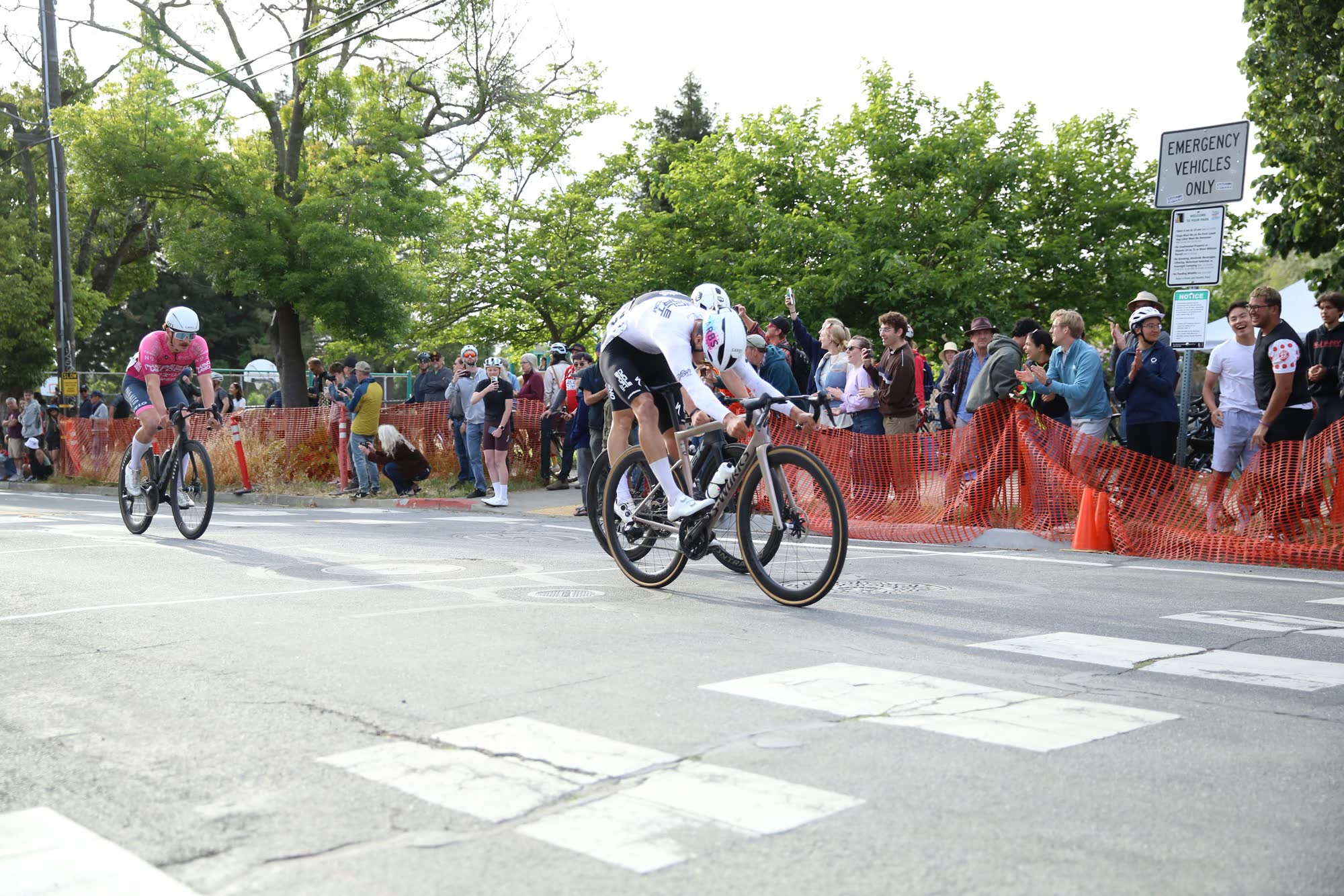
Neither is universally easier. A road race is a long mass-start race on open, often hilly roads where the field breaks apart over time. A criterium, or crit, is a shorter race of many laps around a closed course of city streets, where the group stays together and corners come every lap. The Berkeley Omnium puts one of each on back-to-back days, so it makes a good real-world comparison.
| Berkeley Hills Road Race | Berkeley Streets Criterium | |
|---|---|---|
| Terrain | A loop over the Three Bears on Bear Creek Road near Orinda: 18.76 miles per lap with 759 feet of climbing | A four-corner course beside Ohlone Park in Berkeley: 0.61 miles and 34 feet of elevation gain per lap |
| Novice field (a past edition) | 33 miles | 30 minutes |
| Roads | Raced on open roads, not closed to traffic | Closed course |
| What it asks | Climbing, steady effort, descending, recovering between climbs | Cornering, braking, positioning and repeated accelerations out of corners |
| If you have a problem | No wheel support has been allowed on the course | A free lap for recognized mishaps has applied; bring spare wheels to the pit |
A road race might suit you if you climb reasonably well, are comfortable riding steadily for a long time, and are still building confidence in tight packs. A crit might suit you if your cornering and pack skills are solid and you'd rather race hard for half an hour than ride a long day. Many racers try both and learn something different from each. Distances and rules can change from year to year, so check the current race information.
Road race vs. criterium, in depth →
Which category should a beginner enter?
Most new racers start in the Novice category, USA Cycling's entry category for men and women on the road (also listed as Category 5). Experienced riders race in Categories 4, 3, 2 and 1, and you move up under USA Cycling's upgrade policy, which you can follow with the Upgrade Tracker in your USA Cycling account.
USA Cycling category upgrades (Policy VIII) →
Fields vary from race to race and year to year, and not every event offers a Novice field. The official event listing is where to check: the category names, who is eligible, the distance or duration, and the start time. Some fields combine several categories, such as "4/Novice."
Cycling categories explained →
Women's fields
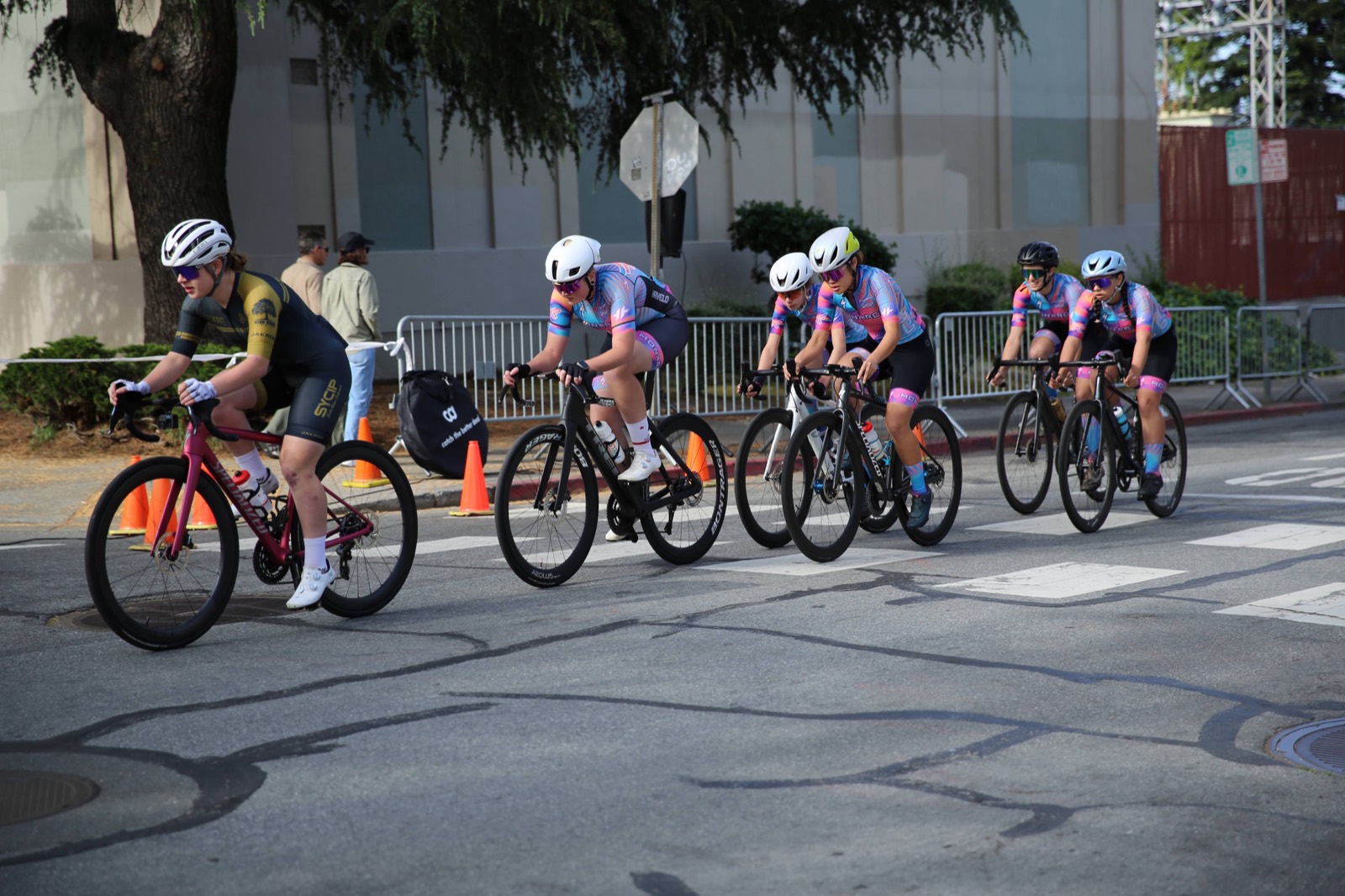
Women's races are often combined or categorized differently from men's. At the Berkeley Omnium, the criterium has had a Women's 4/Novice field, and the Berkeley Hills Road Race has run a women's short and long race: racers of any category choose the short or long course, race together as one field, and are placed both within their category and overall. The Omnium has also offered a registration discount to women racing it for the first time.
Juniors
USA Cycling juniors are riders with a racing age of 9 to 18, where racing age is the year of the event minus the rider's birth year. There are no junior gear restrictions in road races, but riders 14 and under must use standard mass-start bikes. At the Berkeley Omnium, juniors have had their own fields at both races, and riders under 18 have needed a parent or guardian present to sign the waiver.
College students and masters
College racers can race collegiate fields, which at Berkeley have raced with the matching open fields and been scored separately. Masters fields are grouped by age, and some include Novice riders: the Berkeley Hills Road Race has had 60+ and 65+ masters fields open to riders from Category 1 through Novice.
Do you need a license?
Yes, for USA Cycling sanctioned races. A one-day license covers a single day of racing and is meant for trying it out: USA Cycling's rulebook limits the regular one-day license to the lowest category, Novice, while former members can buy an experienced one-day license online to race higher categories. One-day licenses can't be used at championship events. If you'll race more than a few times, an annual license is usually the better choice.
USA Cycling: first-time racer →
At the Berkeley Omnium, our registration guide covers which one-day license fits you, what it costs, and how to buy it, along with day-of registration and junior waivers.
Do you need an expensive race bike?
No. You need a road bike that works properly and fits you. Racing rewards a reliable bike far more than an expensive one, and plenty of riders race their first season on the bike they already own.
What you actually need
- A mechanically sound road bike: brakes that work, tires in good condition, shifting that doesn't skip, and handlebar ends that are plugged.
- No aero bars or forearm rests: USA Cycling doesn't allow them in mass-start races such as road races and crits.
- A helmet that meets USA Cycling's standards, worn securely fastened whenever you're riding at the event, from registration to the end of the prizes.
- A cycling jersey and shorts. Jerseys are required in USA Cycling races.
- Bottles, cages, and food you've tested on long rides.
- Clothing for the forecast, including layers for the start.
Nice to have, not necessary
- A spare pair of wheels for crits that offer a free lap, so you can get back in after a puncture.
- A power meter or heart-rate monitor for training.
- Lighter or more aerodynamic wheels.
If the bike is new to you, ride it for weeks before race day. A race is the wrong place to discover that a new saddle or new shoes don't agree with you.
How fit do you need to be?
Fit enough to ride the race distance at a solid pace, and to go hard more than once without falling apart. There is no magic number. Racing is uneven: long stretches of riding in the group's draft, broken up by hard efforts when the road climbs, the pace jumps or a corner strings everyone out.
- Endurance: comfortably ride longer than your race. At Berkeley, the Novice road race has been 33 miles and the Novice crit 30 minutes.
- Repeated hard efforts: practice going hard for a minute or two, recovering while still riding, and going again.
- Climbing, for hilly road races like the Berkeley Hills Road Race, where every lap climbs the Three Bears.
- Recovery: the ability to bring your breathing down quickly in the group is what lets you respond to the next surge.
Even well-prepared riders get dropped in their first races. Fields can be fast, and race fitness only comes from racing. If it happens, you haven't failed, you've learned where the race is hard.
How should you prepare?
Build toward race day with a mix of riding, skills and rest. How long this takes depends on your fitness and your group-riding experience.
- Group rides: regular rides with people at or a little above your level teach pace changes and pack skills at the same time.
- Skills practice: corners, braking and riding close to others, in a safe place or a structured session.
- Course study: look at the route, the climbs and the corners. Both Berkeley courses have Strava routes on their race pages.
- Fueling practice: eat and drink on long rides the way you plan to in the race.
- Rest: arrive fresh. The week before a race is for shorter rides and good sleep, not for catching up on training.
Racing the Berkeley Hills Road Race? Our preparation guide goes deeper on training for the climbs, positioning, pacing and race morning.
What happens on race day?
Race day follows the same rhythm almost everywhere: check in, pin your number, warm up, line up, listen, race. Arrive early enough that none of it is rushed.
Your first bike race, step by step →
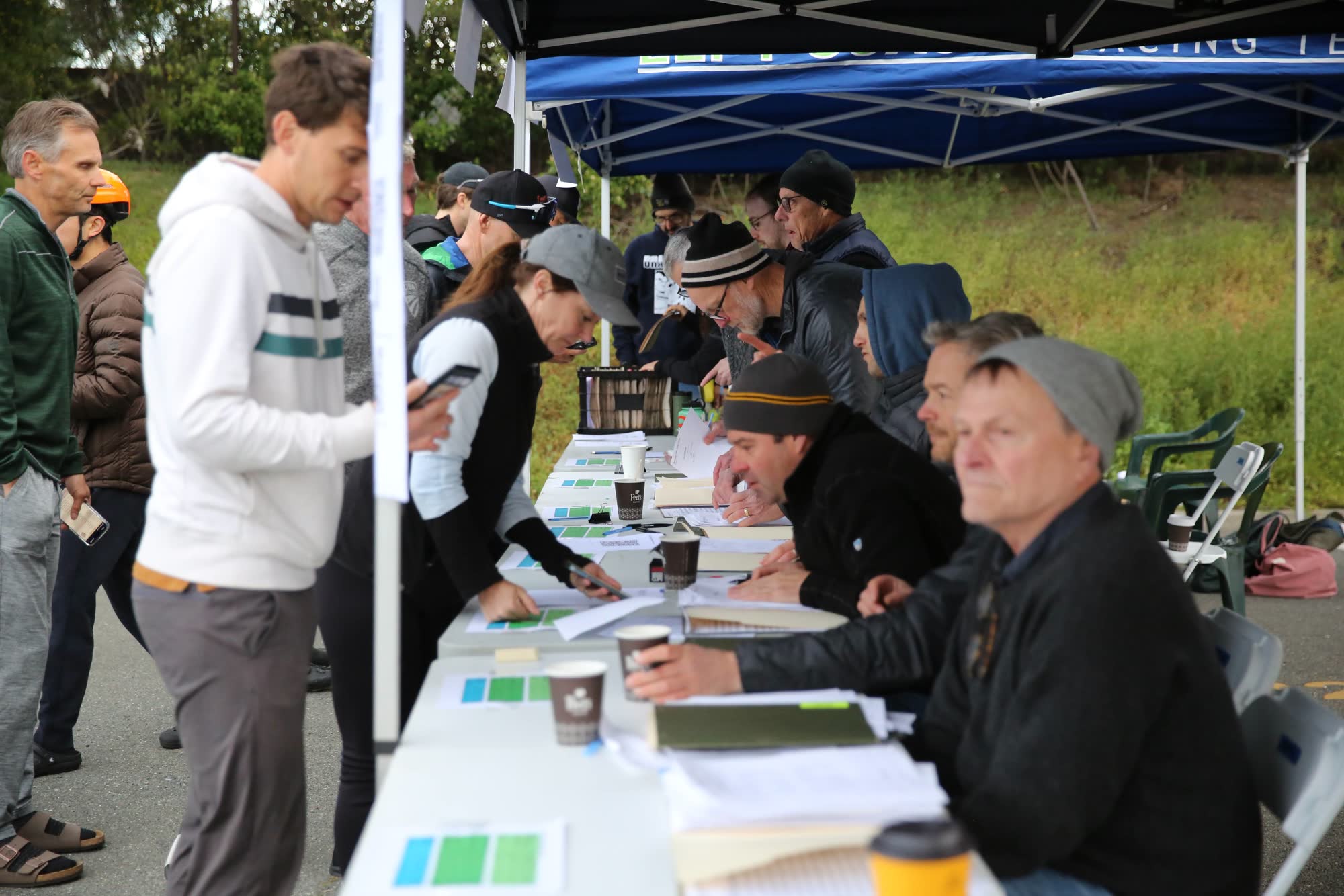
- Check in at registration with your license or one-day license receipt, sign any waivers, and collect your number.
- Pin your number exactly where the officials or race information tell you to. USA Cycling rules leave placement to the race director and officials.
- Check the bike: tire pressure, brakes, bottles.
- Warm up where the race allows it. At the Berkeley Hills Road Race, warming up on the course has not been allowed.
- Get to staging early and listen to the officials' instructions. They cover the course, any neutral start, and anything unusual about the day.
- Race predictably: hold your line, call out hazards, and give other riders room.
If you're dropped or can't finish
It happens to almost everyone. Keep riding safely and finish if you can; you'll learn more from the last laps than from the car ride home. On open roads, such as the Berkeley Hills Road Race course, which has not been closed to traffic, obey traffic and watch for cars. In a crit, officials may pull riders who fall too far behind or get lapped; that's normal. If you stop, tell an official or the registration table so nobody goes looking for you.
Race-day checklist
- Your license, or your one-day license receipt.
- Helmet, shoes, kit and layers for the weather.
- Safety pins for your number.
- Bottles filled, plus food for before, during and after.
- Floor pump and basic tools; spare wheels for a crit with a free lap.
- Start time, staging time and directions, checked the night before.
- Something warm to wear and something to eat after the finish.
What tactics matter in your first race?
In your first race, the goal is to learn safely, not to win. The tactics that matter most are about conserving energy and staying out of trouble.
- Sit in: ride in the group's draft and let others take the wind.
- Find a safe position: away from the very back, where gaps open and the accordion effect is worst, without fighting for the front.
- Don't chase every surge. Plenty of attacks come back on their own.
- Watch and learn: notice where the race speeds up, who moves up before the climbs or corners, and how the group behaves.
- Eat and drink early, before you need it.
Getting dropped is common and does not mean you don't belong. Most racers can tell you about the race where they got dropped, and what they changed afterward.
Find your people in Northern California
No team is required to race, but a club makes it easier: people to ride with, someone to ask about categories, and teammates at the start line. Not every club ride is beginner-friendly or race training, so ask about the pace and whether the ride regroups or drops riders before you show up.
- Berkeley Bicycle Club: the club that organizes the Berkeley Omnium. Its no-drop WTFN Sunday Social Ride welcomes riders returning to cycling or building endurance, at a conversational pace.
- Junior riders: the club's junior program runs road rides and is led by Todd Edminster, and NCNCA lists other Northern California clubs with junior programs.
- College riders: Cal Cycling, UC Berkeley's collegiate racing team and bicycle club, has co-hosted the Omnium and supports new cyclists.
- NCNCA, the Northern California Nevada Cycling Association, keeps the regional race calendar and a directory of member clubs.
Start with the club's social ride if group riding is new to you.
Berkeley Bicycle Club Sunday Social Ride →
Looking for a club near you? NCNCA's directory lists its member clubs across Northern California and Nevada.
Teams and clubs from across the region race Berkeley every spring. Our teams page shows who they are and where they come from.
Teams of the Berkeley Omnium →
For juniors and parents, NCNCA keeps a page of clubs with junior programs and the NCNCA Junior Series; the Berkeley Hills Road Race has been part of the series.
When you're ready to pick a race, the NCNCA calendar lists sanctioned events across the region.
Our Northern California racing calendar collects the upcoming dates we've verified with organizers, featuring the Berkeley Omnium, with advice on planning a season.
Northern California bike racing calendar →
Where the Berkeley Omnium fits
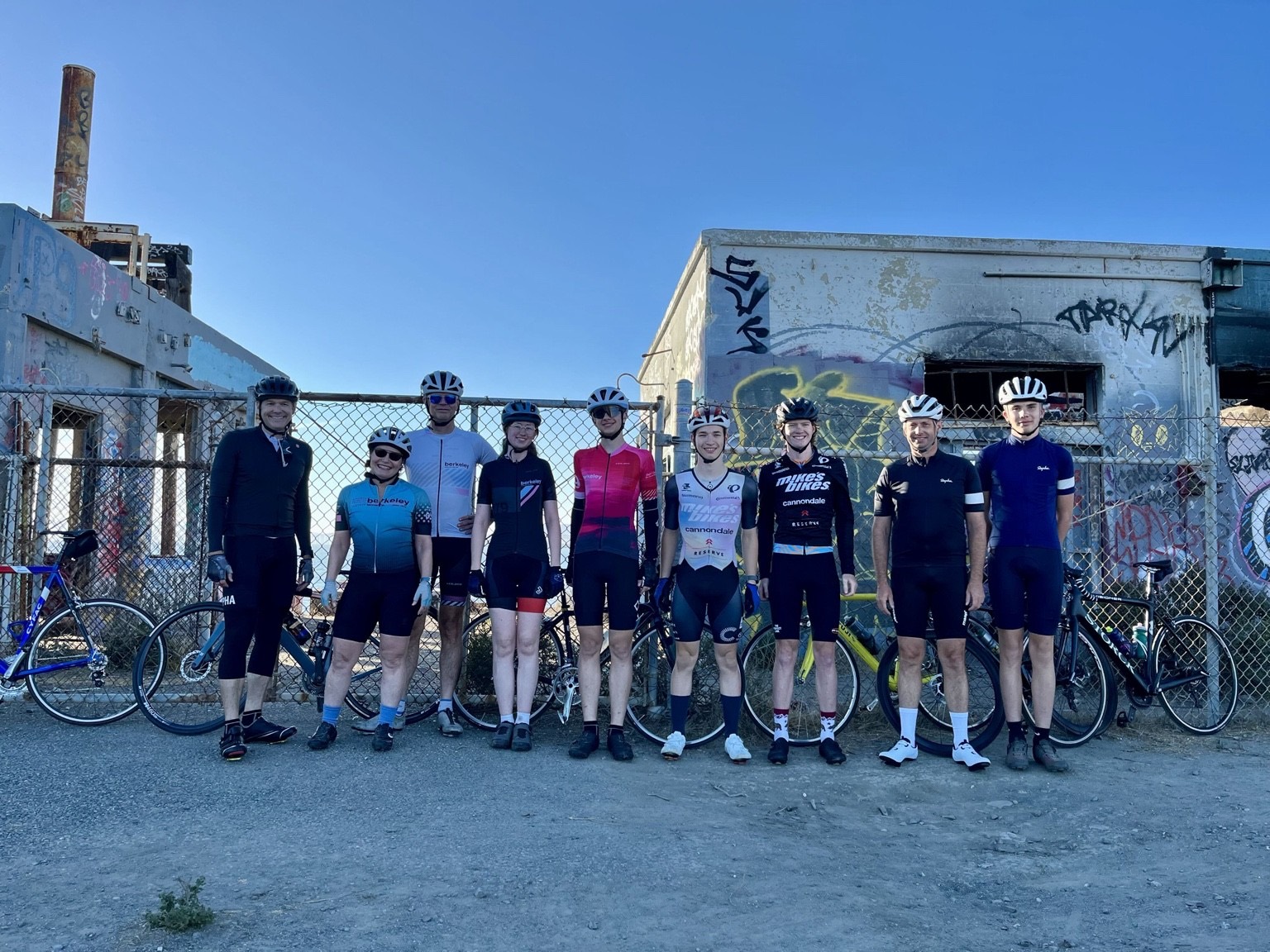
The Berkeley Omnium is a two-day spring race weekend organized by the Berkeley Bicycle Club. Day 1 is the Berkeley Hills Road Race, raced since 1957; Day 2 is the Berkeley Streets Criterium in downtown Berkeley.
The Berkeley Hills Road Race →
An omnium combines several races into one overall standing. Under the Berkeley Omnium's published rules, you start both races in your category to be scored in the omnium. Each race awards points by finishing place, from 25 for first down to 1 for 20th, counting every finisher in the race, and your omnium score is the sum of the two. Ties go first to the better single placing, then against the worse placing, then to the better criterium result. Entering both is optional: you can also enter the road race or the criterium on its own.
The Berkeley Streets Criterium →
For new racers, the weekend has also included a Beginner Race Program: a 20-minute skills tune-up on the criterium course on Sunday morning, before racing began, for junior and Novice racers, including collegiate Novice racers, included with registration in those fields. It covered cornering, protecting your front wheel and riding assertively, and gave riders several laps to pre-ride the course.
Categories, distances, start times, fees and rules are confirmed each year in the race information and on BikeReg when registration opens. Check them before you enter.
Your next step
Find a group ride this week. Practice the skills that keep a pack safe. Pick a field that fits where you are, check the license you need, and come race Berkeley to see what racing feels like, whether you enter one race or both.
Follow the Berkeley Omnium for registration news, and when the categories are posted, pick your field. We'll see you at the start line.
Questions
How to start bike racing in Northern California: FAQ
Do I need a license to enter a bike race?
For USA Cycling sanctioned races, yes. New racers can usually buy a one-day license for entry-level fields, or an annual license if they plan to race more often. Check the event listing for which licenses each field accepts.
USA Cycling: first-time racer →What category should I enter for my first race?
Usually Novice, USA Cycling's entry category for men and women on the road, also listed as Category 5. Some events combine it with Category 4 or offer age-based junior and masters fields, so check the event listing.
Can a beginner race the Berkeley Omnium?
Yes. The Berkeley Omnium has offered Novice, women's 4/Novice, junior and collegiate novice fields, plus a Beginner Race Program before the criterium. Each year's categories are posted when registration opens.
Do I have to race both days of the Berkeley Omnium?
No. You can enter the road race or the criterium on its own. To be scored in the omnium, you start both races in your category, and your points from the two races are added together. Check each year's race information for the current rules.
Do I need to be on a team to race?
No team is required. A club or team helps with skills, advice and company, and many Northern California clubs welcome new racers.
What happens if I get dropped in my first race?
Keep riding safely and finish if you can, obeying traffic on open roads. In criteriums, officials may pull riders who fall far behind. Getting dropped is common in first races and is part of learning.