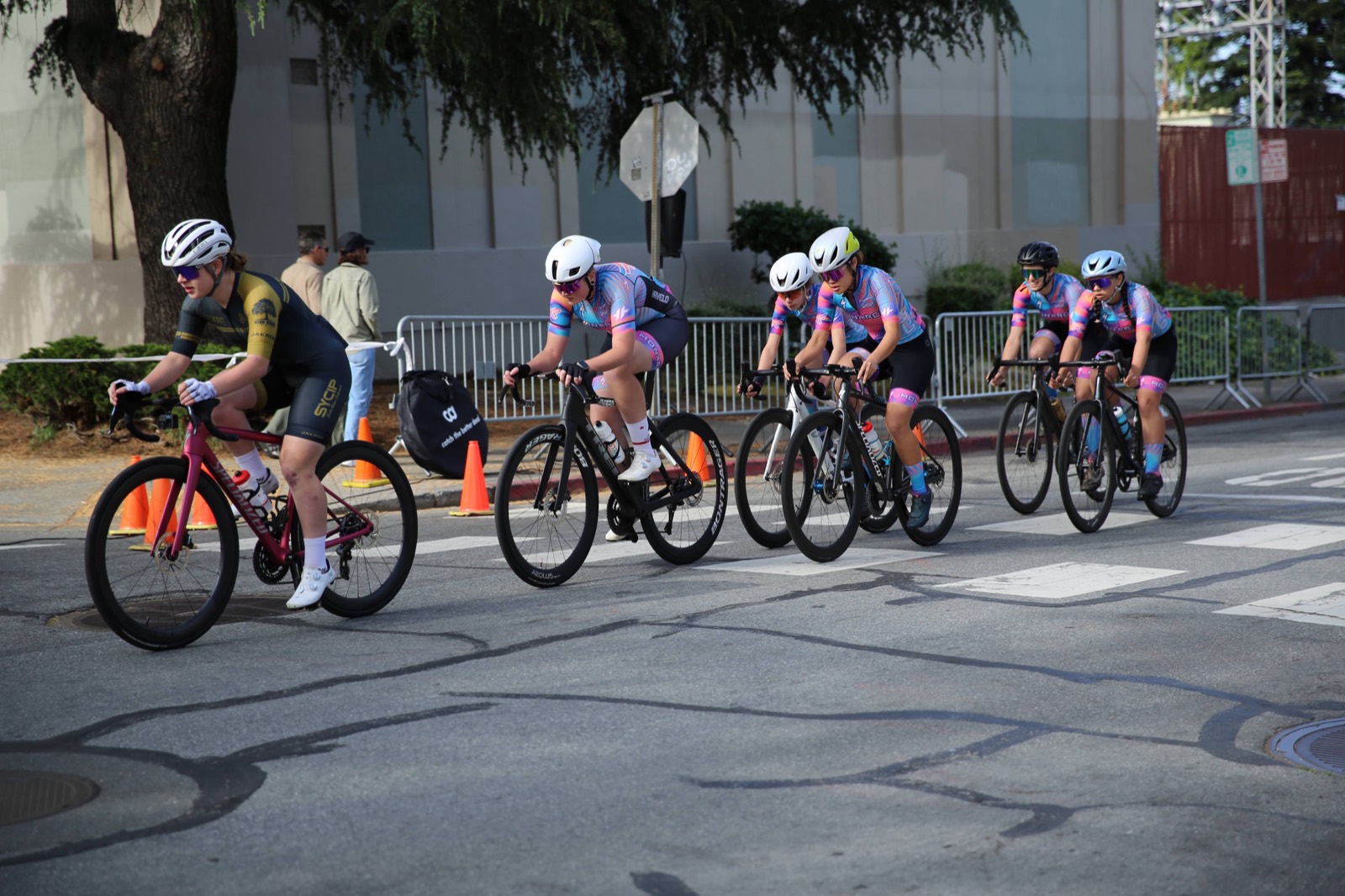
Racer Guide · Beginner Race Program
Berkeley Streets Criterium Beginner Race Program
Your first criterium doesn't have to start with the whistle.
The first corner of your first criterium shouldn't be the first time you've ridden that corner at speed with other racers around you.
That's why Berkeley Streets begins Sunday morning with a Beginner Race Program. Before racing starts, Juniors, Novice and Collegiate Novice racers get about 20 minutes on the actual criterium course to refresh race skills, ride the technical sections, learn the corners, and get their bodies and brains ready to race.
Beginner Race Program at a glance
- When
- Sunday, 7:10 a.m., before racing begins
- Where
- On the Berkeley Streets Criterium course
- How long
- About 20 minutes
- Included with
- Juniors, Novice and Collegiate Novice entries
- Separate sign-up
- None. Registering in an eligible category includes it.
- 7:10 a.m. means
- Ready to ride: checked in, number on, bike ready
The short answer
The Berkeley Streets Criterium Beginner Race Program is a 20-minute race-skills tune-up held on the criterium course at 7:10 a.m. Sunday before racing begins. It's included for racers registered in Juniors, Novice and Collegiate Novice categories, with no separate sign-up, and gives newer racers a chance to practice cornering, protecting their front wheel and assertive group riding while pre-riding the actual course.
What is the Beginner Race Program?
The Beginner Race Program, or BRP, is a short, practical race-skills tune-up on the actual Berkeley Streets course before racing begins. It isn't a classroom lecture: you're on your bike. It refreshes skills such as:
- Cornering.
- Protecting your front wheel.
- Riding predictably around other racers.
- Being assertive about your position.
- Awareness of what's happening around you.
- Riding the course safely in a group.
It's also a chance to pre-ride the technical criterium course several times before racing begins, which is one of its biggest benefits.
Who it's included for
| Category | Beginner Race Program |
|---|---|
| Juniors | Included with your Berkeley Streets entry |
| Novice | Included with your Berkeley Streets entry |
| Collegiate Novice | Included with your Berkeley Streets entry |
Registering in any of these Berkeley Streets categories includes the Beginner Race Program; there's nothing extra to sign up for or pay. The goal isn't to teach everything about criterium racing in 20 minutes. It's to make the first lap of the race feel a lot less unfamiliar.
Collegiate racers race in the same categories as everyone else, from Category 1 to Novice, so a collegiate racer in a Novice field gets the Beginner Race Program too.
First criterium? This is for you.
Being nervous before your first criterium is completely normal. A lot happens at once:
- Riders close together.
- Corners arriving quickly.
- Repeated accelerations out of every turn.
- People moving up around you.
- Officials, lap cards and the bell.
- Attacks, and riders being assertive about position.
The BRP removes one big unknown: the course itself. By race time, you've seen the corners, ridden the course, and thought about where to look and where to be.
Your first bike race: what to expect →
New to racing? Everything else to know before your first crit is in our beginner guide.
Read the first criterium guide →
Bike racing language you'll hear
Prime ("preem"): a prize sprint in the middle of the race. The race keeps going afterward.
Why pre-riding the course matters
A criterium isn't just about watts. A very fit rider can still waste huge amounts of energy entering corners badly, braking when they don't need to, picking poor lines, and sprinting out of every turn from too far back. Knowing the course helps you understand:
- Where each corner begins.
- Where the road narrows or changes.
- Where to look.
- Where the accelerations happen.
- Where position starts to matter.
- How the corners connect.
- Where you can move up safely.
- What the finishing straight feels like.
The goal isn't to memorize every crack in the pavement. It's to remove surprises before the race gets fast.
Cornering isn't about being brave
Good criterium cornering is smooth, predictable, aware and in control. At a high level:
- Look through the corner, toward where you're going.
- Control your speed before the turn, not in it.
- Avoid sudden, unnecessary braking.
- Hold a predictable line.
- Accelerate smoothly as the road opens up.
- Stay aware of the riders around you.
The BRP is where you practice these on the actual Berkeley Streets corners, with instruction. A webpage can't replace that, so listen to the people running it.
What does "protect your front wheel" mean?
Your front wheel is one of the most important things to protect in a bike race. Riders around you move sideways as the field shifts, and a wheel that overlaps theirs can be taken out from under you. Protecting it means:
- Staying aware of the wheels around you.
- Avoiding dangerous overlap with the wheel in front.
- Not staring only at the wheel right in front of you.
- Looking farther up the group.
- Keeping a little space when you need it.
- Riding predictably, without sudden movements.
Be assertive. Not aggressive.
New racers tend to make one of two mistakes: fighting for every wheel as if it's already the last lap, or giving away every position because they're afraid to take space. Neither works well. Race assertiveness means:
- Being predictable.
- Holding a reasonable position.
- Communicating when it helps.
- Making deliberate movements.
- Not panicking when another rider gets close.
- Understanding that everyone is competing for limited space.
You don't need to bully your way through a bike race. But you do need to ride like you belong there.
It's also your warm-up
Skills practice, course preview and warm-up, all in one. The BRP wakes up your legs, lets you ride the course and practice the corners, settles your nerves and gets you comfortable on the bike. Afterward, follow the instructions about when to report to staging for your race.
What the BRP isn't
- A full-day cycling clinic.
- A substitute for basic bike-handling skills.
- A race.
- A chance to attack other riders.
- A place to ride recklessly.
- Twenty minutes of race simulation.
It's a skills tune-up and a course orientation, so everyone starts racing with a little more knowledge and confidence.
What to bring
Bring exactly what you need to race:
- A race-ready bike.
- Your helmet.
- Cycling shoes.
- Race clothing.
- Water.
- Your race number, pinned as instructed.
- Anything else the current USA Cycling and event rules require.
Your bike should already be mechanically ready. This is not the time to discover loose cleats, rubbing brakes, shifting problems, a flat tire or a dead shifting battery. Use the BRP to learn the course, not to debug your bike.
7:10 a.m. means ready to ride
Leave enough time before the BRP to:
- Travel and park, or come by BART.
- Register or check in.
- Sort out your USA Cycling license, if needed.
- Sign the waivers.
- Get your number.
- Get your bike ready.
- Use the restroom and get dressed.
Check the current registration and check-in details before race day.
Junior racers
Junior riders registered in eligible categories get the Beginner Race Program with their race entry. For families: racers under 18 must have a parent or legal guardian present to sign the required waivers.
Junior registration and waivers →
If having a parent or guardian there is a problem, contact the Berkeley Omnium before race day.
Racing collegiate Novice?
The Beginner Race Program is included with your Berkeley Streets entry. Collegiate fields bring together riders with very different backgrounds: experienced cyclists new to racing, former junior racers, mountain bikers trying road racing, riders from NICA high school teams, and people who joined their college team this year. The BRP gives all of them a chance to ride the Berkeley Streets course before the first race-speed lap.
How to start collegiate bike racing in California →
From NICA to collegiate racing
Raced NICA mountain biking in high school and now riding for your college team? Berkeley Streets is part of the path from junior cycling into collegiate and adult road racing.
Collegiate racing at the Omnium →
Families of younger riders can see where that path starts.
Parents and friends
Parents and friends can watch the BRP from safe spectator areas outside the course:
- Stay outside the active course.
- Follow the course marshals.
- Keep children and pets away from the racing surface.
- Don't step onto the course for photos.
Where to stand, the portable toilets and parking are in the spectator guide.
After the BRP
You've ridden the corners. You've seen the course. You've refreshed the skills. Now get ready to race.
The first race lap will still feel different: the field is faster, position matters more, and the adrenaline is higher. Don't abandon everything you just practiced because the whistle blew. Smooth first. Fast follows.
- Thinking about racing?Start with what to expect at a first race.
- Your first bike race guide
- RegisterIn a Juniors, Novice and Collegiate Novice field.
- Beginner Race Program included
- Beginner Race ProgramSunday, 7:10 a.m., on the course.
- Then your race
- Race Berkeley StreetsThen keep racing.
Questions
Berkeley Streets Criterium Beginner Race Program: FAQ
What is the Berkeley Streets Beginner Race Program?
A 20-minute pre-race skills tune-up on the actual Berkeley Streets Criterium course, held before racing begins.
What time is the Beginner Race Program?
7:10 a.m. Sunday, before racing begins. Be checked in and ready to ride by then.
Who can take part in the Berkeley Streets Beginner Race Program?
Racers registered in Juniors, Novice and Collegiate Novice categories at the Berkeley Streets Criterium.
Does the Beginner Race Program cost extra?
No. It's included with registration in an eligible category.
Do I need to register separately for the Beginner Race Program?
No. Registering in an eligible category includes it.
What skills does the Beginner Race Program cover?
Cornering, protecting your front wheel, assertive and predictable group riding, awareness, and getting to know the course.
Is the Beginner Race Program good for first-time criterium racers?
Yes. It takes away one of the biggest unknowns, the course itself, and lets you practice the corners and warm up before your first race lap.
Can I pre-ride the Berkeley Streets Criterium course?
Racers in eligible categories ride the actual course several times during the Beginner Race Program, before racing begins.