
Guide · Collegiate Racing
What is the Western Collegiate Cycling Conference (WCCC)?
What the conference does, who races in it, how categories and team scoring work, and where Cal Cycling and the Berkeley Omnium fit.
The short answer
The Western Collegiate Cycling Conference (WCCC) is USA Cycling's collegiate conference for schools in California, western Nevada and Hawaii. It organizes the conference race calendar, hosted by member schools, keeps the season's individual and team standings, and publishes category and race guidance for college teams in road, mountain bike, track, cyclocross and gravel. Cal Cycling, UC Berkeley's team, races in it.
What is the WCCC?
WCCC stands for Western Collegiate Cycling Conference. It's one of eleven collegiate conferences under USA Cycling, the national governing body for bike racing, and the home of collegiate racing for California, western Nevada and Hawaii. Students race for their schools in conference events, and the strongest riders and teams can go on to USA Cycling's collegiate national championships.
WCCC at a glance
| Fact | Details |
|---|---|
| Full name | Western Collegiate Cycling Conference (WCCC) |
| Part of | USA Cycling's collegiate program, one of eleven conferences |
| Region | California, western Nevada and Hawaii |
| Disciplines | Road, mountain bike, track, cyclocross and gravel events |
| Who races | Full-time students racing for their school's team with a USA Cycling collegiate license |
| Seasons | Mountain bike in the fall; road from winter into spring, ending with the conference championships |
| Standings | Individual and team omniums, posted on the WCCC website |
| Calendar and results | The WCCC website's schedule and results pages |
| Bay Area example | Cal Cycling, UC Berkeley's mountain and road team |
What does the conference do?
The WCCC runs the competition between schools. It sets the season calendar of race weekends hosted by member schools, scores collegiate results into season standings, publishes guidance on categories, upgrades and how races integrate collegiate fields, and submits standings to USA Cycling for national championship call-ups. A conference director leads it.
- USA Cycling writes the rules, sanctions races, issues licenses, and runs the national championships.
- The WCCC runs the conference: calendar, scoring, standings and conference guidance.
- School teams recruit and organize riders, handle membership, and register riders under the school.
- Host schools and race promoters put on the races, including registration, courses and officials.
The WCCC's documents page has its current tech guides, including the scoring rules used below.
Which schools and regions participate?
The WCCC covers California, western Nevada and Hawaii. USA Cycling's WCCC page lists its member schools with a contact for each, from public universities to private and community colleges. They include:
- University of California, Berkeley (Cal Cycling)
- Stanford University
- UC Davis and UC Santa Cruz
- San José State University and Saint Mary's College of California
- Cal Poly San Luis Obispo and Cal Poly Humboldt
- UCLA, UC San Diego and UC Santa Barbara
- Chico State and Sacramento State
- University of Nevada, Reno
Teams come and go, so use the official list rather than this selection.
Cal Cycling's place in the WCCC
Cal Cycling is the mountain and road bicycle club and racing team of the University of California, Berkeley, and it races in the WCCC. Its race seasons follow the conference: mountain bike in the fall, road in the spring. It also hosts conference races: the WCCC's fall mountain bike schedule includes a UC Berkeley race weekend, and its most recent road schedule listed UC Berkeley's race weekend as the Berkeley Omnium. Cal Cycling asks its members to help volunteer at the events it hosts.
Visit Cal Cycling at UC Berkeley →
For a UC Berkeley student, Cal Cycling is the starting point for everything here: rides, membership and racing. Any registered undergraduate or graduate student can join the club, you don't have to race to be a member, and racing for Cal in the WCCC requires club membership plus the collegiate eligibility rules below.
What kinds of racing does the WCCC offer?
The WCCC's road season is the one most Berkeley Omnium riders know: road races and criteriums, which count toward both individual and team standings, plus individual time trials (individual standings only) and team time trials (team standings only). At conference criteriums, every category also races three sprints for bonus points, called point primes.
- Mountain bike: cross-country and short track (the endurance omnium), downhill, dual slalom and super D (the gravity omnium), and team relays.
- Track: mass-start races, match sprints, time trials and team events.
- Cyclocross: individual races and team relays.
- Gravel: WCCC gravel events with their own standings.
Not every event on a conference schedule counts toward the standings; the WCCC has marked some special events as outside the omnium. Check each listing.
How do collegiate categories work?
In the WCCC, your category follows your USA Cycling license. The conference describes its system as license-based: your group in the standings is set by your current USA Cycling category, and on the road the groups are Pro/1/2, Category 3, Category 4 and Category 5 (Novice), with separate women's and men's or open standings. New racers start in the lowest category.
That's not the only system you'll see. USA Cycling's collegiate policy describes lettered categories, A through E, placed by USA Cycling category and points, and some race listings still use letters. The two systems overlap but don't convert one-to-one, so check each listing.
WCCC categories and upgrades →
You move up through USA Cycling's upgrade system: collegiate results count when the race meets USA Cycling's requirements, results must be from the same discipline, and power tests or training rides don't count. A rider who changes category mid-season carries 25% of their conference points into the new group.
Who can compete?
Under USA Cycling's rulebook, a collegiate racer must be a full-time student in good standing at the school granting their degree, a member in good standing of that school's team, and hold a collegiate license, or a one-day license for the lowest category. You race for the school you attend.
Joining a club isn't the same as being eligible to race: a club may welcome part-time students, staff or alumni on rides while only eligible students race collegiately. Your team's officers and the conference director can help with your situation, and our collegiate guide covers the details.
How does team competition work?
Every WCCC result counts twice: for the rider and for the school. Points come from a single collegiate scoring table, 80 points for a win down to 1 point for 40th, and a rider who doesn't finish scores none.
- Individual omnium: a rider's season total adds up every placing and point prime from conference events.
- Team omnium: for each race and gender, schools are ranked by the combined result of their top four riders in a category, and the school earns points by that rank.
- Team events, like team time trials and relays, count only for the team.
- Conference championships are worth double points.
- If a rider races more than one category in a day, only the highest-category race counts.
- In Categories 4 and 5, points go to the top 20 finishers.
So a school with several riders finishing well across categories can beat a school with one winner. Standings are posted on the WCCC's results page.
What is a collegiate race weekend like?
Schedules and formats vary, but a typical road weekend looks something like this. Riders register on BikeReg under their school's team, in their category. Teams travel together, often sharing cars and lodging. Many weekends pair a road race with a criterium, sometimes with a time trial, and collegiate fields often race alongside open fields.
Between races, teammates cheer the other fields, help each other warm up, and talk through what happened. Results feed the conference standings, and the season builds toward the conference championships. It's competitive, but it's also a team trip with your friends.
How can a new student get involved?
- Find your school's cycling team, through campus recreation or USA Cycling's WCCC member list.
- Check the team's joining information and the collegiate eligibility rules.
- Go to a ride or meeting that suits your experience.
- Learn the race skills: pack riding, cornering, predictable lines.
- Get a USA Cycling collegiate license and confirm your category.
- Use the WCCC calendar to choose an event, and register under your school.
At UC Berkeley, start with Cal Cycling's joining and contact information.
Where does the Berkeley Omnium fit?
The Berkeley Omnium is the Berkeley Hills Road Race and the Berkeley Streets Criterium, raced on one weekend. Its connection to collegiate racing works on three levels, and they're worth keeping apart:
- A WCCC calendar event: the conference's most recent road schedule listed UC Berkeley's race weekend as the Berkeley Omnium.
- Collegiate fields: the most recent Berkeley race information listed collegiate fields alongside the matching open fields, scored separately.
- Open fields: any licensed rider, student or not, can enter an open field that matches their USA Cycling category; those results don't count for the conference.
Cal Cycling riders have also led the criterium: Preston Mui as the Omnium took shape, then Nicolas Goumas and Adrian Chin. The next edition's conference status and collegiate fields haven't been announced yet.
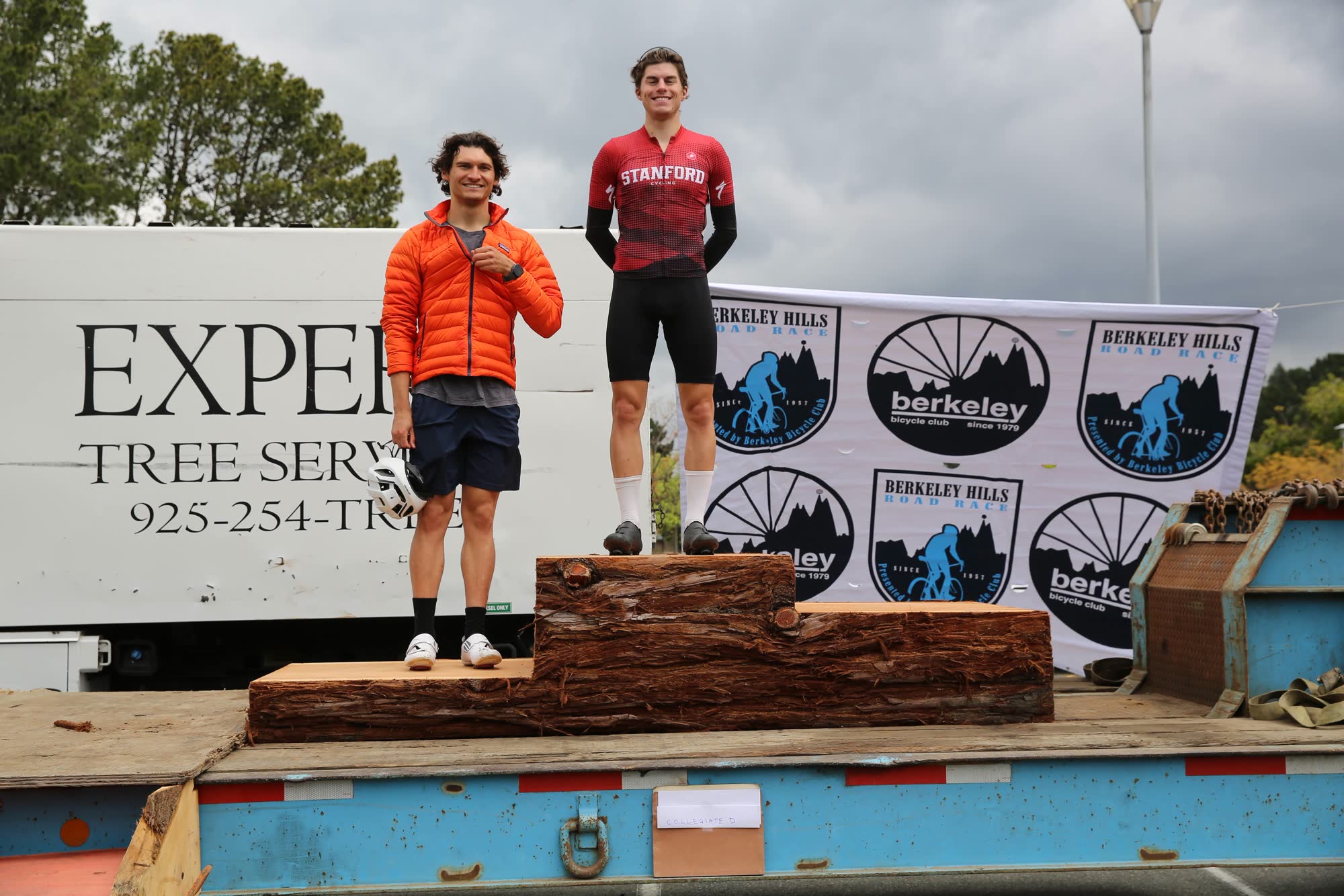
See the courses: the Three Bears climbs of the Berkeley Hills Road Race and the downtown corners of the Berkeley Streets Criterium.
Get involved
UC Berkeley students: explore Cal Cycling, join the mailing list and come to a ride.
Students at other schools: find your team through the conference's member list, or start one.
Racers and fans: check the Berkeley Omnium's current event information.
Questions
What is the Western Collegiate Cycling Conference (WCCC): FAQ
What does WCCC stand for in cycling?
WCCC stands for Western Collegiate Cycling Conference, USA Cycling's collegiate racing conference for schools in California, western Nevada and Hawaii.
What region does the WCCC cover?
California, western Nevada and Hawaii. Member schools range from Cal Poly Humboldt in the north to San Diego State in the south, plus the University of Nevada, Reno.
USA Cycling: WCCC member schools →Who is eligible to race in the WCCC?
Full-time students in good standing at the school granting their degree, who belong to that school's team and hold a USA Cycling collegiate license, or a one-day license for the lowest category.
Can beginners race in the WCCC?
Yes. New racers start in the lowest category, often listed as Novice or Category 5, and the WCCC says most teams welcome riders of all skill levels.
How do WCCC categories work?
The WCCC is license-based: a rider's group follows their current USA Cycling category, which on the road is Pro/1/2, 3, 4 or 5, with separate women's and men's or open standings.
Cycling categories explained →Is Cal Cycling part of the WCCC?
Yes. Cal Cycling, UC Berkeley's mountain and road club and racing team, races in the WCCC and hosts conference races.
Visit Cal Cycling at UC Berkeley →Where is the WCCC race calendar?
On the WCCC's official website, which lists each season's race weekends with registration links.
WCCC race schedule →