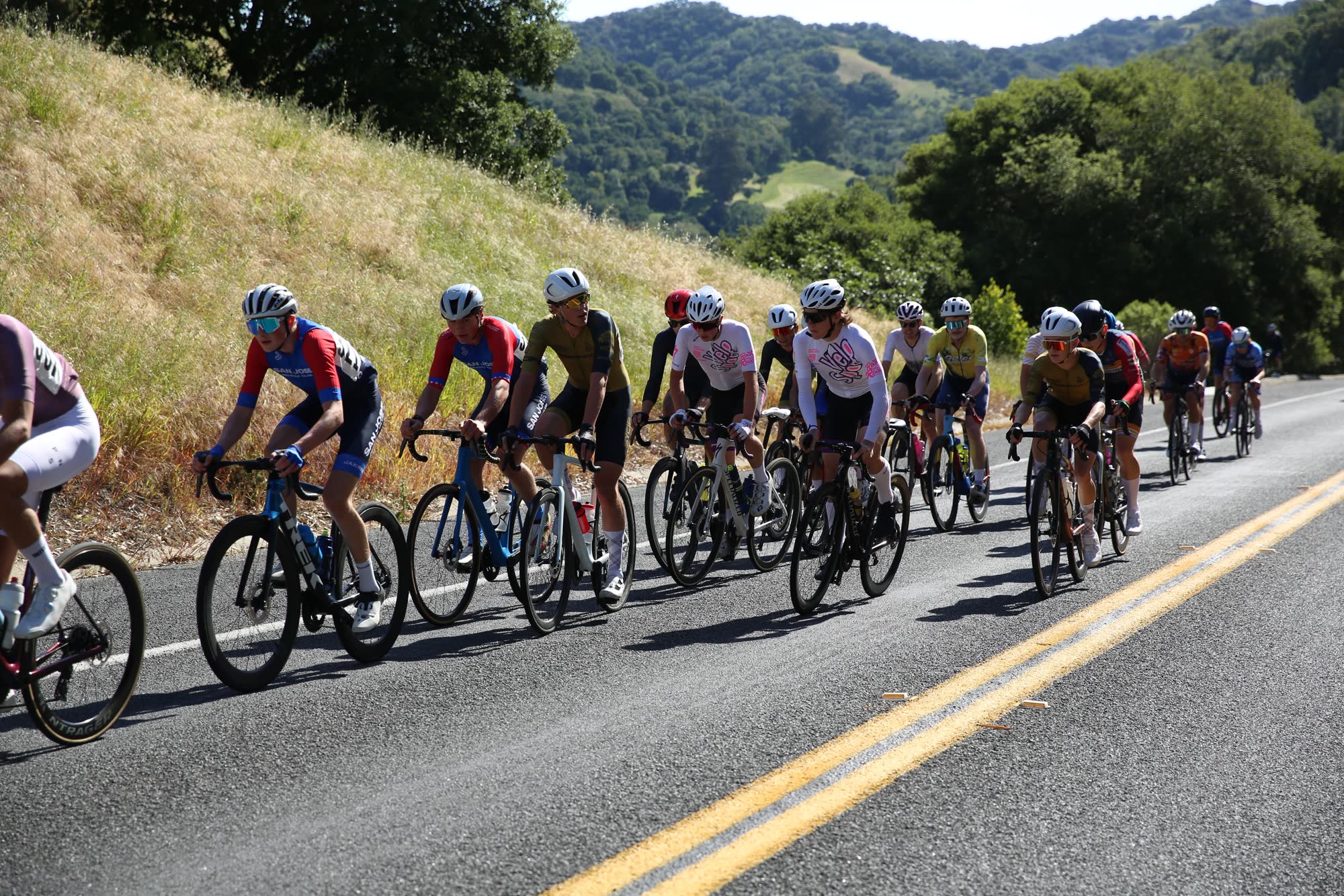
A race older than most of the people running it
Peter Rich promoted the first Berkeley Hills Road Race in 1957. The Berkeley Bicycle Club, formed in January 1979 when Velo Club Berkeley merged with the Berkeley Wheelmen, has organized it ever since. 2026 was the 70th edition.
Most of us weren't born when it started. We inherited it. That's a nice thing to have and a slightly heavy one, because a race this old only keeps going if somebody picks it up every single year, including the year COVID cancelled it and riders did the climbs on Strava instead.
The history of the Berkeley Hills Road Race →
Jonathan Boyer won it in 1979, two years before he became the first American to ride the Tour de France. Eric Heiden won it in 1983. Luke Lamperti won the men's Pro/1/2 in 2019. And a lot of people who never went anywhere near the Tour got dropped on Mama Bear, which is also part of the tradition.
Eighteen miles of road we don't close
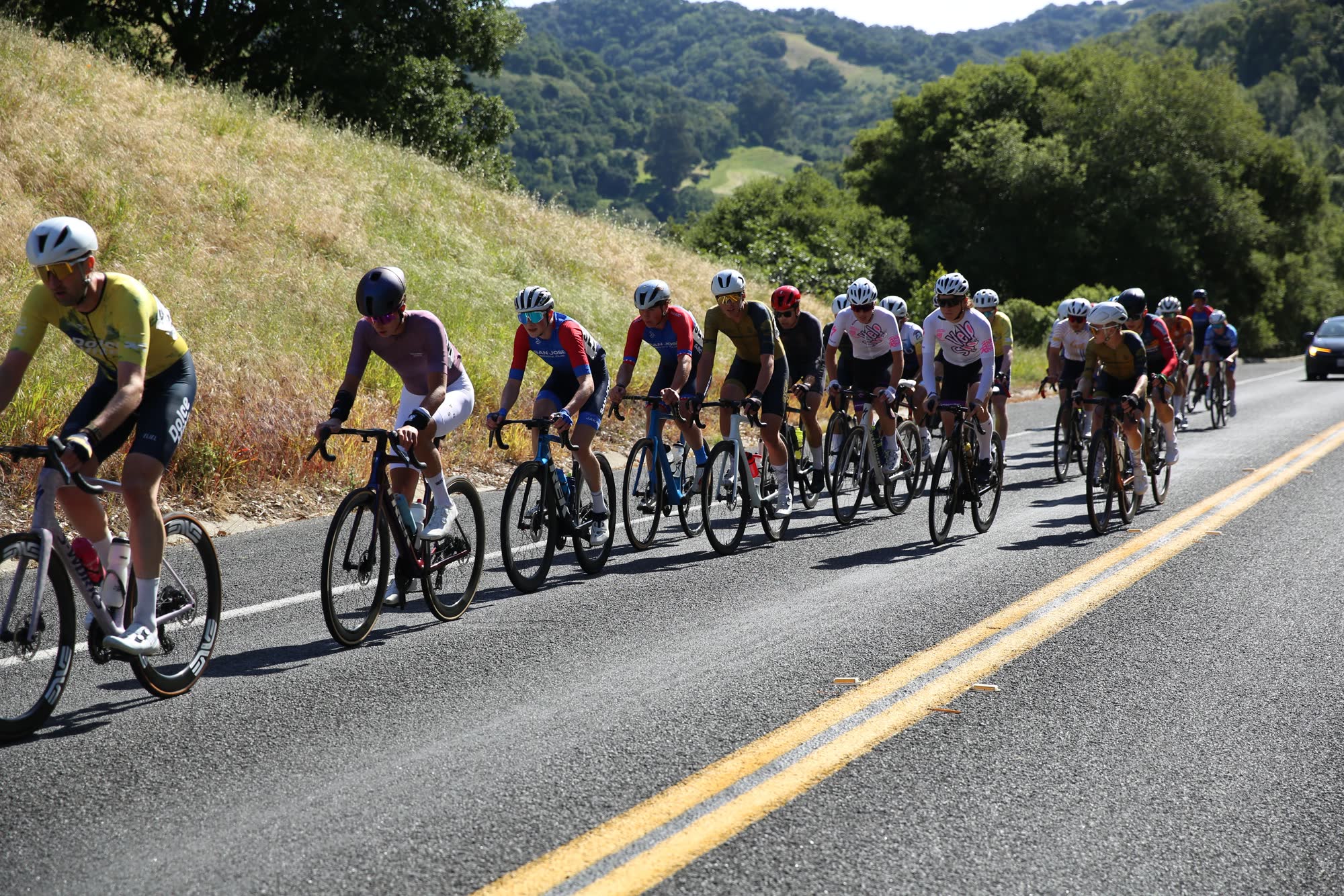
The course is a 18.76 miles loop with about 759 feet of climbing per lap: San Pablo Dam Road, Castro Ranch Road, Alhambra Valley Road and then Bear Creek Road, where the Three Bears are. The roads aren't closed for the race. People who live out there still drive to the store on Saturday morning.
Ride the course: Berkeley Hills course recon →
So most of our planning is about junctions. The 2024 set-up map put California Highway Patrol officers and course marshals at the right turn from San Pablo Dam Road onto Castro Ranch Road, and marshals and warning signs where Alhambra Valley Road meets Bear Creek Road.
Road conditions change from one spring to the next, which is part of why there are course prep days before race weekend. A road problem that wasn't there last year is exactly the kind of thing you'd like to find out about before the P/1/2 field does.
Racers have rules to follow too, and somebody has to explain them every year: obey traffic, no wheel support, and no unauthorized follow vehicles anywhere on the course. Unauthorized follow vehicles get a rider or team disqualified, which is a sentence nobody enjoys saying at registration.
16 fields, one parking lot
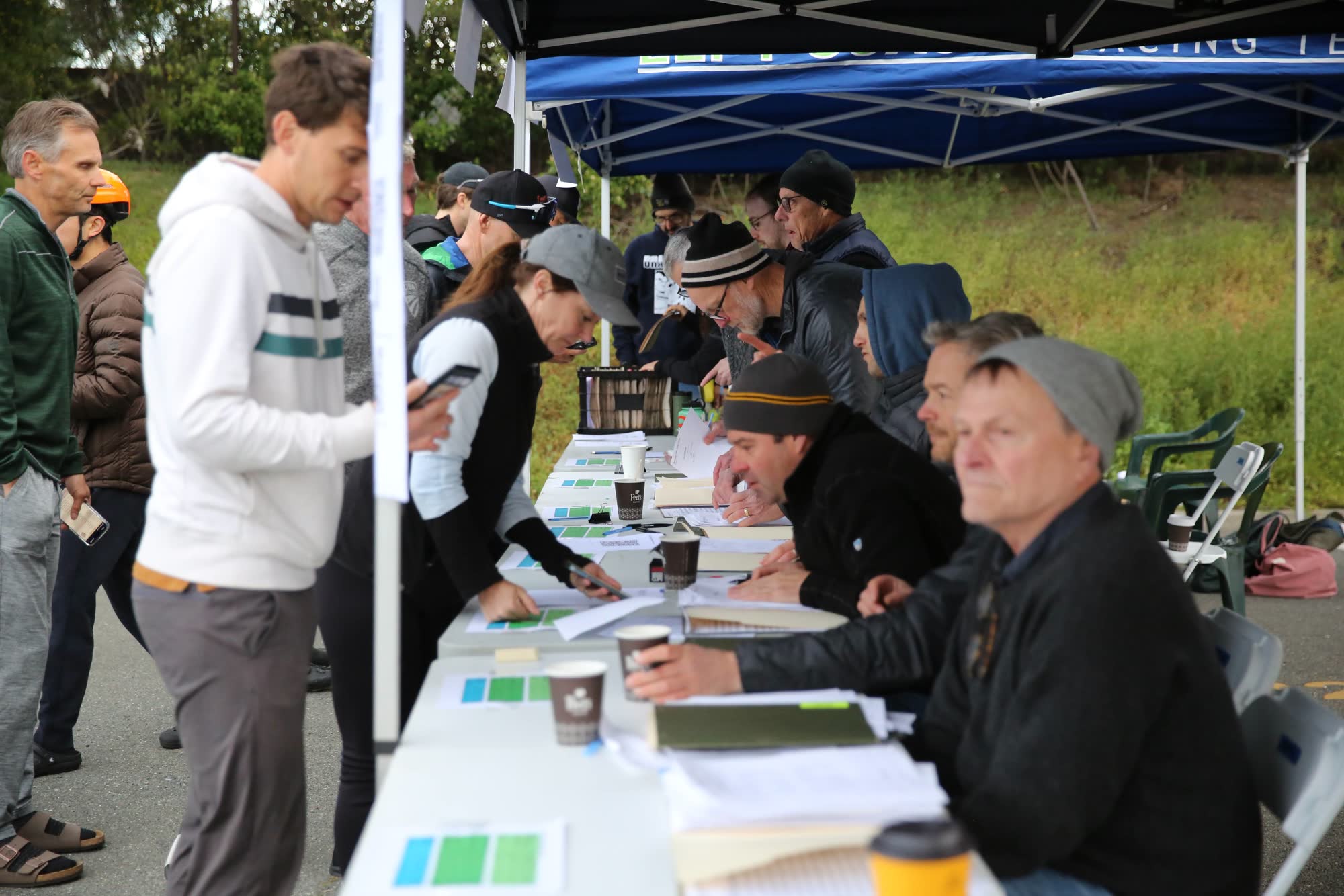
Race HQ is the north end of the Orinda BART parking lot. Registration, results, medical support and staging all happen there, on the other side of the hills from downtown Berkeley. Registration has opened at 7:00 a.m., there's a food truck from 9:00, and parking is free on weekends.
BHRR start, staging and rollout →
In the most recent edition, 16 fields raced anywhere from 16 to 90 miles. They stage in three waves, fifteen minutes apart:
- 8:00 a.m.: P/1/2 and Collegiate P/1/2, Elite 3 and Collegiate 3, Masters 35+ 1/2/3, Women's Long Race
- 8:15 a.m.: Elite 4 and Collegiate 4, Masters 35+ 3/4, Masters 50+ 1/2/3, Masters 50+ 3/4, Masters 60+ and 65+ 1/2/3/4/5
- 8:30 a.m.: Novice and Collegiate Novice, Women's Short Race, all junior fields
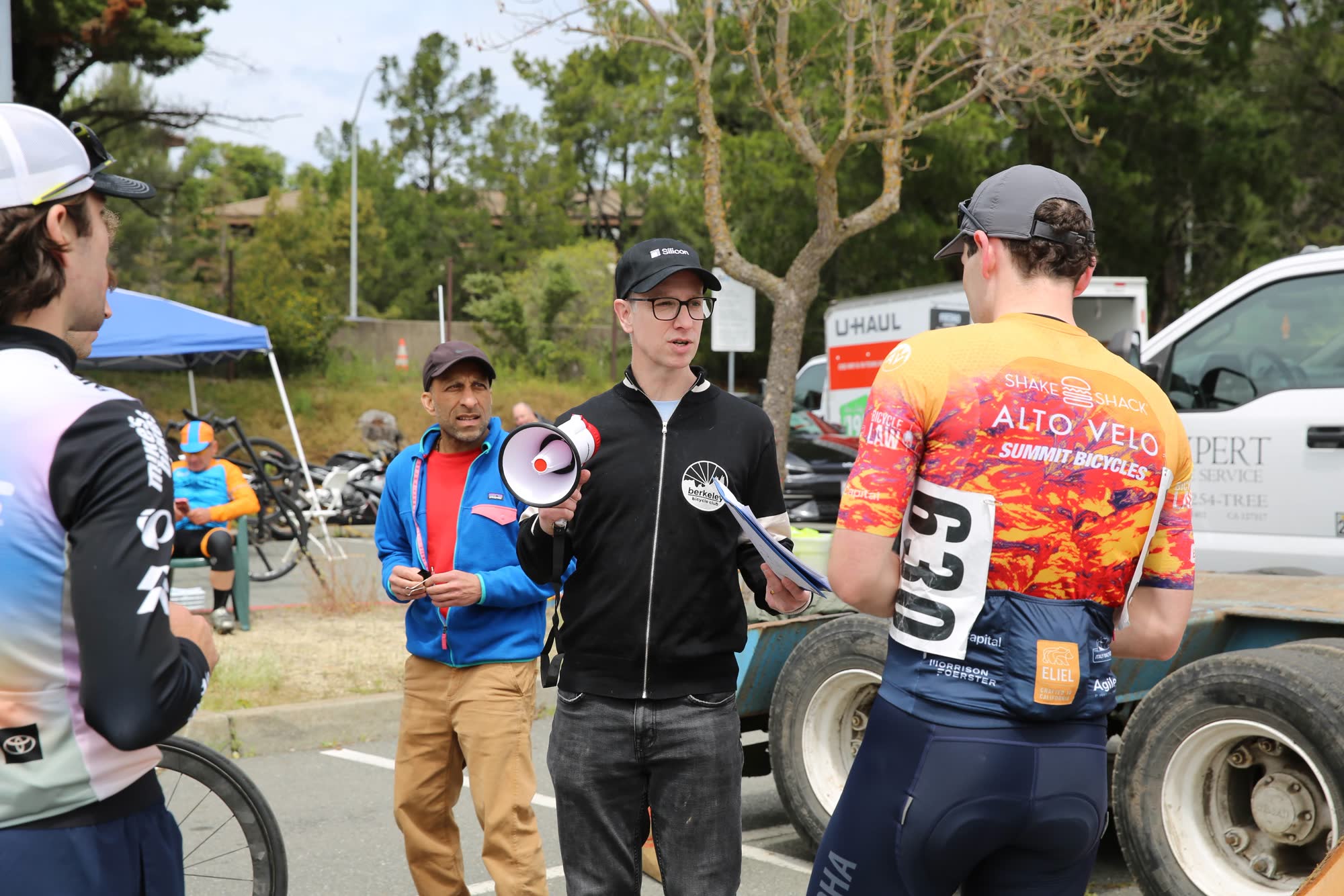
Each wave rides a 2.3-mile neutral rollout from the lot to the start at San Pablo Dam Road and Bear Creek Road, so every field has to be in the right place at the right time, with the right numbers on. Getting everyone into the correct wave is a job in itself, and the people at the registration table explain which wave is whose more times than they can count.
Out on the course
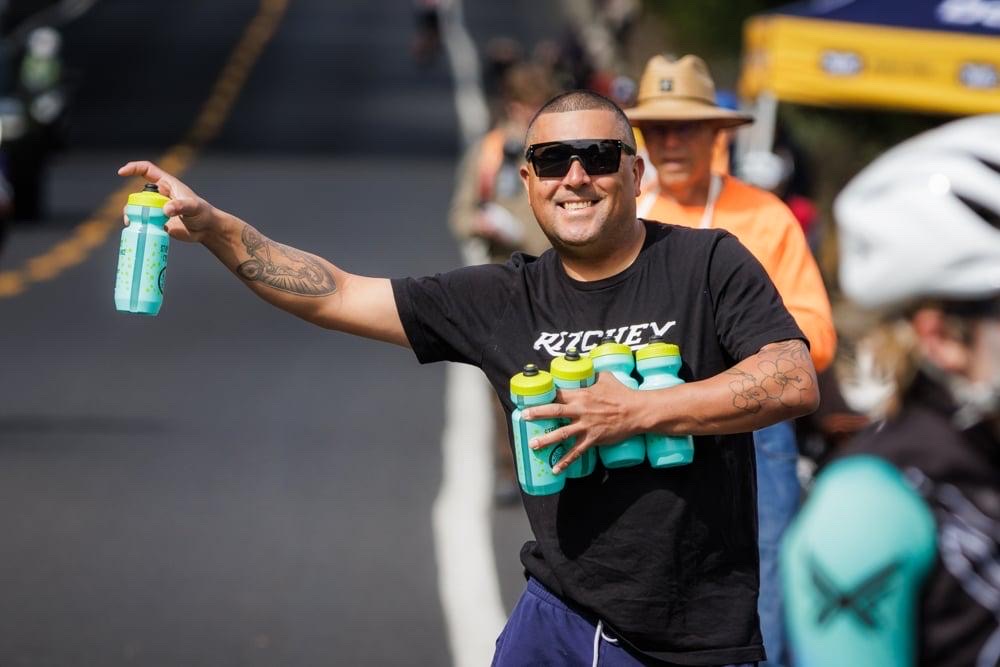
There's no running water on the course, so the feed zone matters. It's near the bottom of Papa Bear, with neutral water support and bottle handouts while supplies last, and teammates and family can hand up to their own riders there. In 2026 Stay True Cycles sponsored the feed zone bottles. Someone fills them, someone gets them out to the feed zone, and someone collects the ones that get dropped.
Behind the fields is the caravan. Follow cars drive behind groups of racers for the whole race, and the longest race in the most recent edition was 90 miles. The club credits its follow cars and moto support with keeping the race flowing. Drivers need experience, because they spend hours with riders all around the car on a road that is also open to everybody else.
Behind the last riders comes the sweep. The course behind a race can't be treated as clear until someone has seen the last riders through, and on Saturday those riders can be spread over miles of road.
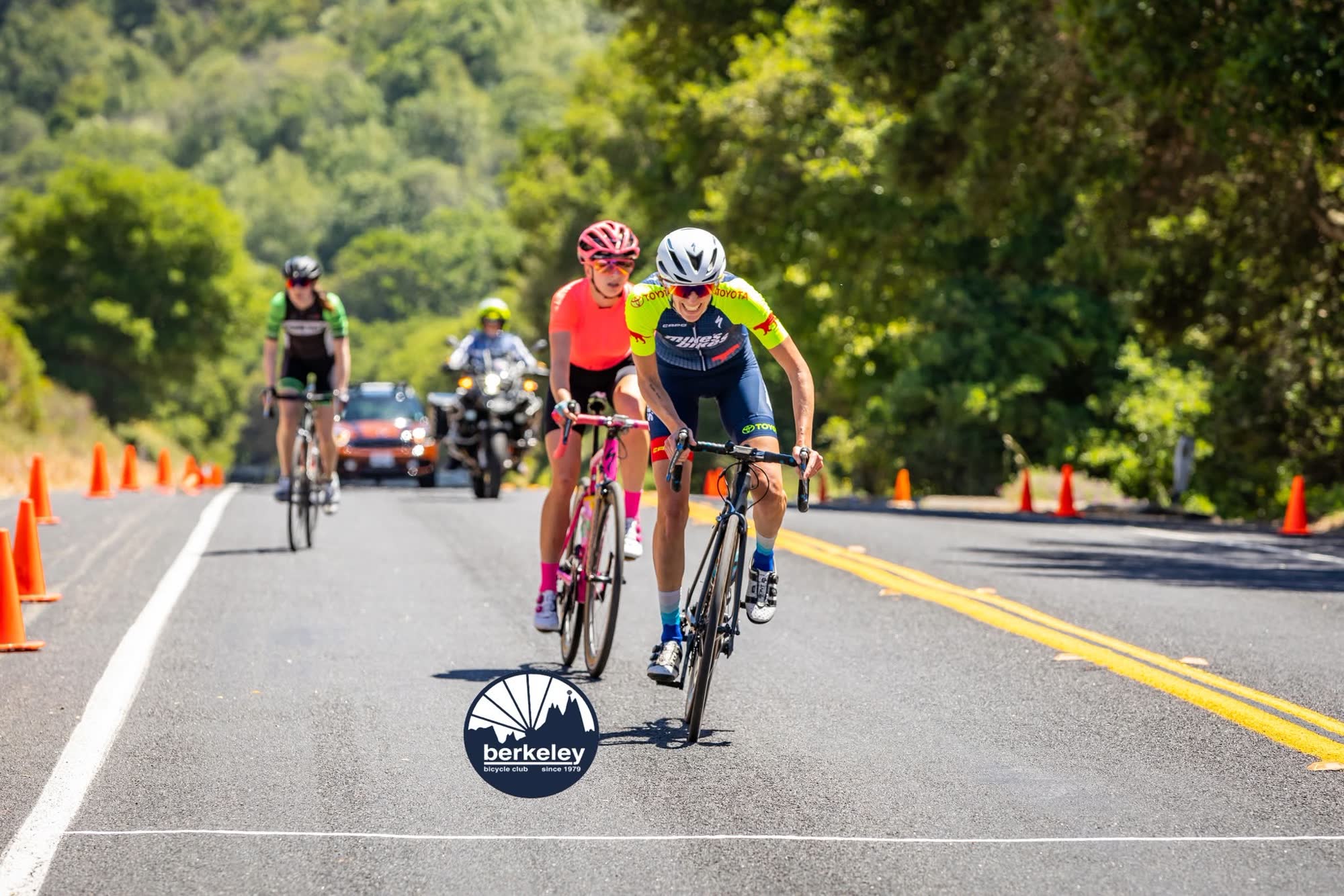
Then the finish, on Bear Creek Road near the top of Papa Bear, with portable toilets at the finish, at registration and at the feed zone. In 2026 the Pro/1/2 fields raced for $10,000, split evenly between the women's and men's races, and the podium they stood on was built by Expert Tree Service.
Saturday's volunteers
Saturday's jobs are spread out. Someone points racers to parking in the Orinda BART lot. Registration checks people in. Marshals go to junctions out on the loop, where it's quiet for a long time and then very much not. The feed zone crew stands at the bottom of Papa Bear. Drivers sit in the caravan. Someone drives the sweep. Results run from a table at HQ, and setup and teardown bracket the whole day.
Every road race field stages between 8:00 and 8:30, so if you're racing Saturday you're busy during the race. That's why Sunday-only racers are the first people we ask.
Why the juniors matter so much here
In the most recent edition there were 4 junior fields on Saturday, with boys and girls racing separately over 16 or 33 miles. They stage in the last wave, at 8:30 a.m., alongside the Novice field and the women's short race. The shortest is 16 miles, which is a long way on these roads when you're ten.
Junior cycling in Northern California →
Here's the reason we take that seriously. In 2019, Kristen Faulkner finished eighth in the women's race here, two years into racing. In 2024 she won the Olympic road race in Paris. Not every junior on the start line is going to do that, and that isn't the point, but every one of them is starting somewhere, and this is one of the places.
Part of every entry fee, including Saturday's, goes to East Bay NICA high school teams: $28,610 in 2026 for six of them, for equipment, coaching, race opportunities and team programs.
Then we go do it again
When the last finisher is through, the course comes back in. Signs and cones get collected around the loop, the HQ comes down, and everything goes back in the truck. Results get checked, because Saturday's finishes are half of everybody's Omnium score.
And then, for a lot of the same people, it's an early night, because Sunday's crit check-in opens at 6:50 a.m. in downtown Berkeley.