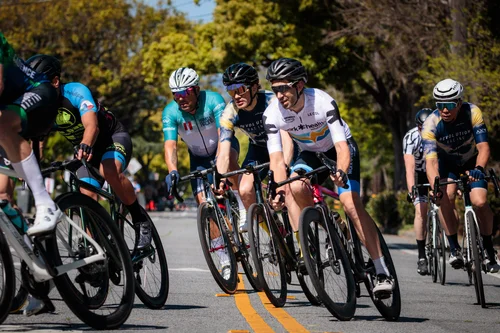
A crit run by people who learned to race here
The Berkeley Streets Criterium became Day 2 of the Berkeley Omnium in 2024, when it and the Berkeley Hills Road Race came together as one race weekend. Preston Mui took the lead on the criterium effort from Cal Cycling as the Omnium took shape. It passed to Nicolas Goumas, and then to Adrian Chin.
Cal Cycling and the Berkeley Omnium →
All three came up through Cal Cycling, UC Berkeley's collegiate team, and Cal Cycling still races both days and crews on race day. So Sunday is run in part by people who were racing collegiate fields on these streets not long before they started organizing them.
Four corners and a lot of fence
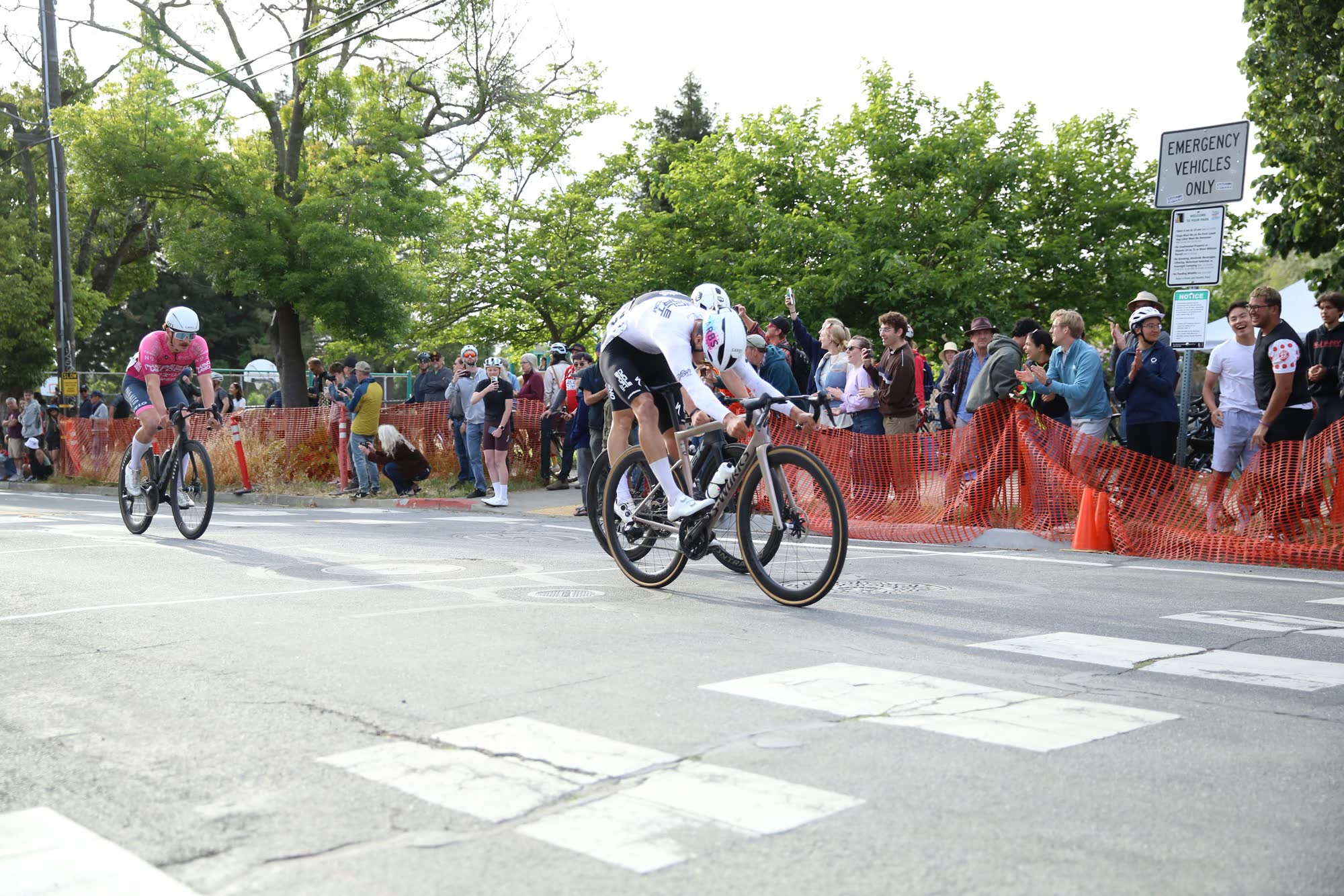
The course is a four-corner rectangle of downtown streets beside Ohlone Park, 0.61 miles a lap. The start/finish straight is on Hearst Avenue between McGee Avenue and Grant Street. Corner 1 is a right onto Grant, about 95 meters past the line. Corner 2 is a right onto Berkeley Way at the high point of the lap, then 400 meters of back straight dropping to Corner 3 onto California Street, and Corner 4 back onto Hearst, about 300 meters from the line.
Ride the course: Berkeley Streets course recon →
Racers see four corners. We see four corners, a few blocks of fencing, every driveway and crossing along the way, and the people who live on those blocks and would like to get to brunch. The streets are closed for the race, so every one of those things has to be handled before the first lap and undone after the last one.
Spectators stay behind the barriers and cross only at marked crossings, when a marshal says it's clear. On a short loop the field comes back much sooner than people expect, so a gap between groups isn't a gap in the race. Explaining that, politely, to a person holding a coffee and a dog is a real part of the job.
Racers have one rule we repeat a lot: when you aren't racing, you're a cyclist on city streets, so stop at the stop signs and red lights and yield to people walking. The race's partnership with the city depends on it.
A 12-race day
Crits are timed, not measured in laps, so the schedule is a stack of races from 7:30 a.m. into the evening. This was the most recent one:
- 7:30 a.m.: Open Novice and Collegiate Novice, 30 minutes
- 8:05 a.m.: Women's 4/Novice and Women's Collegiate 4/Novice, 30 minutes
- 8:40 a.m.: Juniors 10 and under, 11-12 and 13-14, 30 minutes
- 9:15 a.m.: Juniors 15-16 and 17-18, 40 minutes
- 10:10 a.m.: Masters 35+/50+ 3/4, 40 minutes
- 11:00 a.m.: Elite 4 and Collegiate 4, 40 minutes
- 12:15 p.m.: Masters 50+ 1/2/3, 60+ and 65+ 1/2/3/4/5, 50 minutes
- 1:10 p.m.: Women's 3, Collegiate B, Masters 40+/50+/60+, 40 minutes
- 2:05 p.m.: Elite 3 and Collegiate 3, 45 minutes
- 2:55 p.m.: Masters 35+ 1/2/3, 50 minutes
- 4:00 p.m.: Women's Pro/1/2/3 and Collegiate Pro/1/2/3, 60 minutes
- 5:05 p.m.: Pro/1/2 and Collegiate Pro/1/2, 60 minutes
Some of the gaps between one race finishing and the next starting are 5 minutes. In that time one field rolls off and the next one lines up, while check-in keeps closing 15 minutes before each race. Field limits run from 50 to 100 riders, and racers who want a second crit in a field they're eligible for can add one for $20.
Second crits, check-in and day-of entry →
A late race doesn't stay late on its own. Every race after it has to fit, and the evening Pro/1/2 is the one at the end of the line.
The morning before the first lap
Check-in opens at 6:50 a.m. at Hearst Avenue and McGee Avenue, by Ohlone Park. At 7:10 the Beginner Race Program takes novices, collegiate novices and juniors around the actual course for about 20 minutes, to practice the corners and get warm before the first lap counts. The first race goes at 7:30 a.m..
That means the course has to be built and checked before most of Berkeley is up. It also means BART, which doesn't start until 8 a.m. on Sundays, is no help to the earliest racers, and street parking around the course is free on Sunday but very limited. That's why everything we write about Sunday says carpool.
Kids, ice cream and somebody on the mic
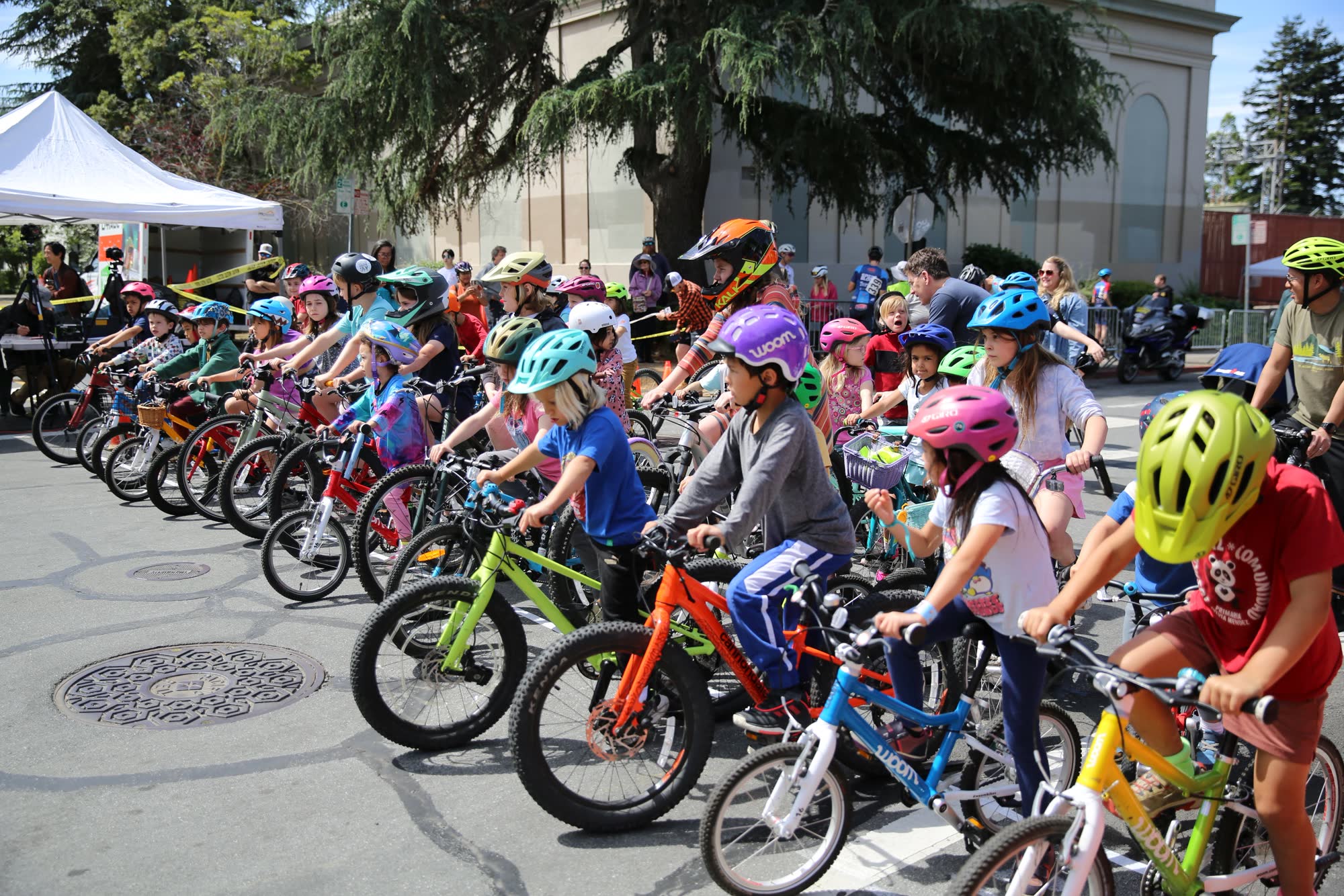
In the middle of the day there's a free kids skills clinic at 11:00 a.m. and a free kids race at 11:45 a.m., for kids about 5 to 10. Kids check in at registration before 11:30 a.m., a parent or guardian signs the waiver, and every rider needs a helmet. In 2026 Trek Berkeley hosted the clinic and brought demo bikes, and the kids racers got ice cream from Mr. Dewie's afterward.
The kids race goes off in the gap between the Elite 4 and Collegiate 4 race and the Masters 50+ 1/2/3, 60+ and 65+ 1/2/3/4/5 race, on the same streets the Pro/1/2 field will race that evening. Fitting it in means the course has to change hands from adult racers to five-year-olds and back again, on time.
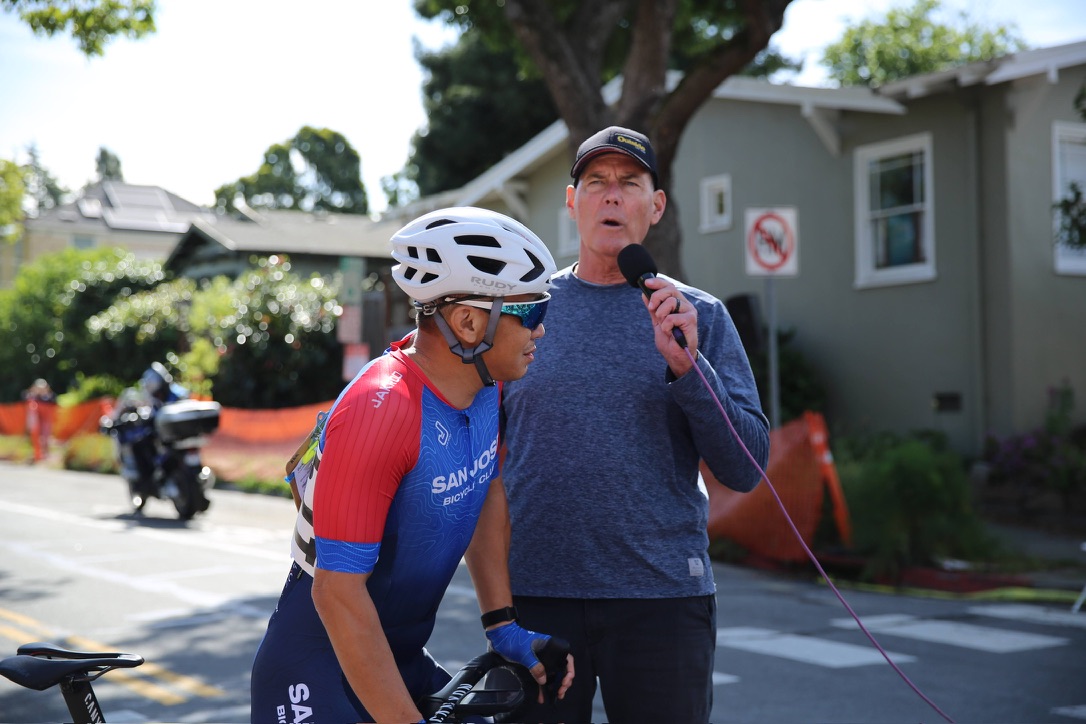
All day there's an announcer calling the racing: who's off the front, the primes, the chase and the sprint, plus what's racing next. The field comes past every couple of minutes, and a good announcer turns that into a race people can actually follow. (Primes at Berkeley Streets don't count toward the Omnium. We get asked.)
Sunday's volunteers
Sunday's jobs are packed into a small space. Marshals hold the corners and the crossings. Check-in runs from before seven until the last race closes. Results run all day. Kids race helpers line kids up and cheer. Setup builds the course before check-in opens, and teardown takes it down so the streets can reopen.
Because the races run from morning into the evening, racers can help on the same day: marshal the races before or after yours, or work check-in outside your own race window. Saturday racers with tired legs are very welcome at teardown.
Then the streets go back to being streets
The Pro/1/2 and Collegiate Pro/1/2 race starts at 5:05 p.m. and runs 60 minutes. When it's done, the fencing comes down, signs and cones get collected, trash gets picked up and the course gets cleared so the streets can reopen. We race on Berkeley city streets, and leaving them the way we found them is part of being allowed back.
Then the truck gets loaded, and the next day it gets unloaded. Results from both days become the Omnium standings, and somewhere in there somebody starts talking about next year.
Who Sunday is really for
Sunday has a little of everything: 2 junior races covering every age from 10 and under to 17-18, novice fields with the Beginner Race Program before them, collegiate riders in combined fields all day, masters, women's fields and the Pro/1/2. And in the middle, the kids race.
Junior cycling in Northern California →
Put that next to who runs it. A kid can ride the clinic, race juniors, race collegiate for Cal Cycling and one day end up running the crit. The last step has already happened: the people leading Sunday came up through Cal Cycling. Keeping that path open is the thing we care about most.
Part of every entry fee goes to East Bay NICA high school teams, $28,610 in 2026 for six of them.