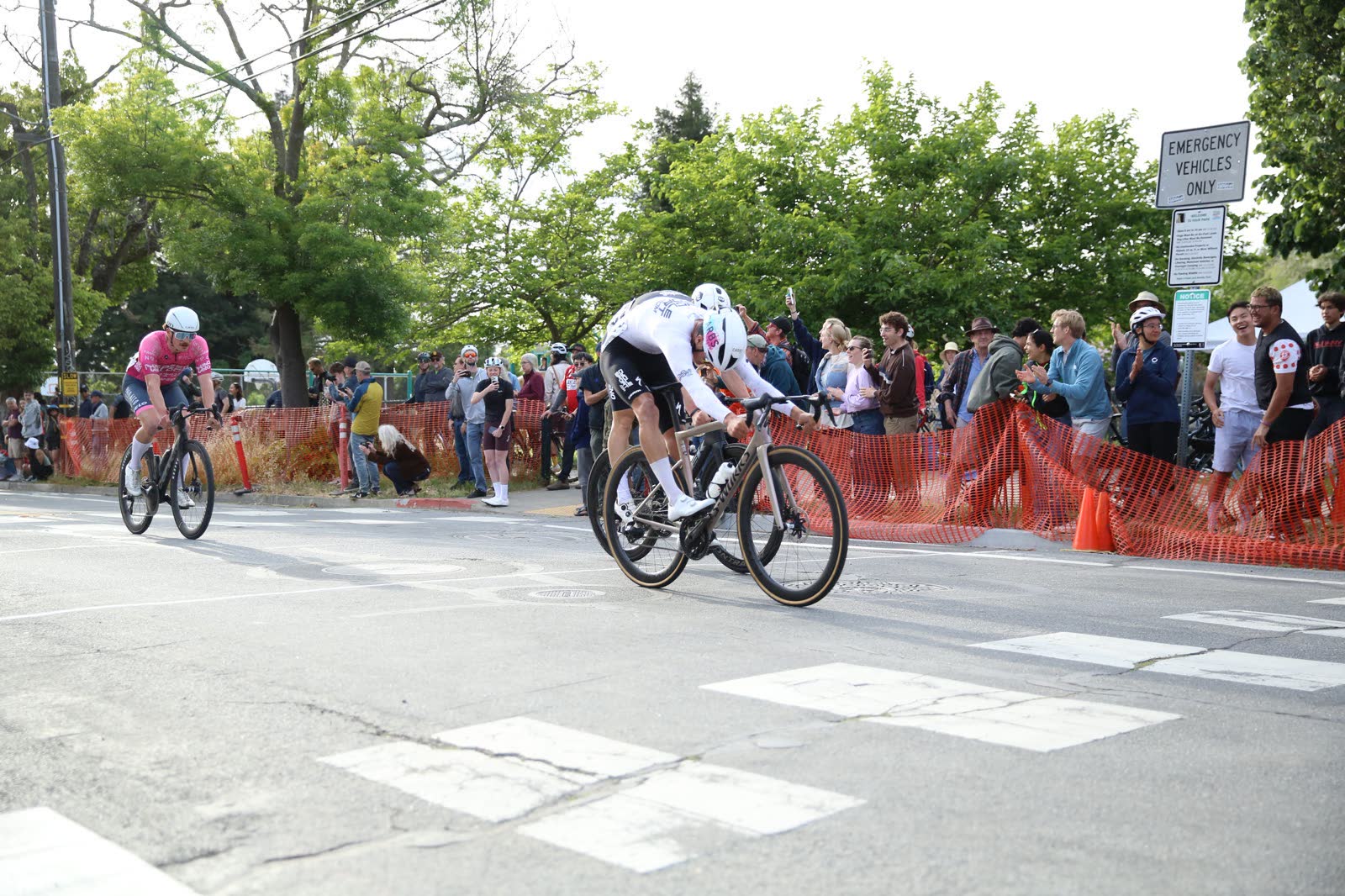
It's a whole day, not one race
Most people picture a bike race as one event with a start and a finish. The Berkeley Streets Criterium is 12 of them in a row. In the most recent edition the first race started at 7:30 a.m. and the last, the Pro/1/2, at 5:05 p.m., with races running 30 to 60 minutes each.
The Berkeley Streets Criterium →
So any one racer is only on the course for under an hour, but most racers aren't there just for that. Check-in closes 15 minutes before each race, racers come early to warm up, and plenty stay to watch a teammate or a friend in a later field. In 2026 there was also a free kids skills clinic at 11:00 a.m. and kids race at 11:45 a.m., which brought a different crowd in the middle of the day.
Across the whole Omnium weekend, more than 400 racers from 11 states started the 2026 races, according to the official results. That number covers both days, not just Sunday, and a lot of those racers live a short ride from Berkeley. It's still a lot of people with a reason to be in town.
Each racer brings more than a bike
Racers rarely come alone. There's often a teammate who drove, a partner holding the spare wheels, a parent, a kid. And a race day has gaps in it that people fill with food and walking around.
Some examples, built from the schedule rather than from anyone in particular: a racer in the Masters 35+/50+ 3/4 race at 10:10 a.m. has a couple of hours after check-in opens, and probably wants coffee and something to eat that won't sit badly. A family with a kid in the kids race and a parent racing Women's 3, Collegiate B, Masters 40+/50+/60+ at 1:10 p.m. has lunch to find somewhere in between. A team whose last rider finishes after the evening Pro/1/2 is looking for a table big enough for everybody.
Downtown Berkeley is about half a mile from the course, with cafés, restaurants, bookshops and the campus all within walking distance. Our visitor guide lists places we've checked.
Eat, explore and experience Berkeley →
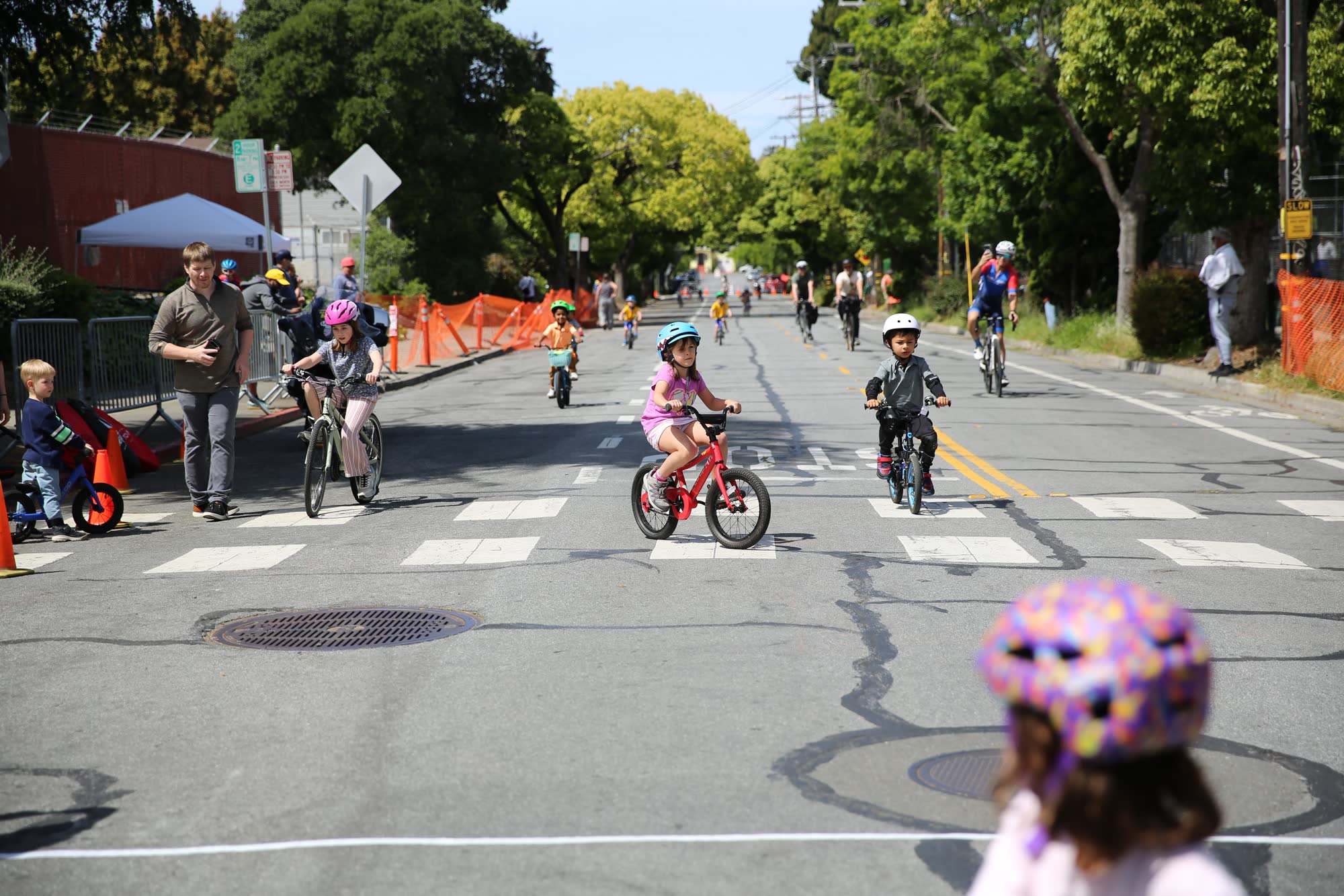
Racing you can walk up to
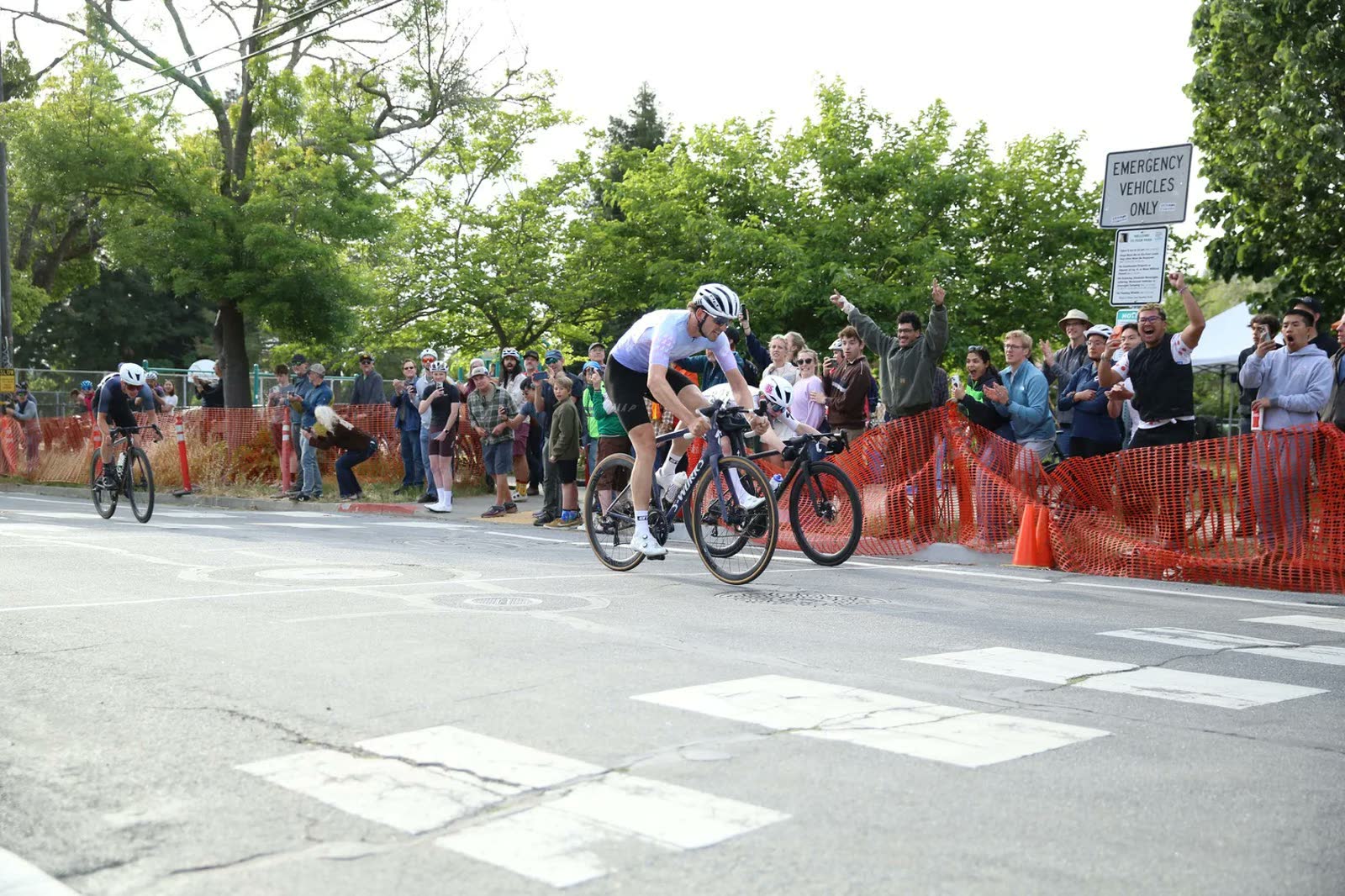
A road race in the hills is hard to stumble into. A criterium is the opposite. The course is a 0.61-mile loop of closed streets beside Ohlone Park, the field comes past every couple of minutes, and it's free to watch. Someone walking to the park or out for coffee can hear it before they see it, stop at the fence and end up staying for the sprint.
That's one of the better things about racing in a city. People who would never look up a bike race find out there's a local racing scene: clubs, college riders from Cal Cycling, juniors, masters, women's fields, and an announcer explaining what's going on. Spectators watch from behind the barriers and cross only at marked crossings, which keeps the racing close without putting anyone in it.
Where to watch the Berkeley Streets Criterium →
Where local businesses come in
A crowd nearby is an opportunity for a business, not a guarantee. A café open early on a Sunday is useful to a racer who checked in at 6:50. A restaurant with room for a group is useful to a team at six in the evening. A shop on the walk between BART and the course might get a look it wouldn't otherwise get.
Not every nearby business will see more customers, and one that's harder to reach because of a street closure may see fewer. We don't have spending figures for race day and we won't make them up.
Some local businesses were already part of the day in 2026. Trek Berkeley hosted the kids clinic and brought demo bikes, and Mr. Dewie's provided ice cream for the kids race.
A good visit can also give people a reason to come back: a café they liked, a street they hadn't walked, a part of Berkeley they hadn't spent time in. We can't measure that, but it's a fair reason to make the day a good one.
Closing streets in someone's neighborhood
People live on the streets we race on. Closing them for a day changes how residents get in and out, where people can park and how deliveries reach businesses. A race that does that owes the people already there clear notice, safe crossings and a quick reopening at the end of the day.
Racers have a part in it too. Off the course, they're cyclists on city streets, so they stop at stop signs and red lights and yield to people walking; the race's partnership with the city depends on it. On race morning street parking is free but very limited, and BART doesn't start until 8 a.m. on Sundays, so we push carpooling hard. When the last race is done, the fencing comes down, the trash gets picked up and the streets go back to the neighborhood.
If you run a business nearby
There are a few ways to be part of race day:
- Sponsor the criterium, or put up a prime, a mid-race prize the announcer calls out with your name on it.
- Offer racers and spectators something on race day. Tell us what it is, and once you've agreed to it, we can list it in our visitor guides until it expires.
- Help visitors find you. If you're open early on race Sunday or have room for groups, let us know so we can point people your way.
- Talk to us about access. If you have deliveries or customers who need to reach you during the closures, get in touch well before race weekend.
Berkeley businesses have their own page on sponsorship, with what you'd get and how to start.
Sponsorship for Berkeley businesses →
If the crit is the part you care about, there's a page for that too.