It starts months before anyone pins on a number
The first decision is the weekend. It has to work for two venues and fit into a NorCal calendar where every other club is trying to place its race too. Once the dates are set, everything else gets built backward from them.
Both races are USA Cycling sanctioned and run under the Northern California Nevada Cycling Association (NCNCA). That means permits, USA Cycling officials and a rulebook every field has to fit inside.
Then the fields. In the most recent edition the road race had 16 of them and the crit had 12 races: Pro/1/2, Elite 3 and 4, masters from 35+ up to 65+, women's fields, Novice, collegiate, and juniors from 10 and under to 17-18. Every one needs a distance or a race length, a start time and a field limit. At the road race they go out in three staging waves between 8:00 a.m. and 8:30 a.m.. At the crit they run back to back all day.
Then money. In 2026 the Pro/1/2 fields raced for $10,000 in cash, split 50/50 between the women's and men's races. That purse exists because two sponsors agreed to fund it, and getting there took a lot of emails.
And then everything racers read before they show up: the BikeReg page, the race information, this website, the posts that remind people the race exists. Somebody writes all of it, and somebody fixes it when a start time changes.
We don't put on the same race twice
Saturday is the Berkeley Hills Road Race. Sunday is the Berkeley Streets Criterium. Apart from the racers, they have almost nothing in common.
Saturday: Berkeley Hills Road Race
- Where racers gather
- Race HQ in the Orinda BART north lot: registration, results, medical support and staging
- Roads
- Open to traffic the whole time
- Getting to the start
- A 2.3-mile neutral rollout to San Pablo Dam Road and Bear Creek Road
- The course
- 18.76 miles per lap over the Three Bears, finishing on Papa Bear
- The day
- Three staging waves, 8:00 a.m. to 8:30 a.m.
- Jobs only this race has
- Junctions, the feed zone, follow cars, the sweep
Sunday: Berkeley Streets Criterium
- Where racers gather
- Registration at Hearst Avenue and McGee Avenue, beside Ohlone Park
- Roads
- Closed course behind barriers
- Getting to the start
- The start/finish is a short walk from registration
- The course
- A short four-corner loop, lap after lap
- The day
- 12 races, 7:30 a.m. to the Pro/1/2 at 5:05 p.m.
- Jobs only this race has
- Corner marshals, course crossings, the announcer, the kids clinic and kids race
At the road race the problem is distance. Racers are spread over miles of public road, so there are junctions to staff, a caravan of follow cars, a feed zone near the bottom of Papa Bear and a sweep behind the last riders. The 2024 plan put California Highway Patrol officers at the main junctions.
What it takes to put on the road race →
At the crit the problem is time. It's one small loop, but the day runs from check-in at 6:50 a.m. to a Pro/1/2 race that starts after five in the evening. The streets have to be closed and fenced, people need to cross the course safely, and in the middle of it all there's a kids clinic and kids race.
What it takes to put on the crit →
There's no gap between them. The road race finishes on Saturday, the gear goes back in the truck, and a lot of the same people who were in Orinda that morning are in Berkeley before Sunday's check-in opens.
The person at the corner
Racers see a volunteer standing at a junction or a corner. Getting that one person there took a chain of other people.
Someone worked out how many spots needed a person. Someone found that person, sometimes by asking a teammate twice. Someone assigned the spot, sent the instructions and checked on race morning that they'd actually shown up. If they hadn't, someone found a replacement, and that someone was often an organizer who now wasn't doing the job they'd planned to do.
Now do that for every marshal spot, the registration table, results, the feed zone, setup, teardown, the kids race and the follow cars. Then do it again on Sunday, on a different course, with different jobs.
The first race can't start until the course is ready, and a course isn't ready with nobody watching the corners. Racers commit to a corner at full speed trusting that someone is.
“Berkeley Omnium doesn't happen without volunteers. Full stop.”
After 2026 the club thanked crews from Cal Cycling Team, Revolution, San Jose Bicycle Club, Dolce Vita, Terun, Monarch and TMBEquator, and Super Sprinkles Racing helped coordinate the volunteers. The jobs are set up so racers can help too: marshal Saturday and race Sunday, or the other way around.
Every volunteer job, explained →
It isn't one person with a laptop
The Berkeley Bicycle Club has organized the road race since 1979 and the Omnium since it began in 2024. The 2026 organizing team came from Berkeley Bicycle Club, Dolce Vita Cycling, San Jose Bicycle Club, Revolution Racing, Cal Cycling, Monarch Racing, SpeedBlock–Terún and KaiVelo. Everyone on it has a job, a family or a race season of their own, usually all three.
Meet the Berkeley Bicycle Club →
So the work gets split up. People take a piece, the road race course or sponsors or volunteers or the website, and own it. Most of it happens in meetings, message threads, shared spreadsheets and phone calls. We don't always agree. Someone wants the schedule moved, someone else knows why it can't move, and it gets worked out.
Some of the work is planned months ahead. Some of it is figuring out, early on race morning, that the thing you need is at the bottom of the truck. Both count.
The criterium side has been led by Cal Cycling students: Preston Mui, then Nicolas Goumas, then Adrian Chin. They came up racing in this scene and then took over running part of it.
Cal Cycling and the Berkeley Omnium →
Sponsors don't appear because there's a logo section
Somebody has to find businesses that might actually want to be there, figure out who to write to, write the email, follow up, explain the race, explain where the money goes, work out what we can offer back, and then chase logo files for the banners. A lot of those emails never get an answer. That's part of putting on a race too.
When it works, you can see it on race day. In 2026 Expert Tree Service and KaiVelo co-funded the $10,000 Pro/1/2 purse, Stay True Cycles sponsored the feed zone bottles, Trek Berkeley brought demo bikes to the kids clinic, and the kids racers got ice cream from Mr. Dewie's. Expert Tree Service also built the podium at the road race.
After race weekend, the sponsors hear from us again with photos, a thank-you and, if it went well, a conversation about next year.
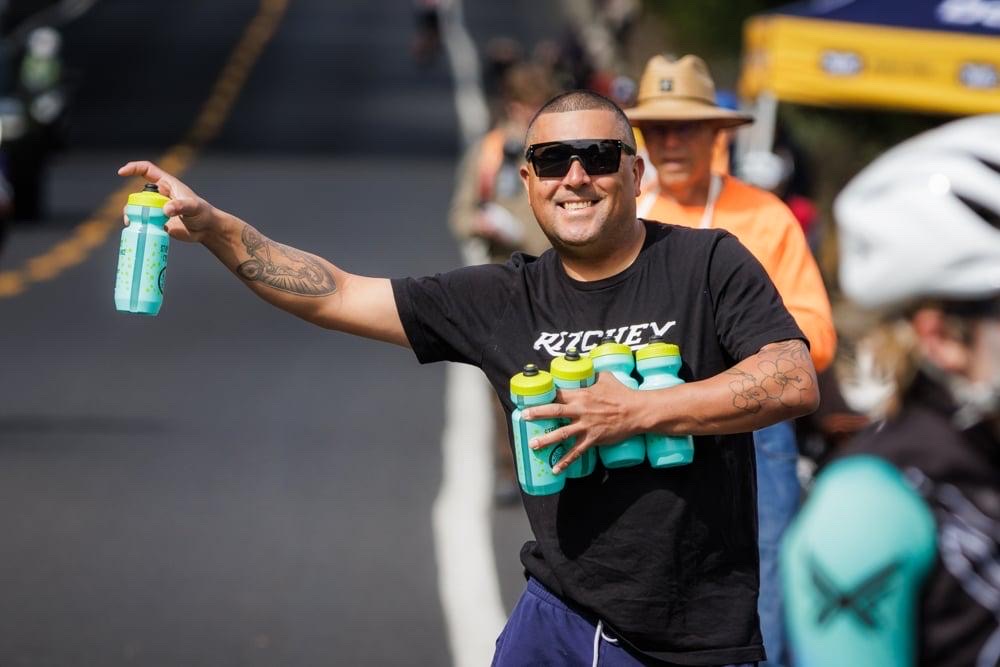
Can I race both days? (Yes. It's on the website.)
Once registration opens, the questions start coming in:
- Can I race both days?
- Which category should I enter?
- Can I transfer my registration?
- Where do I park?
- Where is staging?
- When does my race start?
- Can juniors race?
- Is there water?
- Where is registration?
- What happens if it rains?
Most of these already have answers on this site. We answer them anyway, sometimes the same one several times in one afternoon, because a racer who knows where to park and when to stage has a better morning, and so do the people at the registration table.
Race morning
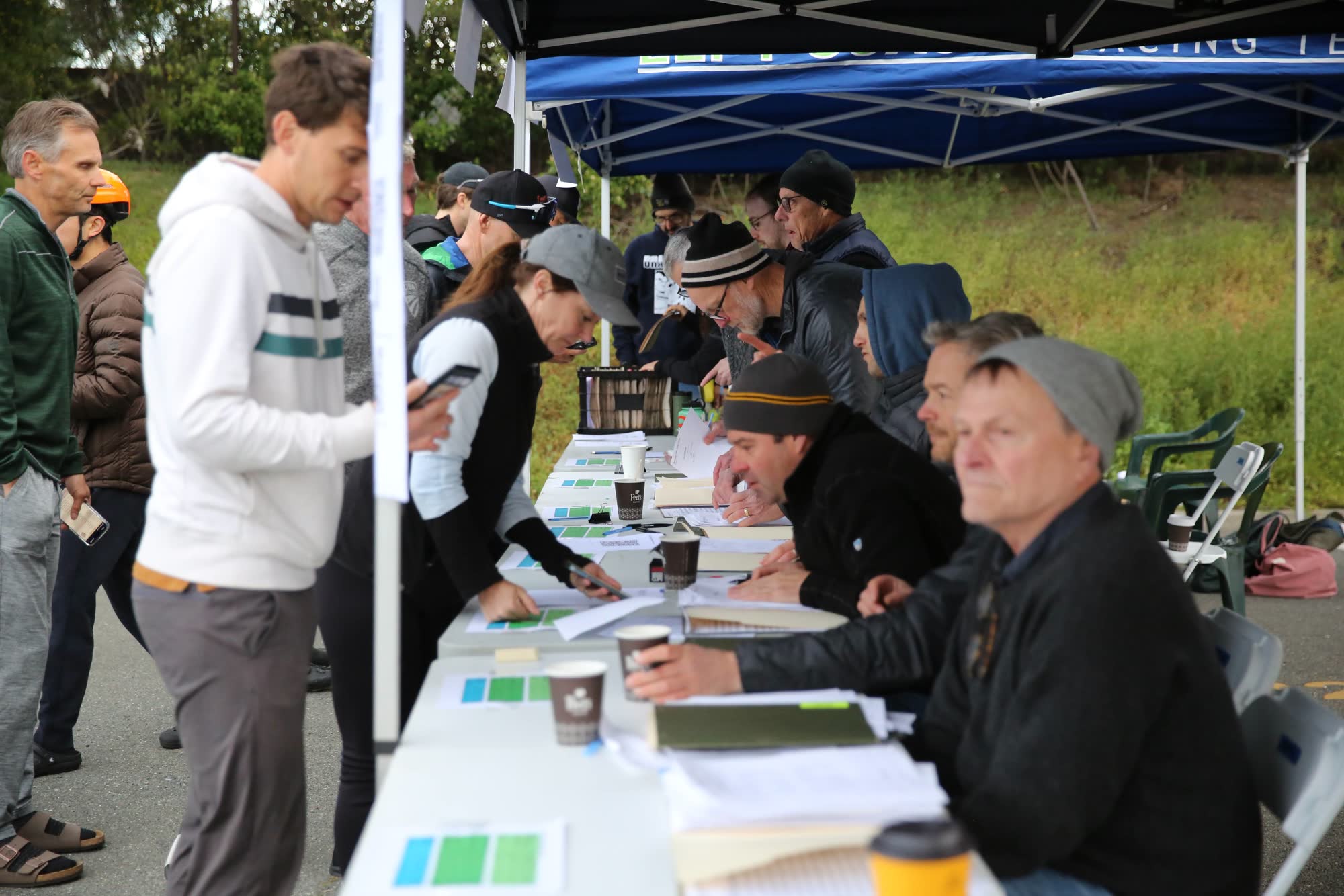
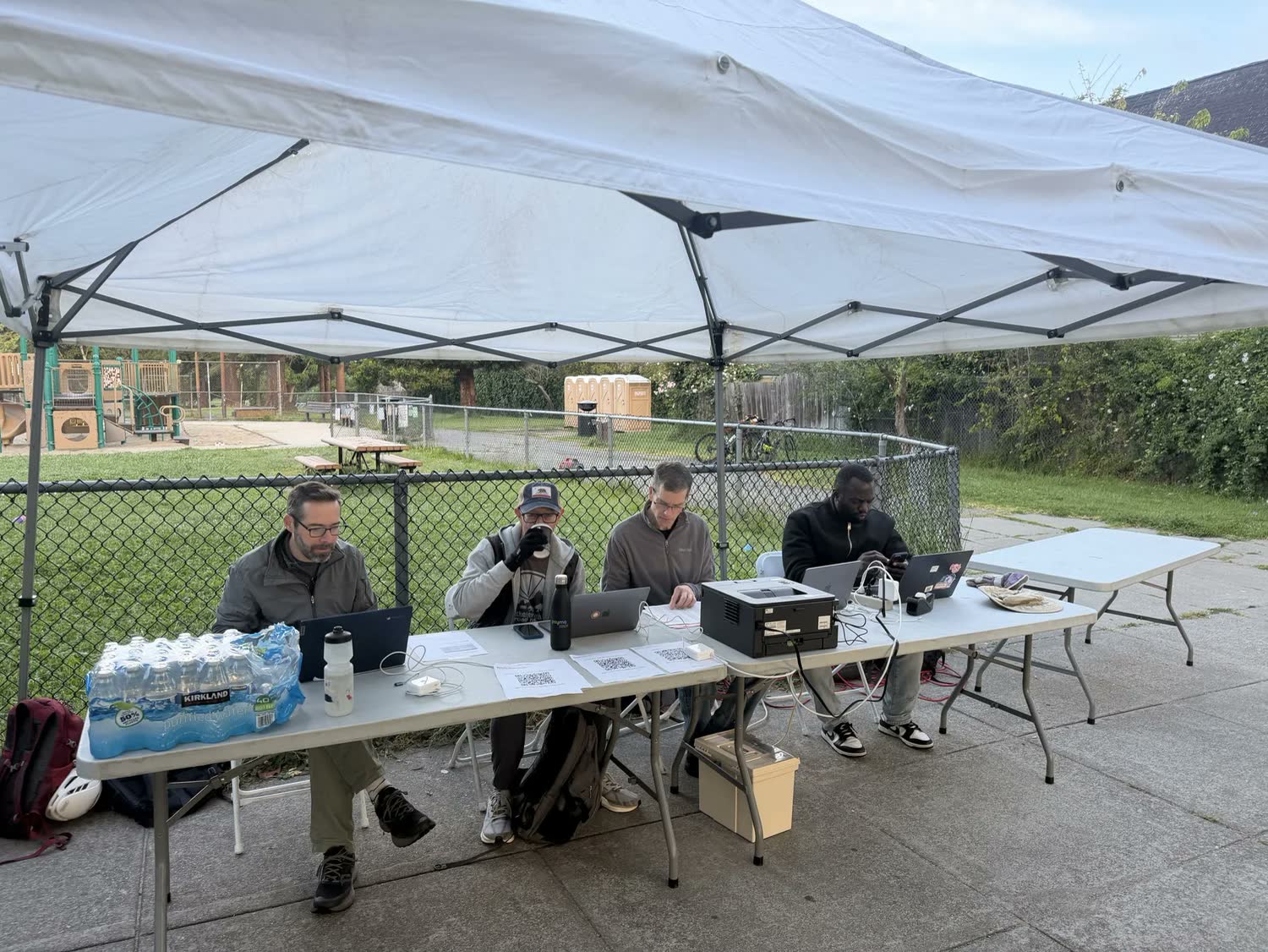
Our Saturday in Orinda starts well before registration opens at 7:00 a.m.. Signs and cones go out on the course. Registration needs tables, canopies and a system that works. The officials need what they need. Every marshal needs to be at their spot, and the feed zone needs bottles.
Then the racers arrive, and the small problems arrive with them, all at once. A number is missing. A license needs sorting. Someone is in the wrong wave. Someone can't find the portable toilets. None of it is hard on its own.
And then somebody says we're ready, the first wave rolls out of the lot, and for about a minute it feels fantastic.
Sunday is the same feeling on less sleep. Crit check-in opens at 6:50 a.m., the Beginner Race Program takes novices and juniors around the course at 7:10, the first race goes at 7:30 a.m., and the Pro/1/2 doesn't start until 5:05 p.m..
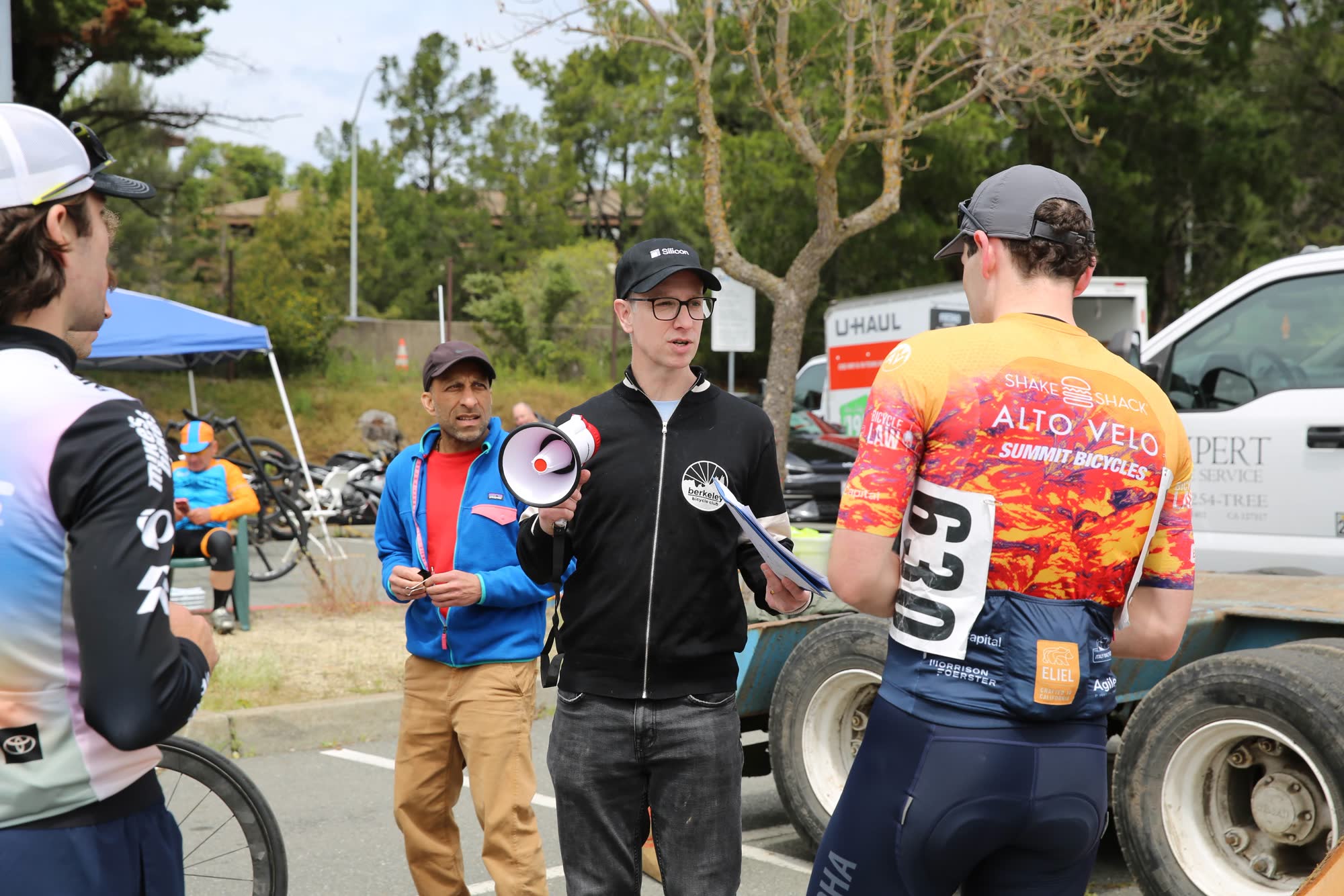
Something will go wrong
No event this size goes exactly the way the spreadsheet says. Someone gets sick the night before. Someone is stuck in traffic. A box isn't where it was supposed to be. A rider goes somewhere they shouldn't. A car is in the wrong place. The weather does what it wants; some of our finish-line photos are of a wet road. A volunteer has a question at the exact moment you're answering someone else's.
Organizing mostly means fixing those things fast, without the whole field finding out. The good race days are the ones where racers never noticed how many things almost went wrong.
The finish line isn't the end
The last Pro/1/2 rider crosses the line on Sunday evening, and we're still not done. Barriers come down so the streets can reopen. Signs and cones get collected. Trash gets picked up, because we race on public roads in Orinda and on Berkeley city streets and we'd like to keep doing that. Everything goes back in the truck.
The day after the crit, it all gets unloaded and put away, ideally well enough that next year's crew can find things.
Then the slow part. Results get finished and posted, and the Omnium standings get added up across both days. Volunteers get thanked. Sponsors get thanked and sent photos. Photos get sorted. Receipts get matched to expenses. Everyone is tired.
And then, a bit sooner than anyone would admit to wanting, somebody starts talking about next year.
Why we keep doing it
We race too. Anyone who has raced in NorCal for a while has watched races drop off the calendar when nobody was left to run them. Nobody wants that for a road race that has been going since 1957.
The history of the Berkeley Hills Road Race →
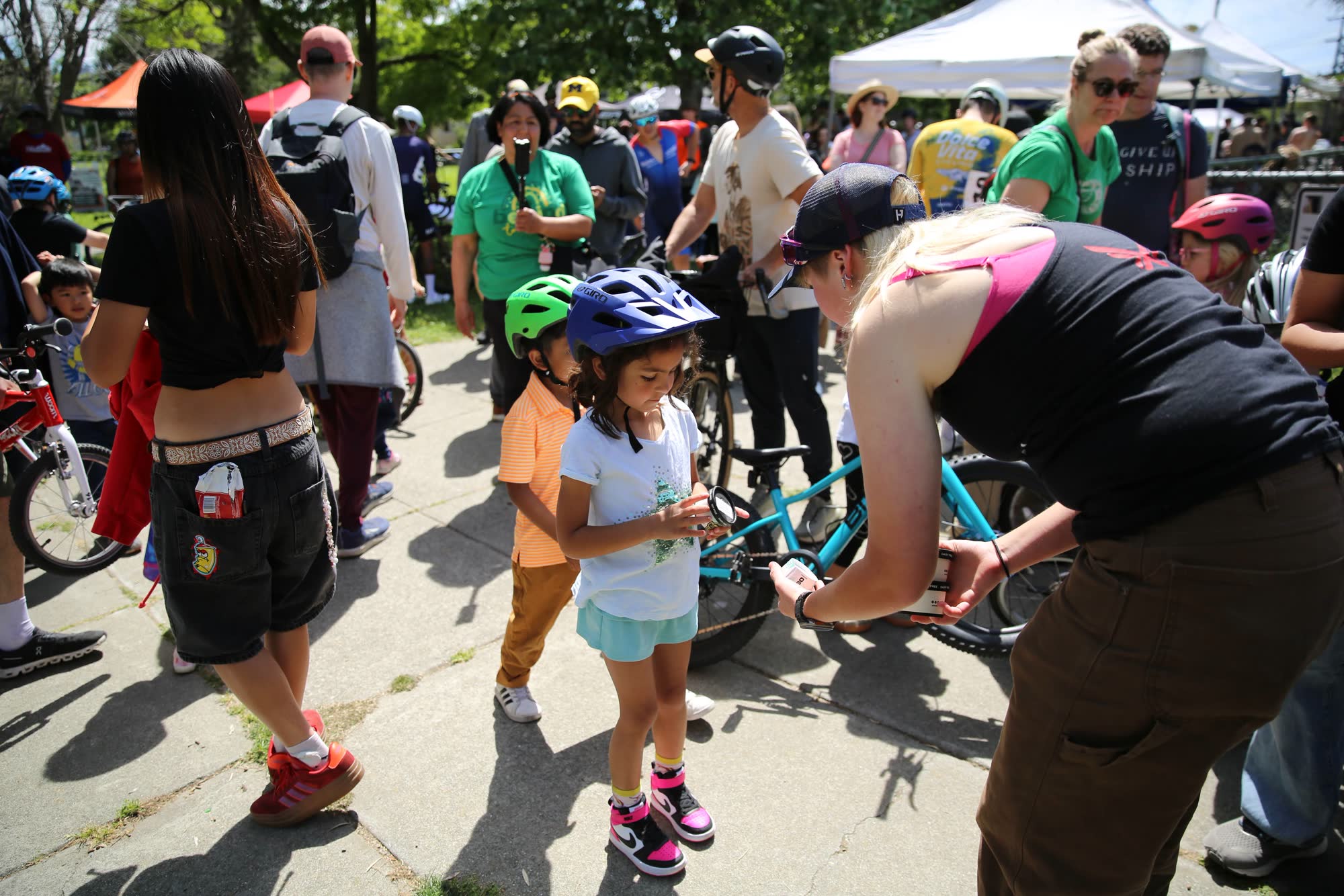
But the bigger reason is the kids and the juniors. Both races have junior fields, and at the road race boys and girls race separately. On Sunday there's a free skills clinic and a free kids race for kids about 5 to 10, and novices and juniors get to ride the crit course in the Beginner Race Program before racing starts.
Kids racing at the Berkeley Omnium →
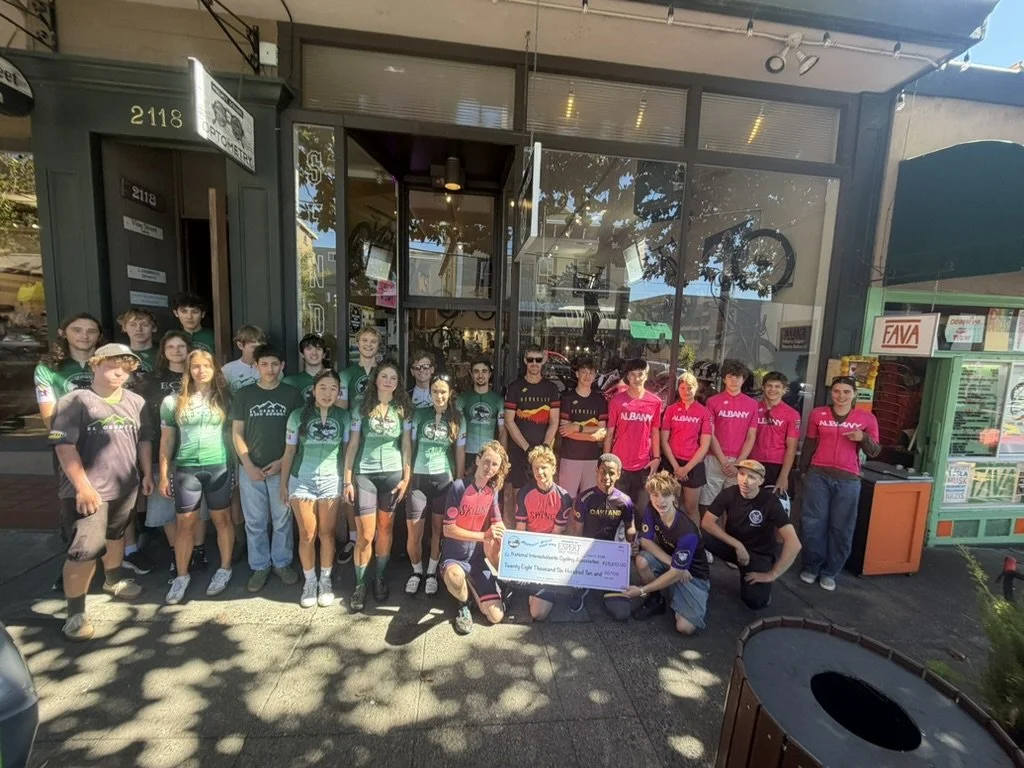
Part of every entry fee goes to East Bay NICA high school mountain bike teams. The Omnium raised $21,000 for them in 2025 and $28,610 in 2026, which went to six teams: Berkeley High School, El Cerrito High School, Albany High School, Skyline High School, Oakland Tech High School and Oakland Composite. It helps pay for equipment, coaching, race opportunities and team programs. The club counts volunteer hours as part of what produces that money, alongside registration, sponsorship and donations, so the person marshaling a corner is helping fund a high school team too.
The part we think about most is what comes after. A kid at the clinic becomes a junior. A junior races NICA, maybe races for Cal Cycling, joins a local club. Some of them end up mentoring at Early Birds sessions, marshaling a corner, or running the crit, which is exactly what Cal Cycling's students did. The race keeps going only as long as that keeps happening.
Junior cycling in Northern California →
We also want room in NorCal for women's racing, collegiate racing, masters and the elite fields. In 2026 the Pro/1/2 purse was split evenly between the women's and men's races, and Omnium proceeds supported Women's On Track, hosted by Eclipse Racing.