The race keeps coming back to you
A criterium, or crit, is a bike race of many laps on a short loop of closed streets. At the Berkeley Streets Criterium that loop is 0.61 miles and four corners beside Ohlone Park, so the riders come past every couple of minutes.
You usually hear the field before you see it: tires on pavement, gears clicking, someone calling out. Then the peloton, the main group of riders, goes by in a rush, and a couple of minutes later it's back. By the third lap you're recognizing jerseys. By the fifth you've noticed the rider who keeps drifting to the back and the one who is always near the front.
Most crits are raced for a set time rather than a set distance. Near the end, officials show a lap card counting down the laps left, and a bell rings as the leaders start the final one. Until then, every lap is another look at how the race is changing.
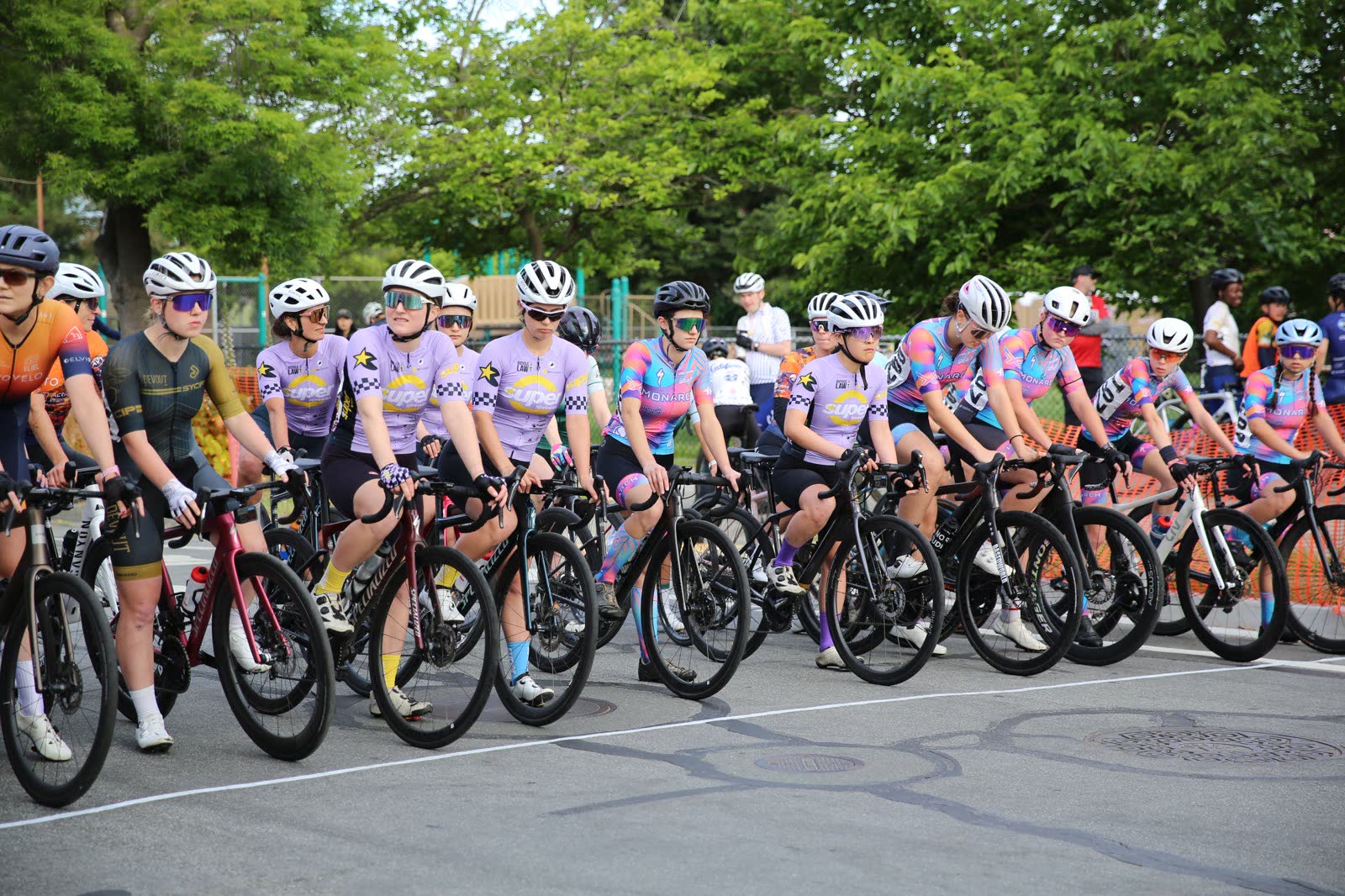
There's more happening than who's in front
The rider at the front is not necessarily winning. Riding behind someone else, in their draft, takes a lot less effort than riding into the wind, so the front of a group is the hardest place to be.
That's why attacks are exciting. An attack is a sudden hard effort to get away. If a rider or a small group gets a gap and holds it, that's a breakaway. Then the question every lap is whether they'll stay away or get caught. Sometimes a breakaway wins. Often the peloton reels it in near the end and the attackers have spent their energy for nothing. You can watch the gap grow or shrink lap by lap, and you won't know which way it goes until late.
Corners are where you see the skill
Berkeley Streets has four right-hand corners. In each one, dozens of riders brake, lean and pick a line through the turn while racing inches apart, then stand up and sprint out of it to get back up to speed.
Watch the back of the group. Riders near the front can carry speed through a corner; riders near the back have to slow down more and accelerate harder, every lap. That's why position matters so much in a crit, and why you'll see riders working to move up even when nothing else seems to be happening.
The course, corner by corner →
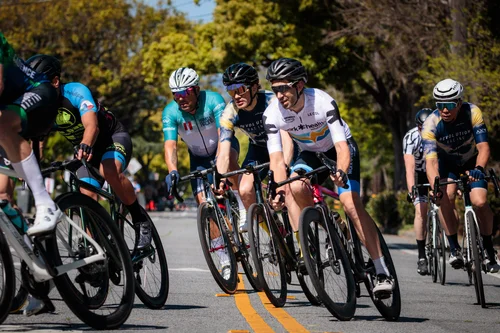
Teamwork you can actually see
Bike racing is a team sport, and in a crit you can see it happen. Look for riders in matching jerseys. When a rival attacks, a team might send someone to chase. When their own rider is in the breakaway, teammates often sit in the peloton and let other teams do the chasing.
Near the end, watch for a lead-out: teammates lined up at the front, riding as hard as they can one after another to deliver their sprinter to the last corner in a good position. When it works, you'll see the sprinter come off the last teammate's wheel in the final stretch.
Primes: races within the race
A prime (say "preem") is a prize for being first across the line on a particular lap, usually announced with a bell before that lap starts. It gives riders a reason to sprint in the middle of a race, which can split the field, launch a breakaway or just make for a fun lap to watch.
If there are primes at Berkeley Streets, the announcer will call them. They don't count toward Berkeley Omnium points, but riders still go for them.
The last laps feel different
When the lap cards start counting down, the whole group gets tense. Riders who sat quietly in the middle of the peloton for most of the race start moving up, gaps close and the speed goes up.
The winner may have spent most of the race out of sight in the pack, saving energy, and only shows up at the front in the last half lap. At Berkeley Streets the last corner is about 300 meters from the line, so getting through it near the front matters a lot. The start/finish on Hearst Avenue is the place to be for the sprint.
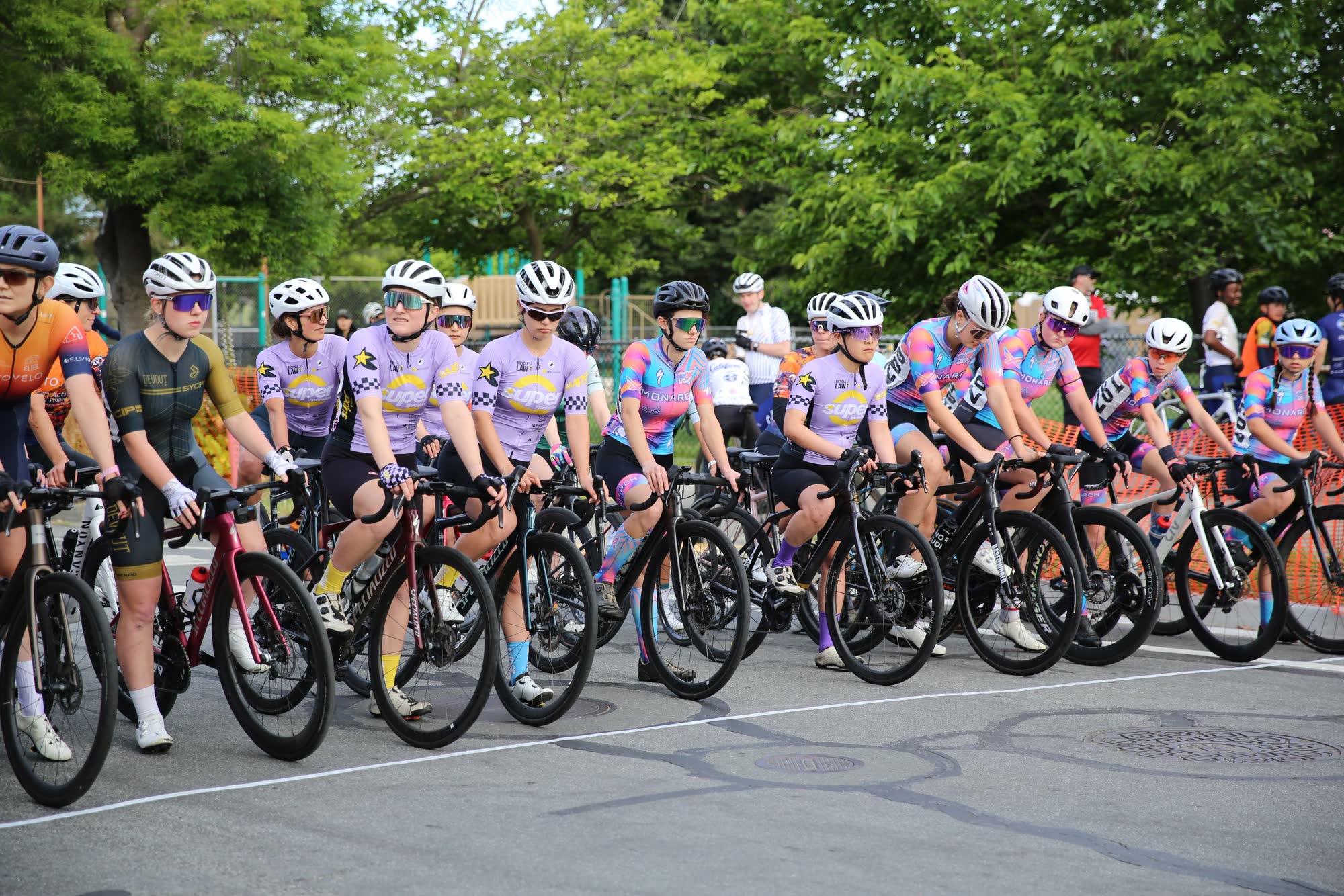
You don't need to know the rules
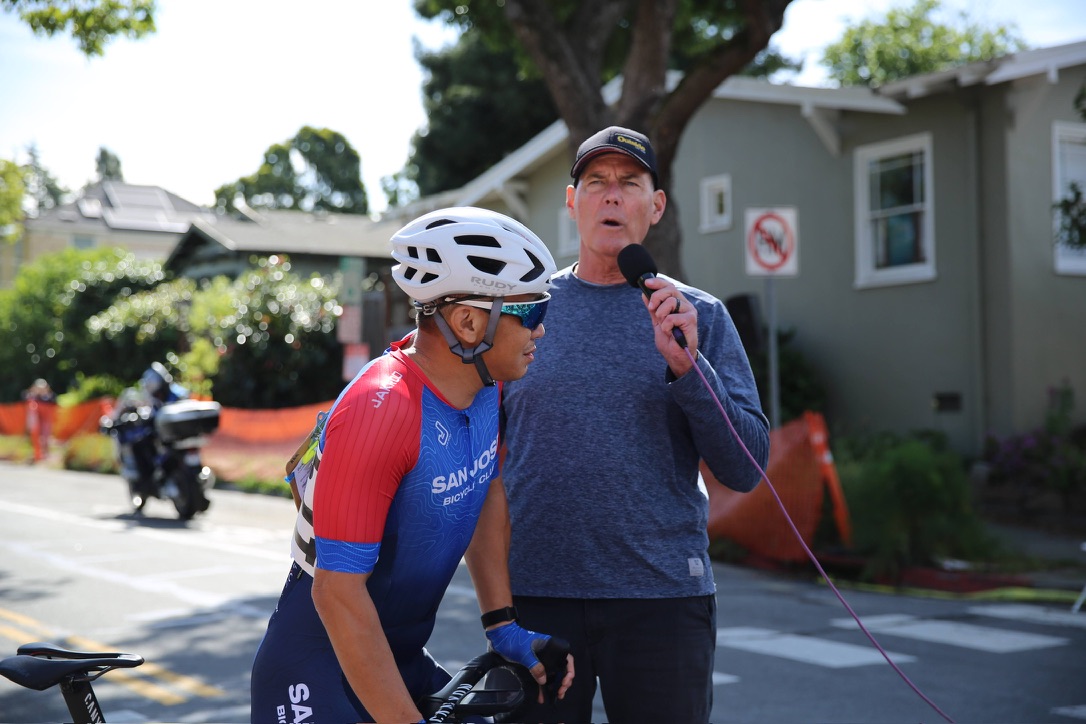
Pick someone to follow: a friend, a team with a jersey you like, or the rider who attacked first. Listen to the announcer, who explains who's in the break and what's coming up. Watch whether the gaps get bigger or smaller.
And move around. Watch a few laps at the start/finish, walk the outside of the course to a corner, then come back for the end. In the most recent edition racing ran from 7:30 a.m. into the evening, with the women's and men's top fields last; the Pro/1/2 and Collegiate Pro/1/2 race started at 5:05 p.m.. Kids can watch the field every couple of minutes, and they can ride too: in 2026 there was a free skills clinic and a free kids race for kids about 5 to 10, with check-in at registration.
Watching safely
Crits put you close to fast riders, which is the point, so the rules matter. Stay behind the barriers and outside the course. Cross only at marked crossings, when a marshal says it's clear. On a short loop the field comes back sooner than you'd expect, and a gap between groups isn't a gap in the race: a chase group, lapped riders or a race vehicle can be right behind it.
Keep children with you and away from the barriers at corners. If you're taking photos, take them from behind the barriers; never lean through or step onto the course for a shot. Portable toilets are near the registration area at Hearst Avenue and McGee Avenue.